News and updates on research on livestock value chains by the International Livestock Research Institute and partners

Showing posts with label avian influenza. Show all posts

Wednesday, August 29, 2012

ILRI presents at the 28th International Conference of Agricultural Economists

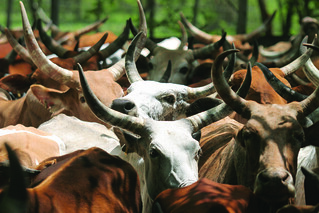
Cattle being watered at the Ghibe River in southwestern Ethiopia
Cattle being watered at the Ghibe River in southwestern Ethiopia. The country's livestock sector supports the livelihoods of a large proportion of rural households (photo credit: ILRI/Stevie Mann).

On 18-24 August 2012, some 1000 agricultural economics experts from around the world met in Foz do IguaƧu, Brazil for the 28th triennial International Conference of Agricultural Economists. The conference was organized by the International Association of Agricultural Economists (IAAE).

Under the theme, The Global Bio-Economy, the conference discussed several global challenges affecting the bio-economy, including food insecurity, natural resource management and food price crises, and possible ways of addressing these challenges.

A team of researchers from the International Livestock Research Institute (ILRI) attended the meeting and presented papers on various aspects of agricultural economics in developing countries, including the role of livestock in the Ethiopian economy, the competitiveness of smallholder pig producers in Vietnam and economic impact assessment of avian influenza control measures in Nigeria.

Other presentations covered the opportunities for intra-regional trade in staple food crops in the Common Market for Eastern and Southern Africa (COMESA) region, the effects of decentralized forest management on household farm forestry in Kenya and the Gender, Agriculture and Assets Project, a research initiative jointly led by the International Food Policy Research Institute (IFPRI) and ILRI aimed at better understanding gender and asset dynamics in agricultural development programs.

Thursday, October 06, 2011

Tackling bird flu in Egypt: ILRI and FAO develop manual for practitioners in community-based animal health outreach


The Strengthening Avian Influenza Detection and Response (SAIDR) project in Egypt was implemented by the International Livestock Research Institute (ILRI) and the Food and Agriculture Organization of the United Nations (FAO) to support efforts by the Government of Egypt to detect and respond to the threat of highly pathogenic avian influenza (HPAI).

This United States Agency for International Development (USAID)-funded project conducted a number of training courses in HPAI participatory disease surveillance, later elaborated to be community-based animal health outreach (CAHO), for 108 veterinarians (making 54 teams) in 15 governorates.

It also developed a training manual to serve as a reference guide for veterinarians during and after CAHO training. Although the manual focuses on HPAI, the methods can be easily adapted and applied to address other livestock diseases.

The manual will also be translated into Arabic to further adapt it for use in the Egyptian context.

Download the manual

You may also be interested in reading
Featured publication: Manual for participatory disease surveillance practitioners

Wednesday, August 31, 2011

Bird flu fear in Asia: IFPRI and ILRI offer research-based disease control options for developing countries

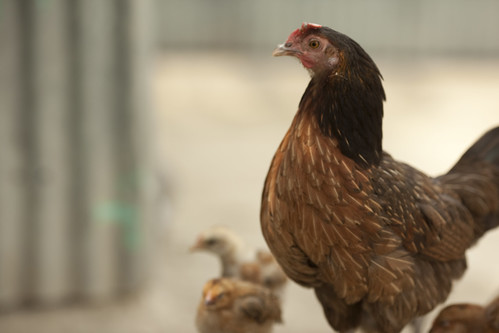
Hen and her chicks
Amid fears of resurgence of avian influenza in parts of Asia, researchers at the International Food Policy Research Institute and the International Livestock Research Institute are helping governments in developing countries to make informed decisions on how to control the spread of the disease and minimize its economic impact on the poor. (Photo: IFPRI)


The H5N1 form of avian influenza that has recently swept through Asia and into parts of Europe and Africa poses an extraordinary challenge for the international community.

And now the United Nations has warned of an imminent resurgence of avian influenza in parts of Asia, following the detection of a mutant strain of avian influenza in China and Vietnam. The UN Food and Agriculture Organization (FAO) has urged "heightened readiness and surveillance against a possible major resurgence of the H5N1 highly pathogenic avian influenza".

While a strong global response is necessary to control the spread of this disease, efforts in developing countries have shown that conventional approaches to disease control and prevention may not always work in the case of avian influenza.

There is considerable uncertainty throughout the developing world about the disease’s spread mechanisms, as well as the timing, extent, and severity of potential outbreaks.

This gap in knowledge, however, does not change the fact that developing countries are faced with critical decisions about how to defend against and recover from a potential outbreak of avian influenza.

Researchers at the International Food Policy Research Institute (IFPRI) and the Market Opportunities theme of the International Livestock Research Institute (ILRI) are spearheading a new research program to study the patterns and determinants of the spread of highly pathogenic avian influenza (HPAI), the economic impacts of an HPAI outbreak on different populations, and cost-effective HPAI control and prevention strategies.

The goal of the project, which is funded by the UK Department for International Development (DFID),  is to help governments in developing countries make more informed decisions about how to control the spread of HPAI and how to minimize the impact on different populations, particularly the poor, of both the disease and the measures taken to control an outbreak so as to ensure optimal compliance.

The project is implemented in Ethiopia,Ghana, Indonesia, Kenya and Nigeria.

For more information and to download the project publications, please visit the project web page.