News and updates on research on livestock value chains by the International Livestock Research Institute and partners

Showing posts with label research. Show all posts

Thursday, October 17, 2013

Agrifood chain toolkit conference fosters interactions between value chain researchers and practitioners

In this blog post, ILRI agro-economist Jo Cadilhon reflects on a recent conference in Kampala, Uganda that brought together agricultural and livestock value chain researchers and practitioners. The participatory approach of the conference fostered exchange of information and helped the participants learn from each other's experiences. 

Day 1: Plenary storytelling
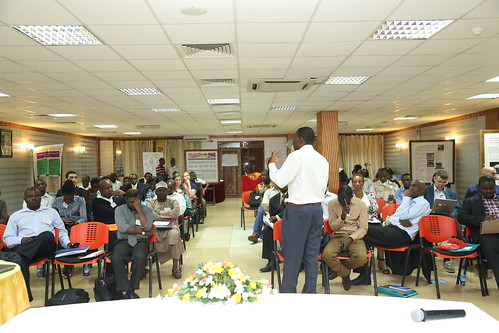
Plenary storytelling at the agrifood chain toolkit conference on livestock and fish value chains in East Africa held at Kampala, Uganda on 9-11 September 2013 (photo credit: ILRI/Megapix). 

The International Livestock Research Institute (ILRI) organized the first Agrifood Chain Toolkit Conference in Kampala from 9 to 11 September 2013. The objective of the meeting was to gather researchers of value chains and practitioners developing value chains in the field so as to foster feedback from the practitioners on the analysis tools developed by researchers.

The meeting also meant to raise the awareness of practitioners on analytical tools available that could help solve their problems of value chain field development.

This whole initiative was undertaken to contribute to the Value Chain Clearinghouse activity of the CGIAR Research Program on Policies, Institutions and Markets. This first conference was focused on livestock and fish chains so as to tap on ILRI’s expertise and partners within the CGIAR Research Program on Livestock and Fish.

As one of the organizers of the event, I would like to reflect on it with the viewpoint of a value chain researcher. I also reflected on the lessons I learned from the conference with a livestock and fish value chain developer’s viewpoint. Short videos are also available showcasing the reflections of the conference participants and of the organizers.

The concept of an Agrifood Chain Toolkit Conference is built around 'No PowerPoint'. This is meant to foster interaction between participants. This can seem a bit off-putting for researchers who are used to presenting their work under this widespread format.

However, as the editor of the conference coordinating the review of contributions submitted, I was very clear that contributors had to find an alternative way of presenting their work. Many researchers opted for posters instead.

Our ILRI facilitator Ewen Le Borgne made a wonderful job of getting everybody involved into discussions through a series of various activities. After the usual icebreaker to let all 58 participants have an idea of who else was in the room, we heard two stories in plenary.

The first was told by a value chain practitioner on the problems he had faced developing dairy value chains in Zimbabwe. The second was beamed live from Nairobi with my colleague Hikuepi (Epi) Katjiuongua telling us about the development and adaptation of the Livestock and Fish Value Chain Toolkit.

We then gave the opportunity to value chain researchers in the room to present their tools and methods for value chain analysis to the rest of the participants through a mini-sharefair.

All presenters had a corner in the room where they could present and discuss their work with other participants who would roam through the room according to their interest. This part of the meeting did not work quite well.

Perhaps because the main interest of the participants at that time of the day was to enjoy morning tea and snacks. Those were served outside the conference room despite our specification to the venue staff to serve those within the room. Understandably, some of the researchers felt a bit frustrated to see their work was attracting less interest than tea and snacks.

The rest of the first day was used to learn from the experiences of value chain practitioners: their stories allowed the researchers to get a better grasp of the problems they were facing to develop value chains in the field.

On the second day, all participants divided into five small groups to go visit five different value chains: two pig value chains, two dairy value chains and one farmed fish value chain.

This allowed value chain researchers to get an even closer understanding of the problems faced by value chain practitioners. It was also an opportunity to undertake quick-field testing of some of the questionnaire tools ILRI had developed in its Livestock and Fish Value Chain Toolkit.

On the third and final day of the conference, the researchers were now better aware of all the different problems faced by value chain practitioners who were also participating in the conference.

So Ewen and I gave the researchers another chance to market their value chain analysis tools and methods knowing the types of issues that had been discussed on the first day and the real-life problems encountered during the field visits.

A second iteration of the mini-sharefair on value chain tools and methods followed. This one was a greater success because the researchers had been able to customize their marketing pitch to attract visitors to their display using the language and keywords that they had heard being used by the value chain practitioners, and by mentioning that their methods and tools could actually contribute to solving some of the real-life problems they had heard and seen during the past two days.

The interactions between researchers and practitioners were then very lively with several practitioners coming one after the other to see researchers who had tools that could help solve their problems.

There were many expressions of interest to use some of these tools in new contexts through research-for-development projects still to be constructed. Most fulfilling, I heard many value chain practitioners saying they could use some of the tools themselves if those were made available to them and would report back on how they were used and the difficulties faced to adapt them to their own context.

This strong interaction and feedback process between value chain researchers and value chain practitioners was exactly what the Agrifood Chain Toolkit Conference was meant to foster. More such conferences will follow focusing on other commodities in other regions.

To stay informed about future events, register to the Agrifood chain toolkit online discussion group.

Jo Cadilhon, Senior Agro-economist, Policy, Trade and Value Chains Program, ILRI
Wednesday, July 03, 2013

ILRI publishes report on rapid appraisal of Ethiopia's live cattle and beef value chain

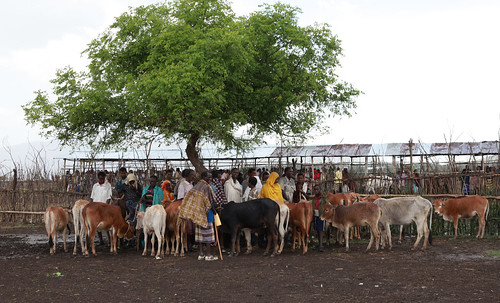
Cattle market in Mi'eso area
Cattle market in Mi'eso, Oromia Region, Ethiopia (photo credit: ILRI/Apollo Habtamu).

Despite the prominence of cattle in Ethiopian society and its economy, relevant qualitative and quantitative information is both scarce and subject to a variety of interpretations.

Mobilizing cattle, and their supporting natural and human resource base, in a sustainable manner for development purposes is therefore a challenge that begins with identification of problems and opportunities about which there is limited agreement.

It is in this context that the Government of Ethiopia requested a diagnostic study, through the Bill & Melinda Gates Foundation, which is supporting the Ethiopian Ministry of Agriculture and Rural Development to undertake a work program requested by the government, to provide strategic input and technical assistance in several key areas of the country’s agricultural sector.

Using an extensive review of secondary materials, learning from a series of stakeholders’ consultations, and participatory rapid assessments of market actors, the study analyzed live cattle and beef marketing.

The key findings have been published by the International Livestock Research Institute (ILRI) in a discussion paper.

The rapid appraisal focused on two of Ethiopia’s major cattle trading routes, representing each of the agropastoral highland production systems and pastoral lowland production, and the respective routes taken by animals to market.

The main objective was to diagnose problems based on quantitative measures, and identify associated policy strategies. The study team included local specialists, international management consultants, as well as researchers from CGIAR.

The team not only interacted with the policymakers on emerging results but also triangulated the results with other experts in the country in the forms of both stakeholders’ consultations and one-to-one interviews.

Download the discussion paper

Citation
GebreMariam S, Amare S, Baker D, Solomon A and Davies R. 2013. Study of the Ethiopian live cattle and beef value chain. ILRI Discussion Paper 23. Nairobi, Kenya: ILRI.

Tuesday, June 18, 2013

Study on the East Africa Dairy Development project provides insights into agricultural innovation processes

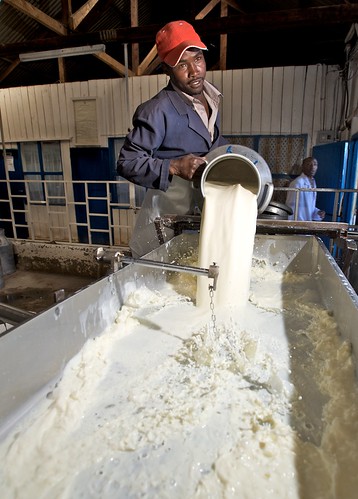
Milk Reception at Nyala Dairy in Kenya
Milk reception at Nyala dairy plant in Kenya (photo credit: East Africa Dairy Development project)

A new study on agricultural innovation systems takes an in-depth look at the East Africa Dairy Development project and its innovative approach to enhancing dairy farmers' access to inputs, credit and animal health services.

The study, published in the June 2013 issue of the journal Agricultural Systems, was lead authored by Catherine Kilelu, a PhD student at Wageningen University who was hosted at the International Livestock Research Institute (ILRI) as a graduate fellow.

Started in January 2008, the East Africa Dairy Development project is working in Kenya, Rwanda and Uganda to transform the lives of 179,000 families (about 1 million people) by doubling household dairy income in 10 years through integrated interventions in dairy production, market access and knowledge application.

The project is funded by the Bill & Melinda Gates Foundation and implemented by Heifer International, African Breeders Services - Total Cattle Management, TechnoServe, the World Agroforestry Centre and ILRI.


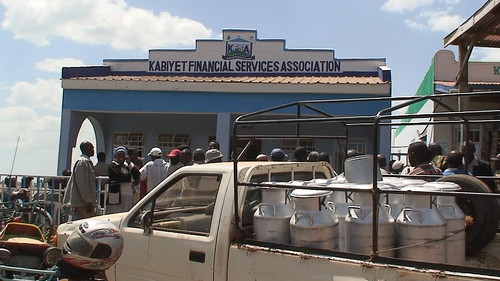
Kabiyet Financial Services Association
Kabiyet Financial Services Association, a farmer-owned village bank, was set up through the East Africa Dairy Development project as an innovative way to enhance dairy farmers' access to financing (photo credit: East Africa Dairy Development Project).

The project helped set up dairy farmer business associations with milk chilling plants. These serve as local business hubs where farmers can easily access credit, farm inputs, artificial insemination services, animal feeds as well as training on dairy production.

Following are the key highlights of the study:
  • Innovation platforms support co-evolution of innovation.
  • Innovation platforms can be considered sets of intermediaries.
  • Dynamism and unpredictability of innovation requires platforms to be adaptive.
  • Feedback and learning in platforms needs to be better monitored.
  • Agricultural innovation policies should be better tailored to co-evolution.
Access the abstract here (subscription required for full-text)

Citation
Kilelu CW, Klerkx L and Leeuwis C. 2013. Unravelling the role of innovation platforms in supporting co-evolution of innovation: Contributions and tensions in a smallholder dairy development programme. Agricultural Systems 118: 65-77.

Thursday, January 24, 2013

New online resource links value chain researchers and practitioners for improved knowledge sharing

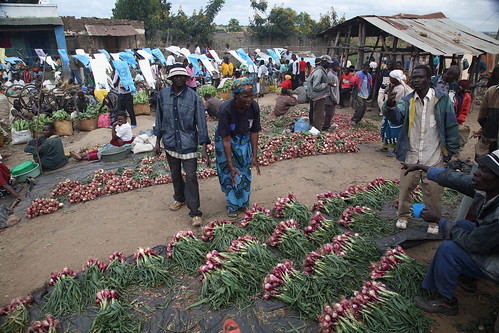
Market near Khulungira Village, in central Malawi
Selling agricultural produce at Chimbiya Market, near Dedza in central Malawi. The new AgriFood Chain Toolkit links value chain researchers and practitioners for better sharing of information and knowledge on value chain development (photo credit: ILRI/Mann).

The CGIAR Research Program on Policies, Institutions and Markets has launched a new online resource that links agricultural value chain researchers and field practitioners so that the methods and approaches used for analyzing value chains in developing countries may be better targeted and adapted to suit specific conditions in the field.

The new AgriFood Chain Toolkit is an online resource that brings together the researchers who develop tools and methods for value chain analysis and the people who use the tools in the field.

The toolkit also supports a community of practice, bringing together various stakeholders to review, assess and improve value chain approaches so as to come up with better-suited tools for value chain analysis and development.

“There are too few links existing between value chain researchers and value chain practitioners. The AgriFood chain toolkit is designed to help researchers and practitioners overcome this challenge,” said Jo Cadilhon, an agricultural economist at the International Livestock Research Institute who was involved in developing the toolkit.

The AgriFood Chain Toolkit is based on two main online knowledge-sharing tools:

  • An electronic document repository: This contains links to documents and websites on quantitative methods of value chain analysis, capacity building of value chain stakeholders and several case studies of agricultural supply chains in developing countries. Most of the publications are open access documents.
  • The AgriFood Chain Toolkit Dgroup: This online discussion group is the platform to go to in order to ask for help when looking for a specific value chain tool to suit a specific field context or to provide feedback on the documents and websites found in the document repository.

Find out more by browsing the document repository or sign up to join the AgriFood Chain Toolkit Dgroup.

Monday, November 26, 2012

ILRI presents at the Ecohealth 2012 conference

Smallholder pig production in northern Viet Nam
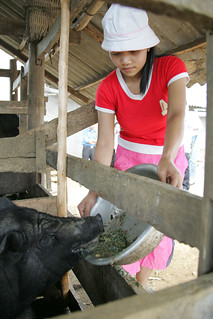
Farmer Ma Thi Puong feeds her pigs on her farm near the northern town of Mieu Vac, Vietnam. Recent studies show that Ecohealth approaches are useful in assessing the prevalence of emerging zoonotic diseases in Vietnam (photo credit: ILRI/Stevie Mann).

EcoHealth is an emerging, multi-disciplinary field of study that examines how ecosystem changes affect human health so as to prevent new diseases from emerging.

International experts in this field met in Kunming, China from 15 to 18 October 2012 for the 4th biennial conference of the International Association for Ecology and Health (Ecohealth 2012). The theme of the conference was "Sustaining Ecosystems, Supporting Health".

The International Livestock Research Institute (ILRI) was represented at Ecohealth 2012 by a team of scientists working on food safety, zoonoses and emerging infectious diseases in the Southeast Asia region. Below are links to a selection of their presentations:

Applying participatory approach to study zoonoses in provinces of South Vietnam: Experiences and lessons learned

Ecohealth approaches in prevention of emerging and re-emerging zoonotic diseases in southern Vietnam: A retrospective study 2008-2011

Ecosystem approaches to the better management of zoonotic emerging infectious diseases in Southeast Asia (EcoZD): Inputs, throughputs and outputs

Field building leadership initiative: Advancing Ecohealth in Southeast Asia

Framing the problem of emerging zoonotic disease risk using a One Health approach

Hygienic practices and microbial contamination of small-scale poultry slaughterhouses in peri-urban areas, Hanoi, Vietnam

Mapping the interface of poverty, emerging markets and zoonoses

South East Asia One Health University Network (SEAOHUN): Lessons learned

Strategies for adopting EcoHealth theory and practice: Lessons from action‐research on zoonotic diseases in Southeast Asia

Wednesday, October 31, 2012

New research project aims to improve smallholder livestock production and marketing in Botswana

Goats in Botswana
Goats awaiting sale at a market in Botswana. A new collaborative research project aims to improve smallholder livestock production and marketing in Botswana (photo credit: ILRI).

The smallholder sector produces most of Botswana’s meat and over 70% of the country’s agricultural gross domestic product.

Although past policy and research have focused on the beef export sector, rather little information has been generated on the circumstances and potential of the 80,000 smallholders who own most of the country’s cattle, and the 100,000 households that earn livelihoods from sheep and goats.

This leaves strategies and investments for rural development and livelihood generation without a basis in data and analysis.

For both cattle and small ruminants, more competitive smallholder systems can improve livelihoods.

Several factors constrain the production and marketing of surpluses by smallholders: poor animal health is one example, that is often made worse by the complexities of communal grazing, and by limited access to services.

A new 3-year research project, Competitive smallholder livestock in Botswana, asks the following questions, and engages partners in research industry and government to help answer them:
  • What are the characteristics of smallholder livestock producers in Botswana and what factors constrain their livelihoods?
  • How can livestock-related marketing systems in Botswana be improved for the benefit of smallholders and the rural population?

The project has three objectives:
  • To better define smallholder livestock production systems and to identify the factors affecting the productivity of smallholder livestock producers and assess their competitiveness 
  • To understand and improve conditions for market participation and value addition in markets for livestock, livestock products and inputs
  • To strengthen the capacity of agricultural education and extension

The International Livestock Research Institute (ILRI) is collaborating in this project with the Botswana Institute for Development Policy Analysis and the Botswana Ministry of Agriculture.

The outcomes from the study will be improved and more sustainable livelihoods among smallholder livestock keepers, and increased uptake and use of scientific and economic knowledge by those providing services to smallholders.

The project is funded by the Australian Centre for International Agricultural Research (ACIAR) and runs from 1 September 2012 to 31 August 2015.

For more information, please contact Sirak Bahta (s.bahta @ cgiar.org)

Friday, August 24, 2012

ILRI research on food safety in informal markets featured in special supplement of Tropical Animal Health and Production

Testing milk in Kenya's informal market
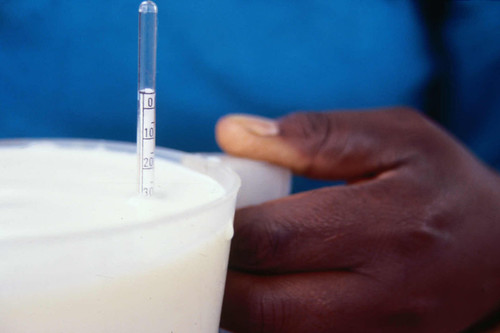
Testing milk in Kenya's informal milk market. New research studies have evaluated zoonotic health risks associated with urban dairy farming systems in Nairobi, Kenya (photo credit: ILRI/Dave Elsworth).


The August 2012 issue of the journal Tropical Animal Health and Production includes a special supplement on assessing and managing urban zoonoses and foodborne disease in Nairobi and Ibadan.

Featured in the special supplement are 10 research articles by scientists from the International Livestock Research Institute (ILRI) and partners from the Kenya Agricultural Research Institute (KARI), the Kenya Ministry of Agriculture, the Federal University of Agriculture, Abeokuta, the University of Ibadan and the University of Nairobi.

Click on the links below to read the abstracts of the articles (journal subscription required for access to full text)

For more information on ILRI’s research on animal health, food safety and zoonoses, please contact Delia Grace (d.grace @ cgiar.org)

Thursday, July 26, 2012

Study calls for integrated use of innovation systems in agricultural research for development

Pineapple farmer, Ntungamo District, Uganda
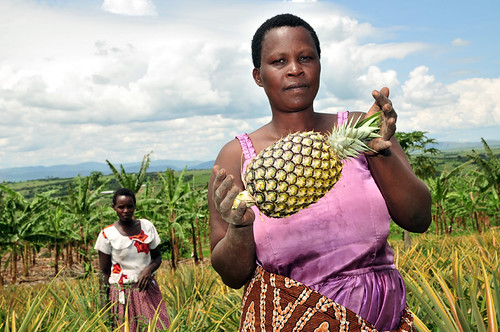
A pineapple farmer in Ntungamo District, Uganda. The Ntungamo Pineapple Innovation Platform is one of three case studies highlighted in a new journal article on innovation platforms for agricultural research for development (photo credit: Neil Palmer, CIAT).

A journal article published in the May 2012 issue of the International Journal of Agriculture and Forestry calls for a coordinated agricultural research and development strategy that links innovation platforms at continental, sub-regional, national and grassroots levels. This, the paper argues, would represent the best practices for comprehensive use of the innovation system approach.

The paper used three case studies from the Sub-Saharan Africa Challenge Program to examine strategies and approaches for the successful use of the innovation system approach in agricultural research for development.

Co-author Pamela Pali is a monitoring and evaluation specialist with the Poverty, Gender and Impact team at the International Livestock Research Institute (ILRI) in Kenya.

Co-author Jemimah Njuki, sociologist and gender specialist, is the former leader of ILRI's Poverty, Gender and Impact team. She left ILRI at the end of March 2012 and now works with CARE International. From her base in Tanzania, she heads a new program on smallholder women in agriculture called PATHWAYS which is being implemented in both Africa and Asia.

Access the full text article

Citation
Nyikahadzoi K, Pali P, Fatunbi AO, Olarinde LO, Njuki J and Adekunle AO. 2012. Stakeholder participation in innovation platform and implications for Integrated Agricultural Research for Development (IAR4D). International Journal of Agriculture and Forestry 2(3): 92-100.

Tuesday, July 17, 2012

New study maps global hotspots of poverty and zoonotic diseases

Orma Boran cattle crossing a river in Kenya
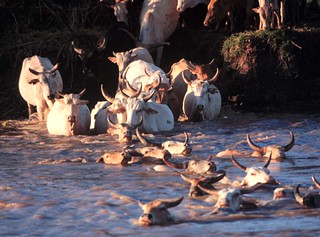
Orma boran cattle crossing a river. A new study has mapped the global hotspots of poverty and human-animal diseases (photo credit: ILRI/R. Dolan).


A new study has mapped global hotspots of poverty and zoonoses (diseases transmissible between animals and humans) and found that a relatively small number of countries – notably India, Ethiopia, and Nigeria – have a disproportionate share of poor livestock keepers and zoonotic disease burden.

The study also revealed that the burden of human and animal diseases can be linked to just a few zoonoses. For this reason, targeting these zoonoses is likely to be an effective use of scarce resources.

These and other findings are contained in a new collaborative research report, Mapping of poverty and likely zoonoses hotspots, by the International Livestock Research Institute (ILRI), the Institute of Zoology (UK) and the Hanoi School of Public Health in Vietnam.

The report to the UK Department of International Development (DFID) presents data and expert knowledge on poverty and zoonoses hotspots to inform prioritization of study areas on the transmission of disease in emerging livestock systems in the developing world, where prevention of zoonotic disease might bring greatest benefit to poor people.

In addition to mapping the hotspots of zoonoses and poverty, the study also identified gaps and opportunities for research to reduce the burden of disease for the zoonoses and regions identified.

These include: 
  • better understanding of the implications for intensification and emerging markets on zoonoses; 
  • models for zoonoses control in emerging markets; 
  • ecosystem models for management of zoonoses with a wildlife interface; 
  • improvement of surveillance for existing and new diseases; 
  • understanding the impacts multiple burdens of zoonoses in order to better allocate resources; and
  • technologies and innovation for detection, diagnosis, prevention, treatment and response. 
Download the report.

Friday, May 18, 2012

New report identifies priority areas for investment to improve livestock data in Africa

Sheep being watered at a waterhole in Niger
Livestock at a watering hole in Niger. A new report identifies priority areas for government investment towards improving the quality of livestock data in Africa (photo credit: ILRI). 

The Livestock Data Innovation in Africa project has published a new report (May 2012)  that  reviews the results of a global online survey that was carried out to identify priority areas for investments to improve the quality of livestock data. 

The survey was carried out between January and February 2012 among 641 livestock stakeholders including researchers, donors, government officials from livestock ministries or departments, and officials from non-governmental organizations and private companies. 

The objectives of the survey were to: 
  • rank the main areas in the livestock value chain where livestock-related data and information are needed;
  • review stakeholders' perceptions of the quality of available livestock data and indicators; and
  • identify priority areas along the livestock value chain where investments are needed to improve the quality and quantity of livestock data and indicators.

The findings of the report, Core livestock data and indicators: results of a stakeholder survey, will provide governments with information on the critical gaps in livestock data. 

In addition, the results will feed into the process of developing a minimum  set of livestock core data that governments should collect, as mandated by the global strategy to improve agriculture and rural statistics.

The Livestock Data Innovation Project is sponsored by the Bill & Melinda Gates Foundation and jointly implemented by the World Bank, the Food and Agriculture Organization of the United Nations (FAO) and the International Livestock Research Institute (ILRI), in collaboration with the African Union Interafrican Bureau for Animal Resources (AU-IBAR).

Monday, April 16, 2012

Second phase of the ILRI-led Safe Food, Fair Food project gets underway


On 12–13 April 2012, the Nairobi campus of the International Livestock Research Institute (ILRI) hosted an inception meeting for the BMZ/GIZ-funded, ILRI-led Safe Food, Fair Food project to develop action plans for the second 3-year phase of the project to build on previous work from 2008-11.

Present at the inception meeting were project partners from Côte d’Ivoire (Centre Suisse de Recherches Scientifiques), Ethiopia (Addis Ababa University), Germany (Federal Institute for Risk Assessment [BfR] and Freie Universität Berlin), Ghana (University of Ghana), Japan (Rakuno Gakuen University), Kenya (University of Nairobi), Mozambique (Direcção de Ciências Animais), Tanzania (Sokoine University of Agriculture) and Uganda (Makerere University).

During the first phase of the project, a number of studies on participatory risk analysis were carried out in eastern, southern and West Africa. The project also held national workshops to engage policymakers to raise awareness about the potential food safety hazards that exist along the entire value chain.

Findings from the project also featured prominently at the first International Congress on Pathogens at the Human-Animal Interface (ICOPHAI) held in September 2011 in Addis Ababa, Ethiopia where some 25 oral and poster presentations were made by researchers and MSc and PhD students attached to the project.

Also in September 2011, the project held its final synthesis workshop to deliberate on the results of national impact assessment studies and develop a project synthesis book which will facilitate dissemination of the research findings to wider audiences.

The project now moves into its second phase which will adopt an action research approach for stakeholder engagement at the regional level towards uptake of tools and approaches to enhance food safety in informal markets in Africa.

For more information, visit the project web page or view the project publications.

Thursday, March 01, 2012

AGRA and ILRI publish proceedings of international conference on priority actions for market development for African farmers

Mozambique
A Mozambican farmer takes her maize harvest to market. Development of agricultural markets in sub-Saharan Africa can boost economic growth and improve livelihoods (photo credit: ILRI/Mann). 

The Alliance for a Green Revolution in Africa (AGRA) and the International Livestock Research Institute (ILRI) have released the proceedings of an international conference held in Nairobi, Kenya in May 2009 to examine the role of agricultural markets in spurring economic growth in sub-Saharan Africa and improving livelihoods.

The AGRA-ILRI conference brought together 150 of the world’s leading market experts to document the practices, policies and investments that can drive agricultural market development in sub-Saharan Africa; reveal the gaps and shortcomings that continue to create barriers; and identify priority actions that should be taken by governments, the private sector, donors and other stakeholders.

The issues discussed at the conference are especially timely in light of recent surges in food prices and the significant burden this is inflicting on millions of poor people, underscoring the urgent need for action.

The proceedings include two papers lead-authored by researchers from ILRI's Markets, Gender and Livelihoods theme.

The paper, Integrating informal actors into the formal dairy industry in Kenya through training and certification by Amos Omore and Derek Baker reviews current thinking on the role of informal agribusiness in pro-poor development, and reports on the example the Smallholder Dairy Project in Kenya.

The project featured collaborative and participatory research, along with training and certification in hygienic milk handling practices as a practical mechanism for optimizing milk quality and addressing regulatory barriers.

It also targeted and helped achieve policy change, which enabled wider piloting of the training and certification activities incorporating a business development service approach by national authorities.

In their paper, The impact of non-tariff barriers on maize and beef trade in East Africa author Joseph Karugia and others report on the use a spatial equilibrium model to quantify the impact of non-tariff barriers – such as licences, taxes and customs duties – on the intra-country flow of trade in maize and beef in Kenya, Tanzania and Uganda.

The study found that reducing or completely removing the existing non-tariff barriers would result in increased intra-regional trade flows, with Kenya importing more maize from both Uganda and Tanzania, while Uganda’s beef exports to Kenya and Tanzania would increase. The overall result would be positive net welfare gains for the maize and beef sub-sectors across the entire East African Community.

Download the full book or individual sections
  • Synthesis of outcomes
  • Section 1: Developing pro-poor markets for African smallholder farmers
  • Section 2: Seed and fertilizer markets
  • Section 3: Strengthening finance, insurance and market information
  • Section 4: High-value commodities and agroprocessing
  • Section 5: Building market institutions
  • Section 6: Encouraging regional trade
For more information
Contact Anne Mbaabu of AGRA (AMbaabu @ agra-alliance.org) or Steve Staal of ILRI (s.staal @ cgiar.org) or visit the conference website.

Citation
ILRI (International Livestock Research Institute). 2011. Towards priority actions for market development for African farmers: Proceedings of an international conference. 13-15 May 2009, Nairobi, Kenya. AGRA (Alliance for a Green Revolution in Africa) and ILRI (International Livestock Research Institute), Nairobi, Kenya.

Monday, February 06, 2012

Concerned about the quality of livestock data? The Livestock Data Innovation project seeks your views

Heading home at dusk in Mozambique

The Livestock Data Innovation project is carrying out a short online survey which will help identify priority areas for investments to improve the quantity and quality of livestock-related data available to decision-makers.

The survey is available at: http://www.surveymonkey.com/s/LIVESTOCK_INDICATORS.

There are just eight questions and you should be able to complete the whole survey in 5 to 10 minutes. Responses are all anonymous and you are free to provide or not provide your contact details.

The project is sponsored by the Bill & Melinda Gates Foundation and jointly implemented by the World Bank, the Food and Agriculture Organization of the United Nations (FAO) and the International Livestock Research Institute (ILRI), in collaboration with the African Union Interafrican Bureau for Animal Resources (AU-IBAR).

Friday, January 06, 2012

A new year, a new name: ILRI's Market Opportunities Theme now called Markets, Gender and Livelihoods

Mozambiquan woman pounds maize for the evening meal

A very Happy New Year to all our readers!

We are pleased to announce that the Market Opportunities theme of the International Livestock Research Institute (ILRI) now has a new name: Markets, Gender and Livelihoods.

The new name takes into account the incorporation of ILRI's Poverty, Gender and Impact group that is led by Dr Jemimah Njuki.

The renaming of the Theme was agreed upon on 18 December 2011 during a meeting of ILRI's Management Committee, to take into account changes in research planning and funding in line with ongoing reforms in CGIAR.

"As we move into new research planning and funding situations, we need to adjust the ways we organize ourselves to meet our commitments and maximize synergies across the institute," said ILRI's Director General, Dr Jimmy Smith, in a message to staff.

The Poverty, Gender and Impact group will continue to provide leadership at the institutional level with respect to work on gender and impact assessment.

Dr Steve Staal continues to serve as director of the theme.

Thursday, December 15, 2011

Tool improves understanding of dynamics of regional trade in agricultural inputs

Mozambique
Mozambican women threshing sorghum. A new tool for tracking trade in agricultural inputs in eastern and southern Africa will lead to better understanding of trade dynamics in the region (photo credit: ILRI/Mann).

Agricultural policymakers and other practitioners in eastern and southern Africa will be able to better understand the dynamics of intra-regional trade in seeds, pesticides and herbicides through a new tool that has been developed to track the volume and value of trade in agricultural inputs in the region.

The tool was developed by the Regional Strategic Analysis and Knowledge Support System (ReSAKSS) for Eastern and Central Africa – which is hosted by the Market Opportunities theme of the International Livestock Research Institute (ILRI) – in collaboration with the United States Agency for International Development (USAID) and several national and regional partners. It was presented at a workshop held in Nairobi, Kenya on 16 November 2011.

"There is optimism that continued interaction with the parties involved will help us to further understand the elements of trade and agricultural inputs in the region to continue to improve agricultural productivity and production, and sustainable food security," the workshop organizers said.

Read more on the ReSAKSS blog.

Friday, December 09, 2011

Traditional fermentation holds the key to microbial safety of milk in Ethiopia, ILRI study finds

Dairy farming in Ethiopia
An Ethiopian smallholder dairy farmer with the day's milk.  An ILRI study reports that traditional fermentation of milk in Ethiopia can significantly reduce the risk of staphylococcal food poisoning (photo credit: ILRI).

The safety of milk and dairy products in Ethiopia can be significantly improved through participatory risk assessment approaches to traditional methods of food production, reports a study published in the 4 November 2011 issue of the International Journal of Food Microbiology.

The study was carried out to assess the risk of staphylococcal poisoning through traditionally fermented milk in Debre Zeit, Ethiopia. Staphylococcus aureus is a bacterium that can cause mastitis (udder infection) in dairy cows. It can also cause food poisoning through production of an enterotoxin.

Traditional souring of milk is carried out by leaving raw milk in a gourd to ferment spontaneously for 1-2 days through the action of the naturally occurring milk microflora. The organic acids produced during fermentation inhibit the growth of spoilage micro-organisms, thereby prolonging the storage life of the milk.

The study, which is part of research by the BMZ- funded Safe Food, Fair Food project, found that home-made traditionally fermented milk in Debre Zeit, Ethiopia reduced the risk of food poisoning by Staphylococcus aureus by 93.7%.

The research was collaboratively undertaken by scientists from the Market Opportunities theme of the International Livestock Research Institute (ILRI) and Addis Ababa University.

Principal author Dr Kohei Makita is a veterinary epidemiologist on joint appointment with ILRI and the Rakuno Gakuen University in Japan while co-author Dr Delia Grace is a veterinary epidemiologist and leader of ILRI's research team on animal health, food safety and zoonoses.

Read the abstract.

Citation
Makita K, Dessisa F, Teklu A, Zewde G and Grace D. Risk assessment of staphylococcal poisoning due to consumption of informally-marketed milk and home-made yoghurt in Debre Zeit, Ethiopia. International Journal of Food Microbiology (2011), doi:10.1016/j.ijfoodmicro.2011.10.028

Wednesday, November 30, 2011

Training program on microbial risk assessment in Vietnam strengthens national food safety policies

Selling pork at a 'wet' market in Vietnam. A new training course on microbial risk assessment is helping to reduce public health risks and improve the management of food and water safety in Vietnam (photo credit: ILRI).

A collaborative training course on microbial risk assessment in Vietnam has provided policymakers with scientific evidence for decision-making towards better management of health risks in food and water.

Environmental health risk assessment in general and microbial risk assessment in particular are still at a very early stage of development in Vietnam.

With its rapid urbanization, industrialization, agricultural development and population growth, Vietnam faces increasing risks from microbial hazards contaminating its water and food supply.

In early 2010, the Swiss-based National Centre of Competence in Research (NCCR) North-South piloted a project that developed a training curriculum in microbial risk assessment as part of national interventions aimed at better managing food- and water-borne health risks in Vietnam.

The project was led by the Hanoi School of Public Health in partnership with the National Institute of Nutrition, the National Institute of Hygiene and Epidemiology, the Preventive Medicine Centre of Ha Nam Province and the Swiss Tropical and Public Health Institute.

Experts from the Market Opportunities theme of the International Livestock Research Institute (ILRI) provided the team with technical support to ensure the quality of the curriculum which covers water, sanitation and food safety.

The collaborative process of developing the training course helped the concerned groups in Vietnam to work together, culminating, in January 2011, with a final training workshop attended by representatives from universities, research institutions and government ministries to discuss areas of future collaboration in research and capacity strengthening in risk assessment.

The course has led to the setting up of a local network on health risk assessment, enhanced the quality of training at the Hanoi School of Public Health, and developed a book-length manual of microbial risk assessment guidelines for food safety.

The development of the training course and its policy impact in tackling issues of water, sanitation, and food safety in Vietnam are described in these NCCR North-South Outcome Highlights, available in English and Vietnamese.

You may also be interested in:
Ecohealth approaches can improve food safety management in Vietnam

Friday, November 11, 2011

Taking stock: ILRI meeting reflects on the past, charts the next steps for livestock research for development

On 9 and 10 November 2011, the Board of Trustees of the International Livestock Research Institute (ILRI) hosted a two-day 'liveSTOCK Exchange’ at ILRI's Addis Ababa campus to discuss and reflect on livestock research for development over the past decade and chart the way forward based on lessons learned.

The event synthesized sector and ILRI learning to help frame future directions for livestock research for development. The liveSTOCK Exchange also marked the leadership and contributions of Dr Carlos Seré who served as the Director General of ILRI from 2002 to 2011.

In October 2011, Dr Seré took up the position of Chief Development Strategist leading the Office of Strategy and Knowledge Management at the International Fund for Agricultural Development (IFAD) headquarters in Rome.

As part of the debate, sharing and reflection, scientists from ILRI's Market Opportunities theme prepared four issue briefs that document the lessons learned from past research projects by the Research Theme as well as the challenges, outcomes, impact evidence, and future prospects for livestock research towards improving market opportunities for smallholder livestock producers. You may access the issue briefs from the links below:


Also check out this presentation: Livestock market opportunities for the poor, that formed the framework for discussion and debate.

To read more about the liveSTOCK Exchange, please visit http://clippings.ilri.org/tag/livestockx/ and the liveSTOCK Exchange wiki.

Monday, October 24, 2011

Tom Randolph to lead CGIAR research program on livestock and fish

Thomas Randolph, Agricultural Economist
The Market Opportunities theme of the International Livestock Research Institute (ILRI) is pleased to congratulate Dr Tom Randolph on being named the Director of the CGIAR Research Program on Livestock and Fish, a recently approved initiative of the Consultative Group on International Agricultural Research (CGIAR). The ILRI Director General, Dr Jimmy Smith, made the announcement on Thursday 13 October 2011.

ILRI leads this CGIAR research program which will be collaboratively undertaken with the International Centre for Tropical Agriculture (CIAT), the International Centre for Agricultural Research in the Dry Areas (ICARDA) and the WorldFish Center as the core CGIAR partners. Various other strategic and value chain partners will play key roles in the implementation of the program.

Dr Randolph was instrumental in the collaborative process of developing the proposal for the research program. Prior to this appointment, he headed ILRI's research team on smallholder competitiveness in changing markets under the Market Opportunities theme.

He holds a PhD in Agricultural Economics from Cornell University. His research interests at ILRI previously included animal and human health issues and impact assessment. Before joining ILRI in 1998, he conducted policy research at the Africa Rice Centre in West Africa.

Congratulations, Tom!

Tuesday, September 13, 2011

ILRI-led food safety project holds forum to synthesize research findings

Pork and beef sellers in Xipamanine Market, Maputo, Mozambique. The ILRI-led Safe Food, Fair Food project is adapting risk-based approaches to improve the safety of informally sold livestock products in sub-Saharan Africa. (Photo: ILRI/Mann).

The Safe Food, Fair Food project begins its final synthesis meeting today 13 September 2011 at the Addis Ababa campus of the International Livestock Research Institute (ILRI), bringing together 25 MSc and PhD students from 11 different countries to present their research findings and draft/completed theses.

The BMZ-funded project is working to improve the management of food safety in general and the safety of livestock products in particular by adapting risk-based approaches to informal markets in sub-Saharan Africa.

The three-year project, which is scheduled to end in December 2011, is being implemented in eight countries (Cote d'Ivoire, Ethiopia, Ghana, Kenya, Mali, Mozambique, the Republic of South Africa and Tanzania) in collaboration with universities and national research institutes.

During the two-day meeting, country coordinators will share information on feedback to communities and synthesize the results of the national impact assessment studies. In addition, a writeshop will be held to collaboratively develop a project synthesis book to facilitate dissemination of the research findings to wider audiences. Plans for individual publications and future research activities will also be discussed.

The meeting’s activities will be facilitated by graduate fellow Kristina Roesel and veterinary epidemiologist Kohei Makita, both of whom are working with ILRI's Market Opportunities theme.

For more information, please visit the project website.