News and updates on research on livestock value chains by the International Livestock Research Institute and partners

Showing posts with label publications. Show all posts

Friday, August 24, 2012

ILRI research on food safety in informal markets featured in special supplement of Tropical Animal Health and Production

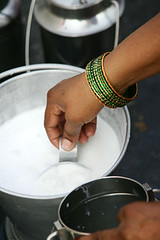
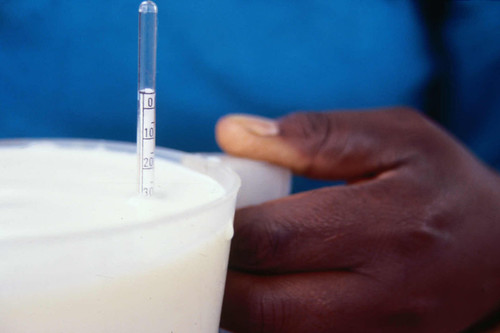
Testing milk in Kenya's informal market
Testing milk in Kenya's informal milk market. New research studies have evaluated zoonotic health risks associated with urban dairy farming systems in Nairobi, Kenya (photo credit: ILRI/Dave Elsworth).


The August 2012 issue of the journal Tropical Animal Health and Production includes a special supplement on assessing and managing urban zoonoses and foodborne disease in Nairobi and Ibadan.

Featured in the special supplement are 10 research articles by scientists from the International Livestock Research Institute (ILRI) and partners from the Kenya Agricultural Research Institute (KARI), the Kenya Ministry of Agriculture, the Federal University of Agriculture, Abeokuta, the University of Ibadan and the University of Nairobi.

Click on the links below to read the abstracts of the articles (journal subscription required for access to full text)

For more information on ILRI’s research on animal health, food safety and zoonoses, please contact Delia Grace (d.grace @ cgiar.org)

Thursday, July 26, 2012

Study calls for integrated use of innovation systems in agricultural research for development

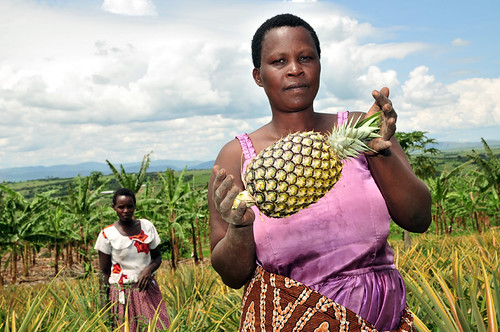
Pineapple farmer, Ntungamo District, Uganda
A pineapple farmer in Ntungamo District, Uganda. The Ntungamo Pineapple Innovation Platform is one of three case studies highlighted in a new journal article on innovation platforms for agricultural research for development (photo credit: Neil Palmer, CIAT).

A journal article published in the May 2012 issue of the International Journal of Agriculture and Forestry calls for a coordinated agricultural research and development strategy that links innovation platforms at continental, sub-regional, national and grassroots levels. This, the paper argues, would represent the best practices for comprehensive use of the innovation system approach.

The paper used three case studies from the Sub-Saharan Africa Challenge Program to examine strategies and approaches for the successful use of the innovation system approach in agricultural research for development.

Co-author Pamela Pali is a monitoring and evaluation specialist with the Poverty, Gender and Impact team at the International Livestock Research Institute (ILRI) in Kenya.

Co-author Jemimah Njuki, sociologist and gender specialist, is the former leader of ILRI's Poverty, Gender and Impact team. She left ILRI at the end of March 2012 and now works with CARE International. From her base in Tanzania, she heads a new program on smallholder women in agriculture called PATHWAYS which is being implemented in both Africa and Asia.

Access the full text article

Citation
Nyikahadzoi K, Pali P, Fatunbi AO, Olarinde LO, Njuki J and Adekunle AO. 2012. Stakeholder participation in innovation platform and implications for Integrated Agricultural Research for Development (IAR4D). International Journal of Agriculture and Forestry 2(3): 92-100.

Tuesday, July 17, 2012

New study maps global hotspots of poverty and zoonotic diseases

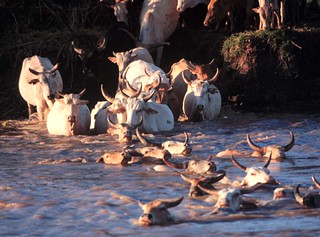
Orma Boran cattle crossing a river in Kenya
Orma boran cattle crossing a river. A new study has mapped the global hotspots of poverty and human-animal diseases (photo credit: ILRI/R. Dolan).


A new study has mapped global hotspots of poverty and zoonoses (diseases transmissible between animals and humans) and found that a relatively small number of countries – notably India, Ethiopia, and Nigeria – have a disproportionate share of poor livestock keepers and zoonotic disease burden.

The study also revealed that the burden of human and animal diseases can be linked to just a few zoonoses. For this reason, targeting these zoonoses is likely to be an effective use of scarce resources.

These and other findings are contained in a new collaborative research report, Mapping of poverty and likely zoonoses hotspots, by the International Livestock Research Institute (ILRI), the Institute of Zoology (UK) and the Hanoi School of Public Health in Vietnam.

The report to the UK Department of International Development (DFID) presents data and expert knowledge on poverty and zoonoses hotspots to inform prioritization of study areas on the transmission of disease in emerging livestock systems in the developing world, where prevention of zoonotic disease might bring greatest benefit to poor people.

In addition to mapping the hotspots of zoonoses and poverty, the study also identified gaps and opportunities for research to reduce the burden of disease for the zoonoses and regions identified.

These include: 
  • better understanding of the implications for intensification and emerging markets on zoonoses; 
  • models for zoonoses control in emerging markets; 
  • ecosystem models for management of zoonoses with a wildlife interface; 
  • improvement of surveillance for existing and new diseases; 
  • understanding the impacts multiple burdens of zoonoses in order to better allocate resources; and
  • technologies and innovation for detection, diagnosis, prevention, treatment and response. 
Download the report.

Friday, May 18, 2012

New report identifies priority areas for investment to improve livestock data in Africa

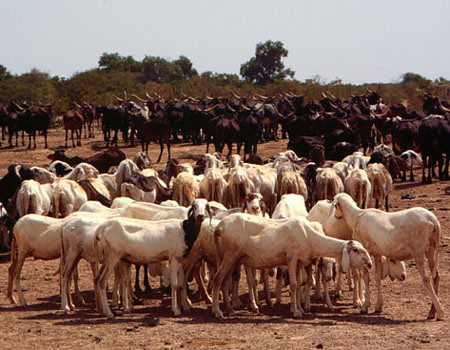
Sheep being watered at a waterhole in Niger
Livestock at a watering hole in Niger. A new report identifies priority areas for government investment towards improving the quality of livestock data in Africa (photo credit: ILRI). 

The Livestock Data Innovation in Africa project has published a new report (May 2012)  that  reviews the results of a global online survey that was carried out to identify priority areas for investments to improve the quality of livestock data. 

The survey was carried out between January and February 2012 among 641 livestock stakeholders including researchers, donors, government officials from livestock ministries or departments, and officials from non-governmental organizations and private companies. 

The objectives of the survey were to: 
  • rank the main areas in the livestock value chain where livestock-related data and information are needed;
  • review stakeholders' perceptions of the quality of available livestock data and indicators; and
  • identify priority areas along the livestock value chain where investments are needed to improve the quality and quantity of livestock data and indicators.

The findings of the report, Core livestock data and indicators: results of a stakeholder survey, will provide governments with information on the critical gaps in livestock data. 

In addition, the results will feed into the process of developing a minimum  set of livestock core data that governments should collect, as mandated by the global strategy to improve agriculture and rural statistics.

The Livestock Data Innovation Project is sponsored by the Bill & Melinda Gates Foundation and jointly implemented by the World Bank, the Food and Agriculture Organization of the United Nations (FAO) and the International Livestock Research Institute (ILRI), in collaboration with the African Union Interafrican Bureau for Animal Resources (AU-IBAR).

Monday, May 14, 2012

New ILRI research paper presents gendered analysis of dairy goat and sweet potato production in Tanzania


A newly published (May 2012) discussion paper from the International Livestock Research Institute (ILRI) presents findings of a study carried out to analyze gender issues in production of dairy goats and sweet potato in four communities in Mvomero and Kongwa districts of Tanzania.

The study identified gender differences in the perceived potential of integrating production of root crops and dairy goats. There were also distinct gender differences with respect to ownership and management of goats and crops.

Men perceived value addition resulting from owning dairy goats and the attendant increase in income for them whereas women perceived change in status quo and increase workload resulting from stall goat management activities.

Women were found to have limited control over decisions on sale and use of incomes generated from sale of goats. Distinct differences in ownership of crops between men and women were also observed; men owned cash crops whereas women owned subsistence or food crops for home consumption.

“Investment is needed in participatory training and creation of awareness on gender for both women and men, to sensitize them on the importance of including both women and men in development projects,” the authors of the paper conclude.

The study was funded by the International Development Research Centre (IDRC) and the Canadian International Development Agency (CIDA). It was collaboratively undertaken by researchers from the Sokoine University of Agriculture, the University of Alberta and ILRI.

To find out more, please visit the project website

Download the discussion paper

Citation
Saghir P, Njuki J, Waithanji E, Kariuki J and Sikira A. 2012. Integrating improved goat breeds with new varieties of sweet potatoes and cassava in the agro-pastoral systems of Tanzania: A gendered analysis. ILRI Discussion Paper 21. ILRI (International Livestock Research Institute), Nairobi, Kenya.

Wednesday, April 25, 2012

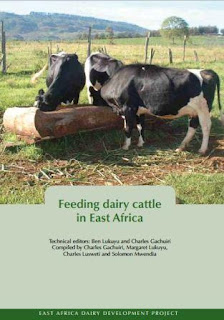
Feeding dairy cattle: Regional experts develop manual for farmers in East Africa


The East Africa Dairy Development project has produced a manual aimed at helping farmers in the region boost the productivity of their dairy cows through adoption of improved animal feeding practices.

The manual was developed by a team of animal science experts from the International Livestock Research Institute (ILRI), the Kenya Agricultural Research Institute (KARI) and the University of Nairobi.

The topics include the basic nutrient requirements of dairy cows; pasture management; production of forage such as hay and silage; feed supplements; practical aspects of feeding calves, heifers and dairy cows; and how to control forage diseases like Napier grass head smut.

Whereas the information has been synthesized in such a way as to be applicable to the East African region, some information may be site specific, and in some instances information that is generalized may need to be customized to suit specific areas.

The manual builds on an earlier version produced by the Smallholder Dairy Project and the Kenya Dairy Development Program that was designed to guide extension workers and smallholder dairy farmers through the basics of feeding dairy animals.

Although dairy farmers are the primary audience of the manual, it may also be a useful information resource for extension workers as well as students of animal production.

For more information, please contact ILRI feed scientist Ben Lukuyu (b.lukuyu @ cgiar.org)
Download the manual

Citation
Lukuyu B, Gachuiri CK, Lukuyu MN, Lusweti C and Mwendia S (eds). 2012. Feeding dairy cattle in East Africa. East Africa Dairy Development Project, Nairobi, Kenya.

You may also be interested in:
Study identifies feed improvement options for dairy farmers in East Africa

Thursday, March 01, 2012

AGRA and ILRI publish proceedings of international conference on priority actions for market development for African farmers

Mozambique
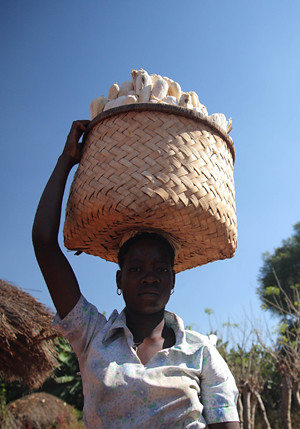
A Mozambican farmer takes her maize harvest to market. Development of agricultural markets in sub-Saharan Africa can boost economic growth and improve livelihoods (photo credit: ILRI/Mann). 

The Alliance for a Green Revolution in Africa (AGRA) and the International Livestock Research Institute (ILRI) have released the proceedings of an international conference held in Nairobi, Kenya in May 2009 to examine the role of agricultural markets in spurring economic growth in sub-Saharan Africa and improving livelihoods.

The AGRA-ILRI conference brought together 150 of the world’s leading market experts to document the practices, policies and investments that can drive agricultural market development in sub-Saharan Africa; reveal the gaps and shortcomings that continue to create barriers; and identify priority actions that should be taken by governments, the private sector, donors and other stakeholders.

The issues discussed at the conference are especially timely in light of recent surges in food prices and the significant burden this is inflicting on millions of poor people, underscoring the urgent need for action.

The proceedings include two papers lead-authored by researchers from ILRI's Markets, Gender and Livelihoods theme.

The paper, Integrating informal actors into the formal dairy industry in Kenya through training and certification by Amos Omore and Derek Baker reviews current thinking on the role of informal agribusiness in pro-poor development, and reports on the example the Smallholder Dairy Project in Kenya.

The project featured collaborative and participatory research, along with training and certification in hygienic milk handling practices as a practical mechanism for optimizing milk quality and addressing regulatory barriers.

It also targeted and helped achieve policy change, which enabled wider piloting of the training and certification activities incorporating a business development service approach by national authorities.

In their paper, The impact of non-tariff barriers on maize and beef trade in East Africa author Joseph Karugia and others report on the use a spatial equilibrium model to quantify the impact of non-tariff barriers – such as licences, taxes and customs duties – on the intra-country flow of trade in maize and beef in Kenya, Tanzania and Uganda.

The study found that reducing or completely removing the existing non-tariff barriers would result in increased intra-regional trade flows, with Kenya importing more maize from both Uganda and Tanzania, while Uganda’s beef exports to Kenya and Tanzania would increase. The overall result would be positive net welfare gains for the maize and beef sub-sectors across the entire East African Community.

Download the full book or individual sections
  • Synthesis of outcomes
  • Section 1: Developing pro-poor markets for African smallholder farmers
  • Section 2: Seed and fertilizer markets
  • Section 3: Strengthening finance, insurance and market information
  • Section 4: High-value commodities and agroprocessing
  • Section 5: Building market institutions
  • Section 6: Encouraging regional trade
For more information
Contact Anne Mbaabu of AGRA (AMbaabu @ agra-alliance.org) or Steve Staal of ILRI (s.staal @ cgiar.org) or visit the conference website.

Citation
ILRI (International Livestock Research Institute). 2011. Towards priority actions for market development for African farmers: Proceedings of an international conference. 13-15 May 2009, Nairobi, Kenya. AGRA (Alliance for a Green Revolution in Africa) and ILRI (International Livestock Research Institute), Nairobi, Kenya.

Friday, February 10, 2012

Agriculture-associated diseases featured in new book on agriculture for nutrition and health


On 10-12 February 2011, the International Food Policy Research Institute (IFPRI) organized a conference in New Delhi, India with the theme, Leveraging agriculture for improving nutrition and health.

To commemorate the first anniversary of the conference, IFPRI has published a book which is a compilation of the background papers originally commissioned for the event and subsequently peer-reviewed and revised.

The 23 chapters in Reshaping Agriculture for Nutrition and Health, edited by Shenggen Fan and Rajul Pandya-Lorch, examine how much more agriculture could do to improve human well-being if it included specific policies, actions, and interventions to achieve health and nutrition goals; what kinds of changes would maximize agriculture’s contribution to human health and nutrition; and how human health and nutrition could contribute to a productive and sustainable agricultural system.

One of the chapters, Agriculture-associated diseases: Adapting agriculture to improve human health by John McDermott and Delia Grace, examines the range of agriculture-associated diseases and explores opportunities for shaping agriculture to improve health outcomes, and related policy implications.

McDermott joined IFPRI in October 2011 as the director of the CGIAR Research Program on Agriculture for Nutrition and Health (A4NH). He was previously the deputy director general for research at the International Livestock Research Institute (ILRI).

Grace leads ILRI's research team on animal health, food safety and zoonoses. She is also the program manager for the agriculture-associated diseases component of A4NH.

Below is an excerpt from the chapter:
"Agriculture and health are intimately linked. Many diseases have agricultural roots —food-borne diseases, water-associated diseases, many zoonoses, most emerging infectious diseases, and occupational diseases associated with agrifood chains. These diseases create an especially heavy burden for poor countries, with far-reaching impacts. This chapter views agriculture-associated disease as the dimension of public health shaped by the interaction among humans, animals, and agroecoystems. This conceptual approach presents new opportunities for shaping agriculture to improve health outcomes, in the short and long term. Understanding the multiple burdens of disease is a first step in its rational management. As agriculture-associated diseases occur at the interface of human health, animal health, agriculture, and ecosystems, addressing them often requires systems-based thinking and multidisciplinary approaches. These approaches, in turn, require new ways of working and institutional arrangements. Several promising initiatives demonstrate convincing benefits of new ways of working across disciplines, despite the considerable barriers to cooperation."
Download the book here (in its entirety or by individual chapters)

Friday, January 20, 2012

ILRI study identifies interventions to reduce exit from Bangladesh's poultry industry

Policy interventions to address farmers' shortage of capital, low profit margins and constraints in the supply of day-old chicks can help to reduce the rate of exit from Bangladesh's poultry industry, a research study by the International Livestock Research Institute (ILRI) reports.

The results of the study are contained in a policy brief (published December 2011) that highlights findings of surveys carried out in 2005 and 2007 to assess the reasons for exit from the poultry sector in Bangladesh and possible solutions. The study considered both broiler and layer enterprises, and large- and small-scale poultry keepers.

The study was carried out in collaboration with partners from the Bangladesh Agricultural University and the Bangladesh Ministry of Food and Disaster Management.

Download the brief.

Citation
Jabbar MA, Rahman MH, Talukder RK and Saha SK. 2011. Exit from Bangladesh's poultry industry: Causes and solutions. ILRI Policy Brief. ILRI (International Livestock Research Institute), Nairobi.

You may also be interested in: 
ILRI Research Report: Contract poultry farming in Bangladesh

Wednesday, January 18, 2012

ILRI project offers solutions for improving smallholder pig production in western Kenya

A smallholder pig farmer in western Kenya: Findings from an ILRI-led study  will help to improve feeding practices and  sow productivity on smallholder pig farms in western Kenya (photo credit: ILRI).

Small-scale pig farming in western Kenya is an important source of family income. Pigs kept are of local breeds that are either tethered or left free to scavenge for food. However, one of the main challenges that pig farmers in western Kenya face is inadequate feed supply.

From 2007 to 2009, a collaborative project led by the International Livestock Research Institute (ILRI) carried out research towards improving pig production and health in smallholder farms in western Kenya.

The project has recently published two journal articles, one featuring a descriptive study of smallholder pig feeding practices (Tropical Animal Health and Production, January 2012) and the other highlighting the results of a baseline study on the productivity of local sows (African Journal of Agricultural Research, December 2011).

The findings of the descriptive study of 164 pig farms in Busia District revealed the need for more research on the nutrient composition of the identified local feeds. Additionally, there is need to develop and validate simple combinations of local feeds to formulate balanced feed rations that smallholder farmers can afford.

The baseline study, which was carried out in Busia and Kakamega Districts, assessed the reproductive performance of local sows, investigated the challenges faced by the farmers, and explored opportunities for improving small-scale production of breeding pigs. The baseline data will be useful in identifying key intervention areas and exploring opportunities for improvement in the sector.

The project was undertaken in partnership with the University of Guelph, the University of Nairobi, and the Swiss Tropical and Public Health Institute.

Other outputs from the project have been featured in two earlier posts on this blog:


Citations
Mutua FK, Dewey C, Arimi S, Ogara W, Levy M and Schelling E. 2012. A description of local pig feeding systems in village smallholder farms of Western Kenya. Tropical Animal Health and Production, Online First 5 January 2012, doi 10.1007/s11250-011-0052-6

Mutua FK, Dewey CE, Arimi SM, Schelling E, Ogara WO and Levy M. 2011. Reproductive performance of sows in rural communities of Busia and Kakamega Districts, Western Kenya. African Journal of Agricultural Research 6(31): 6485-6491.

Friday, December 23, 2011

ILRI develops training manuals towards improving quality of pig production and marketing in Northeast India

Pig production in Nagaland #1
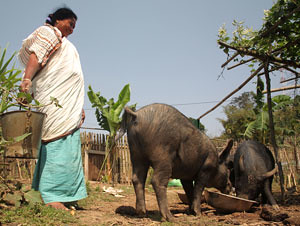
A farmer feeds her pigs in Nagaland, India. ILRI has produced training manuals to help small-scale pig farmers,  veterinary practitioners and pork traders in Northeast India improve farm productivity and product quality (photo credit: ILRI/Mann).

Small-scale pig production and marketing play important roles in contributing to the livelihoods of poor tribal populations that live in Northeast India.

A 2008 study by the International Livestock Research Institute (ILRI) characterized the pig sub-sector in Nagaland, Northeast India and found that the region is home to over a quarter of India's total pig population. Here, 80-90% of tribal communities keep 2-3 pigs, mostly under traditional production systems.

However, the traditional methods of pig production are constrained by lack of management inputs like quality feeds and preventive animal health services. This often leads to low productivity and poor quality of pork products.

Towards improving the quality of pig production and marketing, ILRI's Asia Office and Capacity Strengthening Unit joined hands with national research partners in India to develop three training manuals on smallholders' pig management, veterinary first aid for pigs, and hygienic pork production and marketing.

The manuals are aimed at enhancing the capacity of pig producers, veterinary practitioners and pork traders, respectively, to transform subsistence pig production into small-scale commercial farming that satisfies growing consumer demand for quality and safety.

"It is expected that the implementation of training programs based on these manuals will help to improve productivity and provision of animal health care, and build knowledge and awareness on hygienic pork selling which in turn will improve profitability and livelihoods of smallholder pig producers and pork traders," said Dr Purvi Mehta Bhatt, Head of ILRI's Capacity Strengthening Unit. 

Friday, December 16, 2011

Smallholder dairy farmers in India can benefit from modern milk supply chains

Helping Asia's dairy farmers
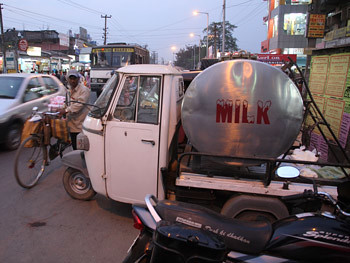
Transporting milk in India. Smallholder dairy farmers in India can benefit from traceability and improved food safety provided by modern milk supply chains (photo credit: ILRI).


Resource-poor, smallholder dairy farmers in India stand to gain from entry into emerging modern milk supply chains despite the predominance of traditional milk marketing in the country, according to a study published in the 14 November 2011 online edition of the journal Agricultural Economics Research Review.

The study also noted that issues of traceability and food safety will strengthen the growing modern milk supply chains in India. In addition, facilities for milk collection and transport and a quality-based pricing system for raw milk will be important factors to consider in scaling up of the supply chains.

The lead author of the journal article is Dr Anjani Kumar, principal scientist (agricultural economics) at the National Centre for Agricultural Economics and Policy Research in New Delhi and former scientist at the Market Opportunities theme of the International Livestock Research Institute (ILRI).

The co-authors are Dr Steve Staal, Director of ILRI's Market Opportunities theme and interim Deputy Director General – Research, and Dr Dhiraj Singh, scientific officer in ILRI's Asia office in New Delhi.

Read the abstract

Citation
Kumar A, Staal SJ and Singh DK. 2011. Smallholder dairy farmers’ access to modern milk marketing chains in India. Agricultural Economics Research Review 24(2):243-253.

Friday, December 09, 2011

Traditional fermentation holds the key to microbial safety of milk in Ethiopia, ILRI study finds

Dairy farming in Ethiopia
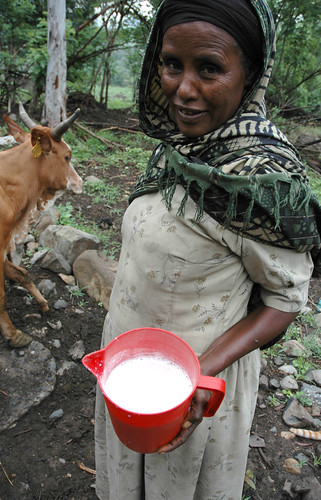
An Ethiopian smallholder dairy farmer with the day's milk.  An ILRI study reports that traditional fermentation of milk in Ethiopia can significantly reduce the risk of staphylococcal food poisoning (photo credit: ILRI).

The safety of milk and dairy products in Ethiopia can be significantly improved through participatory risk assessment approaches to traditional methods of food production, reports a study published in the 4 November 2011 issue of the International Journal of Food Microbiology.

The study was carried out to assess the risk of staphylococcal poisoning through traditionally fermented milk in Debre Zeit, Ethiopia. Staphylococcus aureus is a bacterium that can cause mastitis (udder infection) in dairy cows. It can also cause food poisoning through production of an enterotoxin.

Traditional souring of milk is carried out by leaving raw milk in a gourd to ferment spontaneously for 1-2 days through the action of the naturally occurring milk microflora. The organic acids produced during fermentation inhibit the growth of spoilage micro-organisms, thereby prolonging the storage life of the milk.

The study, which is part of research by the BMZ- funded Safe Food, Fair Food project, found that home-made traditionally fermented milk in Debre Zeit, Ethiopia reduced the risk of food poisoning by Staphylococcus aureus by 93.7%.

The research was collaboratively undertaken by scientists from the Market Opportunities theme of the International Livestock Research Institute (ILRI) and Addis Ababa University.

Principal author Dr Kohei Makita is a veterinary epidemiologist on joint appointment with ILRI and the Rakuno Gakuen University in Japan while co-author Dr Delia Grace is a veterinary epidemiologist and leader of ILRI's research team on animal health, food safety and zoonoses.

Read the abstract.

Citation
Makita K, Dessisa F, Teklu A, Zewde G and Grace D. Risk assessment of staphylococcal poisoning due to consumption of informally-marketed milk and home-made yoghurt in Debre Zeit, Ethiopia. International Journal of Food Microbiology (2011), doi:10.1016/j.ijfoodmicro.2011.10.028

Tuesday, November 22, 2011

Dairy farmers in India gain more money from safer milk

Urban dairy in Hyderabad, India
A study of dairy farms in three states of India has found that farmers who adopt milk safety practices receive higher prices from sale of better quality milk.

The study was carried out in the states of Bihar, Punjab and Uttar Pradesh to highlight the status of compliance with food safety measures in the Indian dairy sector at farm level and investigate the relationship between safety compliance and producer price of milk.

The findings are published in the November 2011 online edition of the Journal of International Food & Agribusiness Marketing.

India is currently the world’s largest producer of milk and Bihar, Punjab and Uttar Pradesh are among India’s largest milk-producing states, accounting for 5.5%, 8.9% and 18%, respectively, of national milk production.

The lead author of the article is Dr Anjani Kumar, principal scientist (agricultural economics) at the National Centre for Agricultural Economics and Policy Research in New Delhi and former scientist at the Market Opportunities theme of the International Livestock Research Institute (ILRI). The co-authors are Dr Iain Wright, ILRI's regional representative for Asia and Dr Dhiraj Singh, scientific officer in ILRI's Asia office in New Delhi.

Compliance with milk safety measures at dairy farm level was low and smallholder dairy farmers were found to be less likely to adopt safer milk handling practices than farmers with larger herd sizes.

The study recommends that supporting policies and technologies be put in place to spur the uptake of safer milk handling practices by dairy farmers, particularly smallholder producers who dominate the dairy sector in India.

Policy support by the government is also need to cushion smallholder farmers from the costs of compliance with food safety standards thereby ensuring that they remain competitive in dairy production and marketing.

Read the abstract of the article.

Citation
Kumar A, Wright IA and Singh DK. 2011. Adoption of food safety practices in milk production: implications for dairy farmers in India. Journal of International Food & Agribusiness Marketing 23(4): 330-344.

Thursday, October 06, 2011

Tackling bird flu in Egypt: ILRI and FAO develop manual for practitioners in community-based animal health outreach


The Strengthening Avian Influenza Detection and Response (SAIDR) project in Egypt was implemented by the International Livestock Research Institute (ILRI) and the Food and Agriculture Organization of the United Nations (FAO) to support efforts by the Government of Egypt to detect and respond to the threat of highly pathogenic avian influenza (HPAI).

This United States Agency for International Development (USAID)-funded project conducted a number of training courses in HPAI participatory disease surveillance, later elaborated to be community-based animal health outreach (CAHO), for 108 veterinarians (making 54 teams) in 15 governorates.

It also developed a training manual to serve as a reference guide for veterinarians during and after CAHO training. Although the manual focuses on HPAI, the methods can be easily adapted and applied to address other livestock diseases.

The manual will also be translated into Arabic to further adapt it for use in the Egyptian context.

Download the manual

You may also be interested in reading
Featured publication: Manual for participatory disease surveillance practitioners

Tuesday, August 30, 2011

ILRI project offers viable solutions to rising pork prices in Vietnam

Smallholder pig production in northern Viet Nam
Farmer Ma Thi Puong feeds her pigs on her farm near the northern town of Meo Vac, Vietnam: Policies that address supply constraints faced by both small and large pig farmers in Vietnam can help in long-term solutions to the rising prices of pork and live pigs. (Photo credit: ILRI/Mann).

Rising consumer demand for pork, high cost of animal feed and ineffcient value chains have led to skyrocketing prices of pork and live pigs in Vietnam. Within the first half of 2011 alone, the cost of pork and live pigs doubled in the principal urban markets of Hanoi and Ho Chi Minh City.

As policymakers seek long-term solutions towards boosting domestic supply of pork to meet the sustained consumer demand, research findings by scientists from the Market Opportunities theme of the International Livestock Research Institute (ILRI) can help in pointing the way to viable solutions to the current food price crisis.

Findings from a three-year (2007-2010) Australian Centre for International Agricultural Research (ACIAR)-funded ILRI-led collaborative project, Improving competitiveness of smallholder pig producers in an adjusting Vietnam market, suggest that both small-scale and large-scale pig producers should be targeted in a strategy for expanding domestic pork supply in Vietnam, considering that prices are likely to remain high in the long run on account of pork being a key ingredient in the Vietnamese diet.

These and other findings are highlighted in an article by Nguyen Do Anh Tuan of Vietnam's Centre for Agricultural Policy and Lucy Lapar of ILRI published in the 22-28 August 2011 issue of Vietnam Investment Review, Vietnam's leading weekly international business newspaper.

Previous interventions by the Vietnam government have tended to ignore small-scale farmers, focusing instead on developing large-scale farms to address supply constraints such as rising feed prices, losses from diseases and inefficiencies in pork value chain.

However, research findings based on a pig sector model for Vietnam suggest that large-scale pig farms will make a minimal contribution to supply in both the short- and long- term. Indeed, the majority small-scale farms were found to be better able to adapt to volatile prices in feed markets, hence creating efficiencies in these systems.

Therefore, focusing on large-scale farms and ignoring the majority of small-scale farms and their constraints will not result in long-term efficiency gains, the study concluded.

"The focus should be on addressing causes of constraints to productivity growth, such as disease outbreaks, rising feed prices, efficient system for replacement of breeding stocks and improving pork value chain performance," the article's authors suggest.

"Policies that will provide incentives to generate new technological breakthroughs and appropriate institutions to support these would likely to be more effective options," the authors add.

The project collaborators were the Centre for Agricultural Policy - Institute of Policy and Strategy for Agricultural and Rural Development (CAP-IPSARD), the International Food Policy Research Institute (IFPRI), Oxfam Hong Kong and the University of Queensland.

Read the complete article from the Vietnam Investment Review

For more information, please contact Dr Lucy Lapar of ILRI (l.lapar @ cgiar.org), visit the project website or read the project publications.

You may also be interested in these past blog posts on Livestock Markets Digest

Thursday, July 28, 2011

New book features case studies on Kenya’s liberalized dairy sector

Improved functioning of Kenya’s dairy marketing systems in the period following the liberalization of the sector in 1992 is a critical factor affecting the improvement of dairy production systems, two new studies report.

The studies feature in a newly published book by Springer (April 2011) titled Emerging Development of Agriculture in East Africa.

Agricultural economists from the Market Opportunities Theme of the International Livestock Research Institute (ILRI), Dr Isabelle Baltenweck and Dr Steve Staal, are chapter co-authors.

Dr Staal is the director of ILRI’s Market Opportunities theme which carries out research aimed at providing appropriate technical, policy and institutional options that will enable the poor, especially women and other marginalized groups, to participate more effectively in remunerative livestock markets.

The chapter, Emerging markets in the post-liberalization period: Evidence from the raw milk market in rural Kenya by Kijima, Yamano and Baltenweck examines the development of raw milk markets in western and central Kenya while the chapter, Dynamic changes in the uptake of dairy technologies in the Kenya Highlands by Baltenweck, Yamano and Staal investigates the dynamics of dairy production in the post-liberalization period.


Citations
Baltenweck I, Yamano T and Staal SJ. 2011. Dynamic changes in the uptake of dairy technologies in the Kenya Highlands.  In: Yamano T, Otsuka K and Place F (eds), Emerging development of agriculture in East Africa. Springer, Netherlands. pp. 85-97.

Kijima Y, Yamano T and Baltenweck I. 2011. Emerging markets in the post-liberalization period: Evidence from the raw milk market in Kenya. In: Yamano T, Otsuka K and Place F (eds), Emerging development of agriculture in East Africa. Springer, Netherlands. pp. 73-84.

Friday, July 15, 2011

Participatory risk analysis: A promising approach to improving food safety in sub-Saharan Africa

Pork and beef sellers in Xipamanine Market, Maputo, Mozambique. Participatory risk analysis offers a new approach to managing the safety of informally produced and marketed food in sub-Saharan Africa. (Photo credit: ILRI/Mann)

Most food in sub-Saharan Africa is produced and sold in the informal sector which is an important source of income, employment and livelihood for millions of poor food producers and sellers.

However, several studies have shown that informally marketed food contains high levels of microbial hazards that pose a threat to public health.

In order to appropriately tackle this problem, approaches are needed that focus on the risk to human health and how best this risk can be assessed and managed rather than focusing solely on the presence of hazards.

For example, the common practice of boiling of milk before drinking it kills disease-causing microorganisms, thereby significantly reducing the public health risks posed by the presence of milk-borne pathogens.

Risk analysis, therefore, presents a new approach to managing food safety and the use of participatory methodologies can improve stakeholder engagement and compliance.

Although risk analysis is now widely applied in much of the developed world and forms the basis of food safety guidelines for domestic and international trade, its use in developing countries has been limited.

This is largely because risk-based approaches to food safety have not been appropriately adapted to suit the prevailing situation in developing countries where informal markets dominate and exist alongside formal markets, and capacity to enforce compliance is low.

The collaborative Safe Food, Fair Food project is currently working to improve the management of the safety of livestock food products by adapting risk-based approaches to suit domestic informal livestock markets in developing countries in sub-Saharan Africa.

The project is led by the Market Opportunities theme of the International Livestock Research Institute (ILRI) and funded by the Federal Ministry for Economic Cooperation and Development (BMZ).

The project involves several partners from eight countries in east, west and south Africa, namely, Côte d’Ivoire, Ethiopia, Ghana, Kenya, Mali, Mozambique, the Republic of South Africa and Tanzania and covers 19 participatory risk analysis topics.

Preliminary results from the proof of concept studies support the hypothesis that risk-based approaches may be useful in improving food safety in informal markets in developing countries.

The application of participatory risk analysis towards improved food safety in sub-Saharan Africa is discussed in a review paper published in the journal, Revue Africaine de Santé et de Productions Animales. The lead author of the paper, Dr Delia Grace, heads ILRI's research team on animal health, food safety and zoonoses.

Click here to read the abstract and access the review paper

For more information, visit the Safe Food, Fair Food project web page


Citation
Grace D, Makita K, Kang'ethe EK and Bonfoh B. 2010. Safe food, fair food: Participatory risk analysis for improving the safety of informally produced and marketed food in sub-Saharan Africa. Revue Africaine de Santé et de Productions Animales 8(S): 3-11.

Friday, June 03, 2011

Study identifies feed improvement options for dairy farmers in East Africa

A dairy cow on a Kenyan smallholder farm feeds on maize stover. The East Africa Dairy Development project has identified opportunities for improving production and use of feed resources. (Photo credit: ILRI)

Good quality feeds and forages are crucial for successful livestock production. Studies have shown that in Africa and other developing countries animal feeds and feeding make up 60-70% of total production costs.

Many smallholder livestock keepers face several constraints related to feeds and feeding, including inadequate quality and quantity of feeds, inefficient supply chains and poor storage facilities, all of which have a negative impact on livestock productivity.

The East Africa Dairy Development (EADD) project is working with dairy farmers in the region to improve household incomes through integrated interventions in dairy production, market access and knowledge application. The project is currently being piloted in 8 sites in Rwanda, 18 in Kenya and 27 in Uganda.

The project carried out a rapid appraisal in four study sites in Kenya to identify practical interventions towards more efficient use of livestock feed resources and, consequently, increased productivity.

The findings of the study are published in the May 2011 edition of Livestock Research for Rural Development. The lead author, Dr Ben Lukuyu, is a feed specialist with ILRI's Market Opportunities research theme.

The EADD project is a regional industry development program implemented by a consortium of partners led by Heifer International. The other project partners are the African Breeders Services Total Cattle Management (ABS-TCM), the International Livestock Research Institute (ILRI), TechnoServe and the World Agroforestry Centre (ICRAF).

The rapid appraisal assessed the livestock feeding practices in smallholder dairy systems; identified where gaps in feed supply occur for feed resources that are not available year-round; and determined some practices that dairy farmers can adopt to ensure a reliable supply of high-quality livestock feed all year round.

The study identified various options to improve the use and storage of on-farm feed resources such as processing of feed by chopping or chaffing which have been shown to increase milk production per kilogram of feed consumed, as well as feed conservation by silage-making and baling of hay to help cope with the dry season shortage and ensure an adequate supply of feed.

However, for sustainable uptake of these interventions, the authors note that there will be need to improve farmer training and access to information, and to strengthen linkages with stakeholders.

Read the full-text article here

Citation
Lukuyu B, Franzel S, Ongadi PM and Duncan AJ. 2011. Livestock feed resources: Current production and management practices in central and northern rift valley provinces of Kenya. Livestock Research for Rural Development Volume 23, Article #112. Retrieved June 3, 2011, from http://www.lrrd.org/lrrd23/5/luku23112.htm

Tuesday, May 24, 2011

Study reviews 20 years of global livestock disease dynamics


Livestock-dependent smallholder and pastoralist systems in developing countries have been identified as one of three trajectories of global disease dynamics. (Photo credit: ILRI/Mann)

From a livestock and global change special feature in the Proceedings of the National Academy of Sciences of the United States of America (online 16 May 2011) comes a review paper on global livestock disease dynamics by Brian Perry, Delia Grace and Keith Sones.

Dr Delia Grace, a veterinary epidemiologist and food safety expert, leads the International Livestock Research Institute (ILRI) research team on animal health and food safety for trade.

Lead author, Prof Brian Perry, is an Honorary Research Fellow in the Nuffield Department of Medicine, University of Oxford, UK (based in Kenya), and Extraordinary Professor at the Faculty of Veterinary Science, University of Pretoria, South Africa. A veterinary surgeon by profession, he previously worked at ILRI for 20 years and led the research team on animal health and food safety for trade.

Dr Keith Sones is an animal health specialist with the Nairobi-based Keith Sones Associates.

The paper reviews the changing patterns of livestock disease over the last 20 years, discusses the main drivers of these patterns and plots future trajectories of livestock disease risk and associated control.

While acknowledging the complexity of disease dynamics, the authors point to three main drivers of changing livestock disease dynamics: ecosystem change, ecosystem incursion, and movement of people and animals. Underlying these dynamics are the growing demand for livestock products (the Livestock Revolution) and increasing human population size.

Three trajectories of global disease dynamics are identified as: (1) the intensified and worried well of the Western world, (2) intensifying and market-orientated sectors of the developing world (hot spots) and (3) smallholder systems dependent on traditional livestock-derived livelihoods (cold spots).

Read the abstract

Citation
Perry BD, Grace D and Sones K. 2011. Current drivers and future directions of global livestock disease dynamics. Proceedings of the National Academy of Sciences of the United States of America, 16 May 2011. doi 10.1073/pnas.1012953108