News and updates on research on livestock value chains by the International Livestock Research Institute and partners

Wednesday, August 31, 2011

Bird flu fear in Asia: IFPRI and ILRI offer research-based disease control options for developing countries

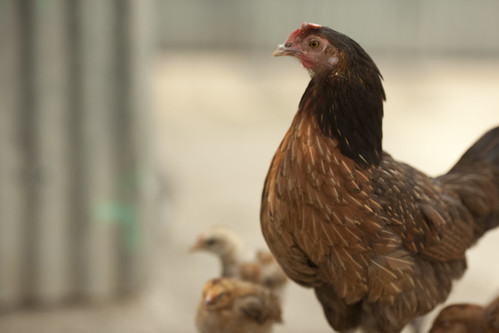
Hen and her chicks
Amid fears of resurgence of avian influenza in parts of Asia, researchers at the International Food Policy Research Institute and the International Livestock Research Institute are helping governments in developing countries to make informed decisions on how to control the spread of the disease and minimize its economic impact on the poor. (Photo: IFPRI)


The H5N1 form of avian influenza that has recently swept through Asia and into parts of Europe and Africa poses an extraordinary challenge for the international community.

And now the United Nations has warned of an imminent resurgence of avian influenza in parts of Asia, following the detection of a mutant strain of avian influenza in China and Vietnam. The UN Food and Agriculture Organization (FAO) has urged "heightened readiness and surveillance against a possible major resurgence of the H5N1 highly pathogenic avian influenza".

While a strong global response is necessary to control the spread of this disease, efforts in developing countries have shown that conventional approaches to disease control and prevention may not always work in the case of avian influenza.

There is considerable uncertainty throughout the developing world about the disease’s spread mechanisms, as well as the timing, extent, and severity of potential outbreaks.

This gap in knowledge, however, does not change the fact that developing countries are faced with critical decisions about how to defend against and recover from a potential outbreak of avian influenza.

Researchers at the International Food Policy Research Institute (IFPRI) and the Market Opportunities theme of the International Livestock Research Institute (ILRI) are spearheading a new research program to study the patterns and determinants of the spread of highly pathogenic avian influenza (HPAI), the economic impacts of an HPAI outbreak on different populations, and cost-effective HPAI control and prevention strategies.

The goal of the project, which is funded by the UK Department for International Development (DFID),  is to help governments in developing countries make more informed decisions about how to control the spread of HPAI and how to minimize the impact on different populations, particularly the poor, of both the disease and the measures taken to control an outbreak so as to ensure optimal compliance.

The project is implemented in Ethiopia,Ghana, Indonesia, Kenya and Nigeria.

For more information and to download the project publications, please visit the project web page.

Tuesday, August 30, 2011

Fighting famine in the Horn of Africa: What role for research on livestock market access?

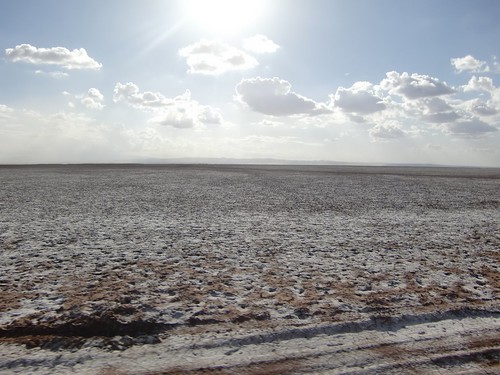
Arid lands
Arid lands in the drought-stricken Horn of Africa: What role can agricultural research play in finding lasting solutions to the problem of drought and famine in the region? (Photo: ILRI)


The current drought in the Horn of Africa is the worst ever in 60 years and some 13 million people have been affected by the attendant food shortage.

Amid several calls for governments and policymakers to come up with long-term interventions to this recurring problem, a team of experts within the Consultative Group on International Agricultural Research (CGIAR) will meet at the Nairobi headquarters of the International Livestock Research Institute (ILRI) on Thursday 1 September 2011 with a few selected development partners to discuss how agricultural research by the CGIAR can provide long-term solutions towards mitigating the effects of drought  and  improving and sustaining agricultural livelihoods in the drylands.

The topics to be addressed include:

  • Promising options and innovations to help farmers become more resilient and food-secure in the face of weather and other shocks;
  • The role of infrastructure and access to viable, functioning livestock markets in food security and prices;
  • Whether drought-tolerant crops and large-scale irrigation are the answer;
  • Whether pastoralism is a driver of drought-induced food insecurity or a buffer against it; and
  • Policies that are needed, and at what levels, to ensure that recommendations and innovations for drought-prone areas are put in place in those areas that need them most.

Among the panelists are Lloyd Le Page, Chief Executive Officer of the CGIAR Consortium; Mark Gordon, Co-Chair of the UN Somalia Food Cluster, World Food Programme; and Namanga Ngongi, President of the Alliance for a Green Revolution in Africa (AGRA).

The briefing is open to the press and the public and will be held from 1030hours to 1200hours. Please visit the CGIAR website for details and to RSVP.

For more information on this topic, and for the live video and chat link during the briefing, please visit the Horn of Africa page on the CGIAR website.

You may also follow @CGIAR on Twitter (hash tag #Ag4HoA).

ILRI project offers viable solutions to rising pork prices in Vietnam

Smallholder pig production in northern Viet Nam
Farmer Ma Thi Puong feeds her pigs on her farm near the northern town of Meo Vac, Vietnam: Policies that address supply constraints faced by both small and large pig farmers in Vietnam can help in long-term solutions to the rising prices of pork and live pigs. (Photo credit: ILRI/Mann).

Rising consumer demand for pork, high cost of animal feed and ineffcient value chains have led to skyrocketing prices of pork and live pigs in Vietnam. Within the first half of 2011 alone, the cost of pork and live pigs doubled in the principal urban markets of Hanoi and Ho Chi Minh City.

As policymakers seek long-term solutions towards boosting domestic supply of pork to meet the sustained consumer demand, research findings by scientists from the Market Opportunities theme of the International Livestock Research Institute (ILRI) can help in pointing the way to viable solutions to the current food price crisis.

Findings from a three-year (2007-2010) Australian Centre for International Agricultural Research (ACIAR)-funded ILRI-led collaborative project, Improving competitiveness of smallholder pig producers in an adjusting Vietnam market, suggest that both small-scale and large-scale pig producers should be targeted in a strategy for expanding domestic pork supply in Vietnam, considering that prices are likely to remain high in the long run on account of pork being a key ingredient in the Vietnamese diet.

These and other findings are highlighted in an article by Nguyen Do Anh Tuan of Vietnam's Centre for Agricultural Policy and Lucy Lapar of ILRI published in the 22-28 August 2011 issue of Vietnam Investment Review, Vietnam's leading weekly international business newspaper.

Previous interventions by the Vietnam government have tended to ignore small-scale farmers, focusing instead on developing large-scale farms to address supply constraints such as rising feed prices, losses from diseases and inefficiencies in pork value chain.

However, research findings based on a pig sector model for Vietnam suggest that large-scale pig farms will make a minimal contribution to supply in both the short- and long- term. Indeed, the majority small-scale farms were found to be better able to adapt to volatile prices in feed markets, hence creating efficiencies in these systems.

Therefore, focusing on large-scale farms and ignoring the majority of small-scale farms and their constraints will not result in long-term efficiency gains, the study concluded.

"The focus should be on addressing causes of constraints to productivity growth, such as disease outbreaks, rising feed prices, efficient system for replacement of breeding stocks and improving pork value chain performance," the article's authors suggest.

"Policies that will provide incentives to generate new technological breakthroughs and appropriate institutions to support these would likely to be more effective options," the authors add.

The project collaborators were the Centre for Agricultural Policy - Institute of Policy and Strategy for Agricultural and Rural Development (CAP-IPSARD), the International Food Policy Research Institute (IFPRI), Oxfam Hong Kong and the University of Queensland.

Read the complete article from the Vietnam Investment Review

For more information, please contact Dr Lucy Lapar of ILRI (l.lapar @ cgiar.org), visit the project website or read the project publications.

You may also be interested in these past blog posts on Livestock Markets Digest

Friday, August 12, 2011

Goat value chain actors in India and Mozambique hold innovation platform meetings


Small-scale goat production and marketing are important sources of livelihood for poor livestock keepers in the arid and semi-arid regions of India and Mozambique.

The Market Opportunities theme of the International Livestock Research Institute (ILRI) is leading a project in collaboration with BAIF Development Research Foundation in India and CARE International, Mozambique towards increasing incomes and food security in a sustainable manner by enhancing pro-poor small ruminant value chains in India and Mozambique.

The project Small ruminant value chains as platforms for reducing poverty and increasing food security in India and Mozambique (imGoats in short), which is funded by the International Fund for Agricultural Development (IFAD), got underway in February 2011.

It uses an innovation systems approach aimed at transforming informal subsistence-level goat production to a viable, profitable model while preserving community and national resource systems. In addition to goat keepers, project beneficiaries include small-scale traders and providers of inputs and animal health services.

Project partners in India and Mozambique recently facilitated inaugural innovation platform meetings in Inhassoro, Mozambique (May 2011) and Jhadol, Udaipur, India (July 2011). Innovation platforms offer an opportunity for the different actors in the goat value chain to gather and exchange knowledge and share experiences towards improving goat production and marketing processes for the benefit of all.

During the innovation platform meetings, participants shared the challenges and constraints they face during goat production/marketing and discussed possible solutions and priority areas for action towards addressing the constraints.

For more details about the imGoats project and to read the meeting reports, please visit http://imgoats.org or contact Dr Ranjitha Puskur of ILRI (r.puskur @ cgiar.org).

Thursday, July 28, 2011

New book features case studies on Kenya’s liberalized dairy sector

Improved functioning of Kenya’s dairy marketing systems in the period following the liberalization of the sector in 1992 is a critical factor affecting the improvement of dairy production systems, two new studies report.

The studies feature in a newly published book by Springer (April 2011) titled Emerging Development of Agriculture in East Africa.

Agricultural economists from the Market Opportunities Theme of the International Livestock Research Institute (ILRI), Dr Isabelle Baltenweck and Dr Steve Staal, are chapter co-authors.

Dr Staal is the director of ILRI’s Market Opportunities theme which carries out research aimed at providing appropriate technical, policy and institutional options that will enable the poor, especially women and other marginalized groups, to participate more effectively in remunerative livestock markets.

The chapter, Emerging markets in the post-liberalization period: Evidence from the raw milk market in rural Kenya by Kijima, Yamano and Baltenweck examines the development of raw milk markets in western and central Kenya while the chapter, Dynamic changes in the uptake of dairy technologies in the Kenya Highlands by Baltenweck, Yamano and Staal investigates the dynamics of dairy production in the post-liberalization period.


Citations
Baltenweck I, Yamano T and Staal SJ. 2011. Dynamic changes in the uptake of dairy technologies in the Kenya Highlands.  In: Yamano T, Otsuka K and Place F (eds), Emerging development of agriculture in East Africa. Springer, Netherlands. pp. 85-97.

Kijima Y, Yamano T and Baltenweck I. 2011. Emerging markets in the post-liberalization period: Evidence from the raw milk market in Kenya. In: Yamano T, Otsuka K and Place F (eds), Emerging development of agriculture in East Africa. Springer, Netherlands. pp. 73-84.

Wednesday, July 27, 2011

Ecohealth approaches can improve food safety management in Vietnam

Pork seller at a market in Vietnam: One Health and Ecohealth approaches can improve the management of food safety and zoonotic diseases in Vietnam. (Photo credit: ILRI).

Food safety is a major concern for the government of Vietnam. According to the World Health Organization Representative Office in Vietnam, the human costs of food-borne diseases, lost production from diseases and related market losses surpass USD 1 billion per year, an amount equivalent to 2% of Vietnam's Gross Domestic Product.

The topic of food safety management in Vietnam featured at the Second Food Safety and Zoonoses Symposium for Asia Pacific that was held in Chiang Mai, Thailand on 21-22 July 2011.

A presentation by Dr Hung Nguyen-Viet of the Hanoi School of Public Health, Vietnam and researchers from the International Livestock Research Institute (ILRI) considered the challenges, costs and benefits of One Health and Ecohealth approaches to food safety in Vietnam.

Ecohealth and One Health approaches assume that human, livestock, wildlife and environmental health are integrally related.

The presentation also highlighted a number of food safety research projects by ILRI in Vietnam, including the project on ecosystem approaches to the better management of zoonotic emerging infectious diseases in Southeast Asia which is coordinated Dr Jeffrey Gilbert, a veterinary epidemiologist with ILRI’s research team on animal health, food safety and zoonoses.


Citation
Nguyen-Viet H, Grace D, Lapar ML, Unger F, McDermott J and Gilbert J. 2011. Linking research and management of food safety within One Health/Ecohealth context in Vietnam: Concepts and applications. Presentation at the 2nd Food Safety and Zoonoses Symposium for Asia Pacific, Chiang Mai, Thailand, 21-22 July 2011.

Friday, July 15, 2011

Participatory risk analysis: A promising approach to improving food safety in sub-Saharan Africa

Pork and beef sellers in Xipamanine Market, Maputo, Mozambique. Participatory risk analysis offers a new approach to managing the safety of informally produced and marketed food in sub-Saharan Africa. (Photo credit: ILRI/Mann)

Most food in sub-Saharan Africa is produced and sold in the informal sector which is an important source of income, employment and livelihood for millions of poor food producers and sellers.

However, several studies have shown that informally marketed food contains high levels of microbial hazards that pose a threat to public health.

In order to appropriately tackle this problem, approaches are needed that focus on the risk to human health and how best this risk can be assessed and managed rather than focusing solely on the presence of hazards.

For example, the common practice of boiling of milk before drinking it kills disease-causing microorganisms, thereby significantly reducing the public health risks posed by the presence of milk-borne pathogens.

Risk analysis, therefore, presents a new approach to managing food safety and the use of participatory methodologies can improve stakeholder engagement and compliance.

Although risk analysis is now widely applied in much of the developed world and forms the basis of food safety guidelines for domestic and international trade, its use in developing countries has been limited.

This is largely because risk-based approaches to food safety have not been appropriately adapted to suit the prevailing situation in developing countries where informal markets dominate and exist alongside formal markets, and capacity to enforce compliance is low.

The collaborative Safe Food, Fair Food project is currently working to improve the management of the safety of livestock food products by adapting risk-based approaches to suit domestic informal livestock markets in developing countries in sub-Saharan Africa.

The project is led by the Market Opportunities theme of the International Livestock Research Institute (ILRI) and funded by the Federal Ministry for Economic Cooperation and Development (BMZ).

The project involves several partners from eight countries in east, west and south Africa, namely, Côte d’Ivoire, Ethiopia, Ghana, Kenya, Mali, Mozambique, the Republic of South Africa and Tanzania and covers 19 participatory risk analysis topics.

Preliminary results from the proof of concept studies support the hypothesis that risk-based approaches may be useful in improving food safety in informal markets in developing countries.

The application of participatory risk analysis towards improved food safety in sub-Saharan Africa is discussed in a review paper published in the journal, Revue Africaine de Santé et de Productions Animales. The lead author of the paper, Dr Delia Grace, heads ILRI's research team on animal health, food safety and zoonoses.

Click here to read the abstract and access the review paper

For more information, visit the Safe Food, Fair Food project web page


Citation
Grace D, Makita K, Kang'ethe EK and Bonfoh B. 2010. Safe food, fair food: Participatory risk analysis for improving the safety of informally produced and marketed food in sub-Saharan Africa. Revue Africaine de Santé et de Productions Animales 8(S): 3-11.