News and updates on research on livestock value chains by the International Livestock Research Institute and partners

Showing posts with label Africa. Show all posts

Tuesday, July 01, 2014

Call for contributions: Seminar on African dairy value chains

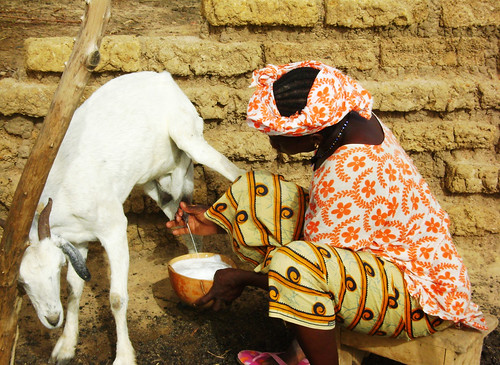
A woman milks one of her goats in Ségou District, Mali
A woman milks one of her goats in Ségou District, Mali (photo credit: ILRI/Valentin Bognan Koné). 

The International Livestock Research Institute (ILRI) and CTA are calling for contributions for a seminar on African dairy value chains to be held in Nairobi, Kenya on 21–24 September 2014.

The objective of the seminar, organized in the context of the AgriFood chain toolkit of the CGIAR Research Program on Policies, Institutions and Markets and the CTA value chain program, is to enable dairy value chain practitioners (farmers’ representatives, private sector firms, non-governmental organizations, development agencies and government officials) and researchers to share lessons on conducive policies and capacity development and analytical tools for the analysis of dairy value chain development.

The organizers are particularly interested in policy-relevant experiences and tools that facilitate a gender-equitable participation of actors in the dairy value chain.

Access more details on the call for contributions

Peer-review and acceptance of relevant contributions will be done on a first-relevant-come, first-served basis. Don't wait until the last minute!

Vous ne comprenez pas bien l’anglais ? Lisez cette note en français ici.

Sunday, March 09, 2014

Parallel insights from the Himalayas and the Tanzanian coast, on agricultural-research-for-development field work

Jo Cadilhon, senior agro-economist with the Policy, Trade and Value Chains program of the International Livestock Research Institute (ILRI), recently travelled to India and Tanzania to visit two ILRI graduate fellows he is supervising. In this blog post, he gives us an insight into their experiences and the different challenges they faced while carrying out their field surveys.

I have travelled recently to visit two new ILRI Graduate fellows I am supervising. They have spent two months in the field with the International Fund for Agricultural Development (IFAD)-funded MilkIT project, which is enhancing dairy-based livelihoods in India and Tanzania through feed innovation and value chain development approaches. This research is linked to the CGIAR Research Programs on Livestock and Fish and Humidtropics. Our aim is to gather data that will help us validate a model useful for the impact assessment of innovation platforms. Despite the two very different field settings they were immersed in, both graduate fellows have been able to share relevant lessons with each other and the project hosting them.

Pham Ngoc Diep is a Vietnamese MSc candidate in Agricultural and Food Economics at the University of Bonn in Germany. Diep is passionate about working for farmers. She already had agricultural development experience in Vietnam and Thailand before joining ILRI but her motivation to take an MSc course and this fellowship was to learn about research methods and tools that she could use in relevant ways for her agricultural development work. She has been diligently going through the traditional steps of a research protocol: two months of literature review and developing questionnaires, two months of field surveys in Tanga Region of Tanzania and she is now inputting her data before analysis and interpretation to write up scientific publications.

Coming from an urban background, Diep liked having had to stay for an extended period with farming communities to collect her data. This experience will help her work better with farmers in future because she has witnessed and appreciated their daily schedule, how they communicated, how they saw, understood and interpreted things. Diep hopes to use this new skill in future when working with farmers in other countries. Diep was particularly challenged by the need to work with interpreters because she could not speak the local language. Having used local extension officers as interpreters, Diep had to think all the time about the possible bias they were introducing into the questions and answers exchanged with the dairy producers with whom they also interacted as part of their regular professional activities. Although the breezy seaside guesthouse she stayed in in the coastal city of Tanga was very pleasant, Diep suffered from the arid heat when working in districts further inland.

The other student working in parallel did not have problems of language or overheating. Shanker Subedi is currently studying agricultural economics at the University of Hohenheim in Germany. He is Nepalese with some previous rural development experience in his country and some knowledge of Hindi. So Shanker felt completely at home during his field work interviewing smallholder dairy producers in Himalayan villages of Uttarakhand State in Northern India. He got along very well with the villagers in whose home he would stay and whose food he would share, for a small fee.

For Shanker, this experience in the field was an opportunity to put agricultural research for development into practice. He felt his social status had been raised while there by the fact that he could share relevant prior agricultural development experience he had from Nepal with the project partners: the viewpoint of an experienced youth was valuable. However, Shanker was more affected by the remote location of his fieldwork setting. The 3G key he had bought – and which was supposed to work where he went, according to the telecoms shop seller – turned out not to pick up any signal so his computer did not have internet access when staying in the villages; he had to rely on his smartphone to stay connected.

Shanker reported suffering from the bitter cold during the Himalayan winter while in the field: he could not work in the evenings because his hands would go numb from typing in the freezing air. The cold nights also made it difficult for him to sleep restfully at night. And then his laptop broke down and he had to travel for two days to the nearest city to get it fixed and lost some of his files in the process.

Both Diep and Shanker are now back in sunny and cool Nairobi. They are now working hard on their data analysis and write-up for their MSc thesis or fellowship report, which are due beginning of April.

Originally posted on Jo Cadilhon's YPARD blog

Monday, October 01, 2012

Farmer trainers in western Kenya are key in disseminating farm technologies, new study shows

Fodder harvesting
Harvesting fodder on a dairy farm in Kenya. A new study in western Kenya shows that farmer trainers are effective agents in disseminating farm technologies (photo credit: East Africa Dairy Development Project).
Volunteer farmer trainers in western Kenya play important roles in promoting the adoption of agricultural technologies, a new study reports.

In addition, the use of farmer trainers in agricultural extension is a cost-effective method of disseminating technologies to farmers because it is sustainable beyond the lifetime of development projects.

These are among several findings of a study carried out to assess the effectiveness of farmer trainers in disseminating agricultural technologies in western Kenya.

The findings are published in an article in the October 2012 issue of the Journal of Agricultural Education and Extension.

The principal author of the article Ben Lukuyu is a feed scientist at the International Livestock Research Institute (ILRI). The co-authors of the study, which was funded by the East Africa Dairy Development Project, are from the World Agroforestry Centre and the Kenya Forestry Research Institute.

The farmer trainer method of agricultural extension involves farmers sharing their knowledge and experience with other farmers as well as conducting experiments.

Through this participatory approach, a large number of farmers in communities can be reached at low cost through multiplier effects whereby farmers act as the main agents of change and technology adoption in their communities.

The study found that farmer trainers commonly used methods such as farm visits, community gatherings and field days to disseminate information on soil fertility practices, use of crop residues, food crops, vegetables and livestock technologies.

Farmer trainers also played important roles such as mobilizing and training their fellow farmers, hosting demonstration plots and bulking and distributing planting materials.

“The results from the study will be useful to development programs keen on using low-cost, community-based dissemination approaches,” the authors of the paper conclude.

The authors further recommend that the farmer trainer approach be promoted by extension service providers such as governments, non-governmental organizations and the private sector.

However, a cautionary note is sounded that the guidance provided for farmer trainer programs is suited to the conditions existing in western Kenya where the study was carried out and should therefore not be considered as best practices for uptake under general conditions.

Read the abstract of the article

Citation
Lukuyu B, Place F, Franzel S and Kiptot E. 2012. Disseminating improved practices: Are volunteer farmer trainers effective? Journal of Agricultural Education and Extension 18(5): 525-540.

Friday, August 24, 2012

ILRI research on food safety in informal markets featured in special supplement of Tropical Animal Health and Production

Testing milk in Kenya's informal market
Testing milk in Kenya's informal milk market. New research studies have evaluated zoonotic health risks associated with urban dairy farming systems in Nairobi, Kenya (photo credit: ILRI/Dave Elsworth).


The August 2012 issue of the journal Tropical Animal Health and Production includes a special supplement on assessing and managing urban zoonoses and foodborne disease in Nairobi and Ibadan.

Featured in the special supplement are 10 research articles by scientists from the International Livestock Research Institute (ILRI) and partners from the Kenya Agricultural Research Institute (KARI), the Kenya Ministry of Agriculture, the Federal University of Agriculture, Abeokuta, the University of Ibadan and the University of Nairobi.

Click on the links below to read the abstracts of the articles (journal subscription required for access to full text)

For more information on ILRI’s research on animal health, food safety and zoonoses, please contact Delia Grace (d.grace @ cgiar.org)

Friday, June 22, 2012

New blog features research on food safety in informal markets in Africa

Testing milk in Kenya's informal market
Testing milk in Kenya's informal market (photo credit: ILRI/Dave Elsworth).

Interested in food safety in informal markets in sub-Saharan Africa? Then check out the new blog of the Safe Food, Fair Food project, a research initiative that is using risk-based approaches to improve food safety and market access in informal markets for animal-source foods in sub-Saharan Africa. 

This BMZ/GIZ-funded project is led by the International Livestock Research Institute (ILRI) and is collaboratively undertaken with several local, regional and international partners

The first phase of the project (2008-11) built core capacity in risk-based methods through training and practical application in 24 proof-of-concept studies in eight countries in sub-Saharan Africa. 

The recently launched second phase of the project (2012-15) will consolidate and expand on the achievements of the first phase by addressing selected high-potential value chains, and targeting regional policy and education.

The three main components of the second phase of the project are:

  • Rapid assessment of food safety risks in four selected value chains using the tools validated in the first phase.
  • Action research on priority food safety issues in these value chains to pilot and test best-bet interventions.
  • Engagement with regional economic communities, the private sector and veterinary universities for a more enabling environment.
For more information, please contact the project coordinator Kristina Roesel (k.roesel @ cgiar.org).

Monday, May 28, 2012

New research consortium to provide knowledge for effective One Health approaches to disease control in Africa

Orma Boran cattle crossing a river in Kenya
Orma Boran cattle crossing a river in Kenya. The new Dynamic Drivers of Disease Consortium will integrate understanding of zoonoses, ecosystems and wellbeing (photo credit: ILRI/Dolan).
Dynamic Drivers of Disease in Africa is a new Ecosystem Services for Poverty Alleviation (ESPA)-funded research program that seeks to integrate our understanding of zoonoses, ecosystems and wellbeing.  The 3.5 year program runs until July 2015 and focuses on four emerging or re-emerging zoonotic diseases in four diverse African ecosystems:
  • Henipavirus infection in Ghana
  • Rift Valley fever in Kenya
  • Lassa fever in Sierra Leone
  • Trypanosomiasis in Zambia and Zimbabwe
Its innovative, holistic approach brings together natural and social scientists to build an evidence base designed to inform global and national policy players seeking effective, integrated approaches to control and check disease outbreaks.

The Drivers of Disease Consortium comprises over 30 researchers working in 17 institutes across Africa, Europe and the US and includes researchers in the environmental, biological, social, political, and human and animal health sciences. They will generate new knowledge on:
  • Ecosystem change
  • How ecology and people’s interactions with ecosystems affect disease emergence
  • Disease transmission and exposure
The partner institutes are:
  • ESRC STEPS Centre, Brighton, UK
  • University of Cambridge, UK
  • Institute of Zoology, London
  • University of Edinburgh
  • University College, London
  • Wildlife Division of the Forestry Commission, University of Ghana
  • International Livestock Research Institute (ILRI), Kenya
  • Kenya Medical Research Institute (KEMRI)
  • University of Nairobi
  • Kenema Government Hospital, Sierra Leone
  • Njala University, Sierra Leone
  • Ministry of Livestock and Fisheries Development, Zambia
  • University of Zambia
  • Ministry of Agriculture, Mechanisation and Irrigation Development, Zimbabwe
  • University of Zimbabwe
  • Stockholm Resilience Centre
  • Tulane University, USA
The programme is funded by a £3.2m grant from the Ecosystem Services for Poverty Alleviation (ESPA) programme of the Natural Environment Research Council (NERC), the Economic and Social Research Council (ESRC) and the UK Department for International Development (DFID).

Friday, May 18, 2012

New report identifies priority areas for investment to improve livestock data in Africa

Sheep being watered at a waterhole in Niger
Livestock at a watering hole in Niger. A new report identifies priority areas for government investment towards improving the quality of livestock data in Africa (photo credit: ILRI). 

The Livestock Data Innovation in Africa project has published a new report (May 2012)  that  reviews the results of a global online survey that was carried out to identify priority areas for investments to improve the quality of livestock data. 

The survey was carried out between January and February 2012 among 641 livestock stakeholders including researchers, donors, government officials from livestock ministries or departments, and officials from non-governmental organizations and private companies. 

The objectives of the survey were to: 
  • rank the main areas in the livestock value chain where livestock-related data and information are needed;
  • review stakeholders' perceptions of the quality of available livestock data and indicators; and
  • identify priority areas along the livestock value chain where investments are needed to improve the quality and quantity of livestock data and indicators.

The findings of the report, Core livestock data and indicators: results of a stakeholder survey, will provide governments with information on the critical gaps in livestock data. 

In addition, the results will feed into the process of developing a minimum  set of livestock core data that governments should collect, as mandated by the global strategy to improve agriculture and rural statistics.

The Livestock Data Innovation Project is sponsored by the Bill & Melinda Gates Foundation and jointly implemented by the World Bank, the Food and Agriculture Organization of the United Nations (FAO) and the International Livestock Research Institute (ILRI), in collaboration with the African Union Interafrican Bureau for Animal Resources (AU-IBAR).

Monday, April 16, 2012

Second phase of the ILRI-led Safe Food, Fair Food project gets underway


On 12–13 April 2012, the Nairobi campus of the International Livestock Research Institute (ILRI) hosted an inception meeting for the BMZ/GIZ-funded, ILRI-led Safe Food, Fair Food project to develop action plans for the second 3-year phase of the project to build on previous work from 2008-11.

Present at the inception meeting were project partners from Côte d’Ivoire (Centre Suisse de Recherches Scientifiques), Ethiopia (Addis Ababa University), Germany (Federal Institute for Risk Assessment [BfR] and Freie Universität Berlin), Ghana (University of Ghana), Japan (Rakuno Gakuen University), Kenya (University of Nairobi), Mozambique (Direcção de Ciências Animais), Tanzania (Sokoine University of Agriculture) and Uganda (Makerere University).

During the first phase of the project, a number of studies on participatory risk analysis were carried out in eastern, southern and West Africa. The project also held national workshops to engage policymakers to raise awareness about the potential food safety hazards that exist along the entire value chain.

Findings from the project also featured prominently at the first International Congress on Pathogens at the Human-Animal Interface (ICOPHAI) held in September 2011 in Addis Ababa, Ethiopia where some 25 oral and poster presentations were made by researchers and MSc and PhD students attached to the project.

Also in September 2011, the project held its final synthesis workshop to deliberate on the results of national impact assessment studies and develop a project synthesis book which will facilitate dissemination of the research findings to wider audiences.

The project now moves into its second phase which will adopt an action research approach for stakeholder engagement at the regional level towards uptake of tools and approaches to enhance food safety in informal markets in Africa.

For more information, visit the project web page or view the project publications.

Wednesday, March 21, 2012

Informal channels are key sources of livestock information for Kenya’s rural farmers

Maasai father and son tend to their cattle in Kenya
Maasai father and son tend to their cattle in Kenya. Informal channels are important sources of livestock information but there are gender disparities in access to information among male-headed rural households in Kenya (photo credit: ILRI/Mann).

Informal channels such as farmer to farmer interactions are more important sources of information on livestock production and marketing for rural farmers in Kenya than co-operative groups, government extension services and radio, a new study has found.

However, this farmer to farmer exchange is more popular among women farmers than among their male counterparts.

The study, published in the February 2012 edition of Livestock Research for Rural Development, assessed how women’s access to livestock information and financial services compares to that of men among male-headed rural households in four districts in Kenya: Kajiado, Kiambu, Meru and Tharaka.

The study also revealed gender disparities with respect to training of farmers in livestock production and marketing.

Men in male-headed households received more training on a greater variety of technical topics such as livestock breeding, health and marketing, whereas women mostly received training on general aspects of livestock management.

Trainings were mostly held within the village but outside the home.

“Increasing access to training by women will require holding training in venues that do not constrain women,” the authors suggest.

Gendered disparities were also observed in access to financial services.

Although both men and women relied on groups as their main source of credit, more men than women obtained credit from formal financial service providers such as banks, microfinance institutions and co-operative societies.

On the other hand, more women than men obtained credit from neighbours and friends.

For this reason, the authors recommend that “provision of credit facilities should be flexible and have consideration for women’s constrained access to collateral”.

Access the article

Citation
Mburu S, Njuki J and Kariuki J. 2012. Intra-household access to livestock information and financial services in Kenya. Livestock Research for Rural Development. Volume 24, Article #38. http://www.lrrd.org/lrrd24/2/mbur24038.htm

Thursday, March 01, 2012

AGRA and ILRI publish proceedings of international conference on priority actions for market development for African farmers

Mozambique
A Mozambican farmer takes her maize harvest to market. Development of agricultural markets in sub-Saharan Africa can boost economic growth and improve livelihoods (photo credit: ILRI/Mann). 

The Alliance for a Green Revolution in Africa (AGRA) and the International Livestock Research Institute (ILRI) have released the proceedings of an international conference held in Nairobi, Kenya in May 2009 to examine the role of agricultural markets in spurring economic growth in sub-Saharan Africa and improving livelihoods.

The AGRA-ILRI conference brought together 150 of the world’s leading market experts to document the practices, policies and investments that can drive agricultural market development in sub-Saharan Africa; reveal the gaps and shortcomings that continue to create barriers; and identify priority actions that should be taken by governments, the private sector, donors and other stakeholders.

The issues discussed at the conference are especially timely in light of recent surges in food prices and the significant burden this is inflicting on millions of poor people, underscoring the urgent need for action.

The proceedings include two papers lead-authored by researchers from ILRI's Markets, Gender and Livelihoods theme.

The paper, Integrating informal actors into the formal dairy industry in Kenya through training and certification by Amos Omore and Derek Baker reviews current thinking on the role of informal agribusiness in pro-poor development, and reports on the example the Smallholder Dairy Project in Kenya.

The project featured collaborative and participatory research, along with training and certification in hygienic milk handling practices as a practical mechanism for optimizing milk quality and addressing regulatory barriers.

It also targeted and helped achieve policy change, which enabled wider piloting of the training and certification activities incorporating a business development service approach by national authorities.

In their paper, The impact of non-tariff barriers on maize and beef trade in East Africa author Joseph Karugia and others report on the use a spatial equilibrium model to quantify the impact of non-tariff barriers – such as licences, taxes and customs duties – on the intra-country flow of trade in maize and beef in Kenya, Tanzania and Uganda.

The study found that reducing or completely removing the existing non-tariff barriers would result in increased intra-regional trade flows, with Kenya importing more maize from both Uganda and Tanzania, while Uganda’s beef exports to Kenya and Tanzania would increase. The overall result would be positive net welfare gains for the maize and beef sub-sectors across the entire East African Community.

Download the full book or individual sections
  • Synthesis of outcomes
  • Section 1: Developing pro-poor markets for African smallholder farmers
  • Section 2: Seed and fertilizer markets
  • Section 3: Strengthening finance, insurance and market information
  • Section 4: High-value commodities and agroprocessing
  • Section 5: Building market institutions
  • Section 6: Encouraging regional trade
For more information
Contact Anne Mbaabu of AGRA (AMbaabu @ agra-alliance.org) or Steve Staal of ILRI (s.staal @ cgiar.org) or visit the conference website.

Citation
ILRI (International Livestock Research Institute). 2011. Towards priority actions for market development for African farmers: Proceedings of an international conference. 13-15 May 2009, Nairobi, Kenya. AGRA (Alliance for a Green Revolution in Africa) and ILRI (International Livestock Research Institute), Nairobi, Kenya.

Wednesday, January 18, 2012

ILRI project offers solutions for improving smallholder pig production in western Kenya

A smallholder pig farmer in western Kenya: Findings from an ILRI-led study  will help to improve feeding practices and  sow productivity on smallholder pig farms in western Kenya (photo credit: ILRI).

Small-scale pig farming in western Kenya is an important source of family income. Pigs kept are of local breeds that are either tethered or left free to scavenge for food. However, one of the main challenges that pig farmers in western Kenya face is inadequate feed supply.

From 2007 to 2009, a collaborative project led by the International Livestock Research Institute (ILRI) carried out research towards improving pig production and health in smallholder farms in western Kenya.

The project has recently published two journal articles, one featuring a descriptive study of smallholder pig feeding practices (Tropical Animal Health and Production, January 2012) and the other highlighting the results of a baseline study on the productivity of local sows (African Journal of Agricultural Research, December 2011).

The findings of the descriptive study of 164 pig farms in Busia District revealed the need for more research on the nutrient composition of the identified local feeds. Additionally, there is need to develop and validate simple combinations of local feeds to formulate balanced feed rations that smallholder farmers can afford.

The baseline study, which was carried out in Busia and Kakamega Districts, assessed the reproductive performance of local sows, investigated the challenges faced by the farmers, and explored opportunities for improving small-scale production of breeding pigs. The baseline data will be useful in identifying key intervention areas and exploring opportunities for improvement in the sector.

The project was undertaken in partnership with the University of Guelph, the University of Nairobi, and the Swiss Tropical and Public Health Institute.

Other outputs from the project have been featured in two earlier posts on this blog:


Citations
Mutua FK, Dewey C, Arimi S, Ogara W, Levy M and Schelling E. 2012. A description of local pig feeding systems in village smallholder farms of Western Kenya. Tropical Animal Health and Production, Online First 5 January 2012, doi 10.1007/s11250-011-0052-6

Mutua FK, Dewey CE, Arimi SM, Schelling E, Ogara WO and Levy M. 2011. Reproductive performance of sows in rural communities of Busia and Kakamega Districts, Western Kenya. African Journal of Agricultural Research 6(31): 6485-6491.

Monday, January 16, 2012

New project adopts innovation and value chain approaches to enhance livestock feeds in India and Tanzania

Fodder market in India
Fodder market in India: Research by ILRI and CIAT aims to enhance  dairy-based livelihoods in India and Tanzania through feed innovations and value chain approaches (photo credit: ILRI/Mann).

Lack of access to adequate high-quality livestock feed is a key constraint towards improved milk yields and hence dairy income for smallholder dairy producers.

As part of efforts towards addressing the problem of feed scarcity, two CGIAR centres, the International Livestock Research Institute (ILRI) and the International Center for Tropical Agriculture (CIAT), have embarked on a research initiative that will use novel systems-based approaches to enhance feeds and feeding in smallholder dairy production systems in India and Tanzania.

By adopting a value chain perspective and using innovation system principles, the project places feed in a broader context and acknowledges that enhancing feed supply involves more than just introducing or promoting feed technologies at farm level but also includes other dimensions such as animal health, livestock breeding and knowledge sharing.

The objectives of the project Enhancing dairy-based livelihoods in India and Tanzania through feed innovation and value chain development approaches (MilkIT) are three-fold:

  • Institutional strengthening: To strengthen use of value chain and innovation approaches among dairy stakeholders to improve feeding strategies for dairy cows
  • Productivity enhancement: To develop options for improved feeding strategies leading to yield enhancement with potential income benefits
  • Knowledge sharing: To strengthen knowledge sharing mechanisms on feed development strategies at local, regional and international levels

The three-year project is embedded in the CGIAR Research Program on Livestock and Fish. It will be coordinated by ILRI with CIAT acting as a major partner. Dr Bernard Lukuyu and Dr Amos Omore from ILRI's Markets, Gender and Livelihoods theme will make key contributions in the areas of livestock feeds and technical/institutional options for improving market access, respectively.

Already, some preliminary activities have taken place. In the latter half of 2011, a number of scoping visits were made to the two study countries to identify project sites and partners. A pre-inception planning meeting is scheduled for 24-25 January 2012 in Nairobi to officially launch the project activities. You can read about the scoping visits in this post on the ILRI Fodder Adoption blog.

For more information about this project, please contact Dr Alan Duncan (a.duncan @ cgiar.org)

Download the project brochure

Thursday, December 15, 2011

Tool improves understanding of dynamics of regional trade in agricultural inputs

Mozambique
Mozambican women threshing sorghum. A new tool for tracking trade in agricultural inputs in eastern and southern Africa will lead to better understanding of trade dynamics in the region (photo credit: ILRI/Mann).

Agricultural policymakers and other practitioners in eastern and southern Africa will be able to better understand the dynamics of intra-regional trade in seeds, pesticides and herbicides through a new tool that has been developed to track the volume and value of trade in agricultural inputs in the region.

The tool was developed by the Regional Strategic Analysis and Knowledge Support System (ReSAKSS) for Eastern and Central Africa – which is hosted by the Market Opportunities theme of the International Livestock Research Institute (ILRI) – in collaboration with the United States Agency for International Development (USAID) and several national and regional partners. It was presented at a workshop held in Nairobi, Kenya on 16 November 2011.

"There is optimism that continued interaction with the parties involved will help us to further understand the elements of trade and agricultural inputs in the region to continue to improve agricultural productivity and production, and sustainable food security," the workshop organizers said.

Read more on the ReSAKSS blog.

Friday, December 09, 2011

Traditional fermentation holds the key to microbial safety of milk in Ethiopia, ILRI study finds

Dairy farming in Ethiopia
An Ethiopian smallholder dairy farmer with the day's milk.  An ILRI study reports that traditional fermentation of milk in Ethiopia can significantly reduce the risk of staphylococcal food poisoning (photo credit: ILRI).

The safety of milk and dairy products in Ethiopia can be significantly improved through participatory risk assessment approaches to traditional methods of food production, reports a study published in the 4 November 2011 issue of the International Journal of Food Microbiology.

The study was carried out to assess the risk of staphylococcal poisoning through traditionally fermented milk in Debre Zeit, Ethiopia. Staphylococcus aureus is a bacterium that can cause mastitis (udder infection) in dairy cows. It can also cause food poisoning through production of an enterotoxin.

Traditional souring of milk is carried out by leaving raw milk in a gourd to ferment spontaneously for 1-2 days through the action of the naturally occurring milk microflora. The organic acids produced during fermentation inhibit the growth of spoilage micro-organisms, thereby prolonging the storage life of the milk.

The study, which is part of research by the BMZ- funded Safe Food, Fair Food project, found that home-made traditionally fermented milk in Debre Zeit, Ethiopia reduced the risk of food poisoning by Staphylococcus aureus by 93.7%.

The research was collaboratively undertaken by scientists from the Market Opportunities theme of the International Livestock Research Institute (ILRI) and Addis Ababa University.

Principal author Dr Kohei Makita is a veterinary epidemiologist on joint appointment with ILRI and the Rakuno Gakuen University in Japan while co-author Dr Delia Grace is a veterinary epidemiologist and leader of ILRI's research team on animal health, food safety and zoonoses.

Read the abstract.

Citation
Makita K, Dessisa F, Teklu A, Zewde G and Grace D. Risk assessment of staphylococcal poisoning due to consumption of informally-marketed milk and home-made yoghurt in Debre Zeit, Ethiopia. International Journal of Food Microbiology (2011), doi:10.1016/j.ijfoodmicro.2011.10.028

Wednesday, November 09, 2011

New Agriculturist magazine features ILRI-led Safe Food, Fair Food project


The November 2011 issue of the bimonthly online magazine, New Agriculturist, features the Safe food, fair food project which aims to improve the safety of livestock products in sub-Saharan Arrica by adapting risk-based approaches, successfully used for food safety in developed countries, to suit domestic informal livestock markets in developing countries in sub-Saharan Africa.

The project is led by scientists from the Market Opportunities research theme of the International Livestock Research Institute (ILRI) and is implemented in eight countries (Cote d'Ivoire, Ethiopia, Ghana, Kenya, Mali, Mozambique, the Republic of South Africa and Tanzania) in collaboration with universities and national research institutes.

In addition to research studies on participatory risk analysis, the project has held national workshops to engage policymakers to raise awareness about the potential food safety hazards that exist along the entire value chain.

In September 2011, the project held its final synthesis workshop to deliberate on the results of national impact assessment studies and develop a project synthesis book which will facilitate dissemination of the research findings to wider audiences.

To find out more, please visit the project web page.

Friday, October 28, 2011

International conference to discuss strategies to boost agricultural productivity and food security in Africa

Working in the maize field in Malawi
A Malawian farmer tends to her maize crop. Farmer organizations will be among participants at an international conference on improving agricultural productivity for achieving food security in Africa. The conference takes place in Addis Ababa, Ethiopia on 1-3 November 2011 (photo credit: ILRI/Mann).

Farmers, researchers, policymakers, academics and development partners are among some of the participants who will gather at the United Nations Conference Centre in Addis Ababa, Ethiopia on 1-3 November 2011 for an international conference under the theme, Increasing agricultural productivity and enhancing food security in Africa: New challenges and opportunities.

The conference is organized by the International Food Policy Research Institute (IFPRI), in conjunction with the African Union Commission, the Forum for Agricultural Research in Africa (FARA) and the United Nations Economic Commission for Africa (UNECA) and will feature plenary and parallel sessions, discussions of conference papers, and moderated panel discussions of specific issues.

Scientists from the Market Opportunities theme of the International Livestock Research Institute (ILRI) are scheduled to present two papers during the parallel session on 'Appropriate capacities, investments, institutions and policies for supporting agriculture'.

Ayele Gelan will present a paper titled, Integrating livestock in the CAADP framework: policy analysis using a dynamic computable general equilibrium model for Ethiopia and Francis Wanyoike will present on Pro-poor livestock development: analysis of performance of projects and lessons.

To find out more about the conference, please visit http://addis2011.ifpri.info

Tuesday, September 27, 2011

Study explores market opportunities for value-added beef products in East Africa

Selling meat in a Kenyan butchery. Improving the quality and safety of beef sold by small-scale traders in East Africa will enable them take advantage of emerging niche markets and increase their incomes. (Photo: ILRI)

According to a May 2011 report by the International Food Policy Research Institute (IFPRI), annual meat consumption per person will more than double in sub-Saharan Africa from 2000 to 2050, leading to a doubling of total meat consumption by 2050.

The Food and Agriculture Organization (FAO) estimates that between 1997-99 and 2030, annual meat consumption in sub-Saharan Africa (excluding South Africa) will increase from 9.4 to 13.4 kg per person.

Growth in human population, increasing incomes and changing consumer tastes are among the main drivers of this rise in demand for high-quality meat products in much of the developing world, a trend that is expected to continue.

In eastern Africa, the growing demand for high-quality meat products presents a ripe opportunity for livestock producers to take advantage of the emerging markets for value-added meat products. However, several institutional barriers, such as unfavourable policies and poorly enforced regulations, limit the extent to which small-scale meat producers and market agents in the region can benefit from these opportunities.

To address this and other related issues, a collaborative project, Exploiting market opportunities for value-added dairy and meat products in the Eastern and Central Africa region, was carried out in Ethiopia, Kenya and Tanzania in 2006 and in Rwanda, Uganda and South Sudan in 2010 to characterize value chains for conventional and niche markets for dairy and meat products.

The project aimed at enhancing the capacity of small- and medium-scale enterprises in the East Africa region to effectively meet consumer demand for safe, high-quality dairy and meat products that meet national regulatory requirements.

The study examined consumers' perspectives on meat quality and safety and found that high-income consumers prefer to buy meat from upper-end markets like priority stores and supermarkets. They associate well packaged meat, clean premises and veterinary stamped-products with good quality and safety, and are indeed willing to pay a premium for these attributes. On the other hand, low-income consumers mostly purchase their meat products from local butcheries.

Roast beef

Selling of roast beef is an increasing trend motivated by rising consumer demand for ready-to eat roast beef. For example, in Kenya, Tanzania and South Sudan, the roast meat (nyama choma) sold in butcheries and bars is a growing preference by both the indigenous and foreign consumers. In Uganda, vending of roadside roast beef known as muchomo is a growing trend on highway spots outside the capital city, Kampala.

The different ways in which the beef is roasted, dressed and sold varies by country. However, some consumers still question the safety and quality of beef as it goes through the processes of roasting, dressing and selling. However, if sellers can provide assurance of quality and safety then there will be demand from the high-income consumers.

Therefore, to increase the sales of value-added products, sellers of roast beef should adhere to national regulations for quality and safety and respond to consumer preferences. The growing trend of niche markets running along the spectrum of high, medium and low income consumers should also be explored as an opportunity for increasing sales through product value addition.

Regulators and policy perspectives

With regard to the policy and regulatory environment, the study identified a need for greater harmonization of regulations among countries in the eastern Africa region in order to enhance effective service provision to the beef sector.

The study proposes that a comprehensive beef policy for the region be drawn up to guide the implementation and enforcement of regulations aimed at ensuring the quality and safety of beef products, particularly those sold by small-scale traders.

For more information about this study, please contact Dr Amos Omore of the International Livestock Research Institute (ILRI) (a.omore @ cgiar.org).

Story adapted from a brochure, Quality and safety of small-scale beef products in East and Central Africa, produced by the Association for Strengthening Agricultural Research in Eastern and Central Africa (ASARECA).

Monday, September 19, 2011

Study examines quality and safety of East Africa's milk and dairy products

Training and certification schemes for small-scale sellers of milk and dairy products in Eastern Africa can lead to better milk quality and help traders benefit from the growing demand for value-added dairy products. (Photo: ILRI)
Most sub-Saharan countries, including those in Eastern and Central Africa, are net importers of dairy products, with most of these products being imported from Europe and South Africa. In South Sudan, nearly all value-added dairy products are imported. At the same time, there is a growing demand for high-quality dairy products by the growing population and the tourist market.

The unmet demand is providing opportunities for value addition. However, significant technical and institutional barriers continue to limit the exploitation of these benefits by small-scale producers and small- and medium-scale enterprises engaged in value addition activities.

A study characterizing value chains for both conventional and niche markets for dairy and meat products was carried out in Ethiopia, Kenya and Tanzania in 2006 and in Rwanda, Uganda and South Sudan in 2010.

The main objective of the project, Exploiting market opportunities for value-added dairy and meat products in the Eastern and Central Africa region, was to enhance the capacity of small- and medium-scale enterprises to meet demand for quality and safety of the various value chain actors and regulatory requirements.

Major concerns and opportunities for value addition are presented here to stimulate action by producers, processors and traders on key issues regarding the quality and safety of milk and dairy products produced and marketed by small and medium enterprises in the eastern Africa region.

Consumer perceptions 

The issue of milk quality evokes different perceptions and reactions among different categories of consumers. Over 80% of the milk is sold raw (unpasteurized). Colour, smell, thickness, perceived fat content and cleanliness of the milk handlers, milk vessels and premises from where milk is sold are some of the most important criteria used by those purchasing raw milk.

Adulteration of milk, often judged by observations on thickness and physical appearance, is a major food safety concern to consumers, counter-balanced only by personal judgment and mutual trust between buyer and seller. Most adults consume fresh milk in the form of tea or makyato (Ethiopia) while children drink fresh milk directly after boiling.

The quality of packaging, presence of quality certification mark, expiry date and reliability of supplier are very important considerations to consumers who buy value-added dairy products such as pasteurized milk, yoghurt, fermented (sour) milk, cheese and butter.

More than 50% of consumers interviewed considered the quality of packaging to be an important measure of the quality and safety of products they bought and would be willing to pay more for well-packaged milk. This is not surprising as most of them were already purchasing considerably more expensive but better packaged imported dairy products.

Between the milk producers and consumers, various market intermediaries including informal milk traders, vendors, hawkers and formal dairy chain actors such as co-operative societies and processors play various roles in transforming milk into value-added products.

All processors consider milk producers as their primary clients. The primary concern of the informal traders is the quantity of milk supplied to them which can vary a lot by season, especially where traditional pastoralists are the major suppliers. Adulteration with water is a common problem especially in the dry season.

Milk quality

The main concern of the organized sector in all the six countries is the quality and hygienic level of milk handling. The use of plastic vessels for carrying milk is a major source of contamination as they are often poorly designed, not made of food-grade material and difficult to clean.

Most processors use lactometers to exclude heavily adulterated milk with a common lactometer reading cut-off point of 26. Seasonal fluctuation in the quantity, quality and prices of raw milk is yet another area of concern for processors.

Large hotels and supermarkets often demand quality and safety for value added products that are properly and attractively packaged and are endorsed by quality control bodies such as national bureaus of standards. Some high-end supermarkets demand packaged products to have bar codes for ease of sales and stock control.

Very few small- and medium-scale enterprises meet these demands for quality and safety. In some cases, there were poorly designed or inappropriately, inadequately, or erroneously labelled containers and wrappings of butter and cheese.

These shortcomings have tended to degrade the quality and safety perception of such products by potential buyers or, more importantly, acted as barriers to accessing high-end supermarket shelves in some of the major cities of the six countries.

All countries have food standards bodies and regulations that prescribe hygienic and food safety standards for milk and dairy products. Nevertheless, informal trade in raw milk is predominant in all countries and compliance by small- and medium-scale enterprises is still low.

High fees for quality testing and certification; lack of quality control facilities; the high cost of packaging materials; high cost of appropriate milk handling equipment such as milk cans and milk coolers; and lack of appropriate knowledge and skills were cited as major barriers.

Actions to address some of these constraints could include training and offering group concessions in quality certification schemes.

For more information about this study, please contact Dr Amos Omore of the International Livestock Research Institute (ILRI) (a.omore @ cgiar.org).

Story adapted from a brochure, Quality and safety of value added milk and dairy products, produced by the Association for Strengthening Agricultural Research in Eastern and Central Africa (ASARECA).

You may also be interested in these earlier blog posts on Livestock Markets Digest

Tuesday, September 13, 2011

ILRI-led food safety project holds forum to synthesize research findings

Pork and beef sellers in Xipamanine Market, Maputo, Mozambique. The ILRI-led Safe Food, Fair Food project is adapting risk-based approaches to improve the safety of informally sold livestock products in sub-Saharan Africa. (Photo: ILRI/Mann).

The Safe Food, Fair Food project begins its final synthesis meeting today 13 September 2011 at the Addis Ababa campus of the International Livestock Research Institute (ILRI), bringing together 25 MSc and PhD students from 11 different countries to present their research findings and draft/completed theses.

The BMZ-funded project is working to improve the management of food safety in general and the safety of livestock products in particular by adapting risk-based approaches to informal markets in sub-Saharan Africa.

The three-year project, which is scheduled to end in December 2011, is being implemented in eight countries (Cote d'Ivoire, Ethiopia, Ghana, Kenya, Mali, Mozambique, the Republic of South Africa and Tanzania) in collaboration with universities and national research institutes.

During the two-day meeting, country coordinators will share information on feedback to communities and synthesize the results of the national impact assessment studies. In addition, a writeshop will be held to collaboratively develop a project synthesis book to facilitate dissemination of the research findings to wider audiences. Plans for individual publications and future research activities will also be discussed.

The meeting’s activities will be facilitated by graduate fellow Kristina Roesel and veterinary epidemiologist Kohei Makita, both of whom are working with ILRI's Market Opportunities theme.

For more information, please visit the project website.

Friday, August 12, 2011

Goat value chain actors in India and Mozambique hold innovation platform meetings


Small-scale goat production and marketing are important sources of livelihood for poor livestock keepers in the arid and semi-arid regions of India and Mozambique.

The Market Opportunities theme of the International Livestock Research Institute (ILRI) is leading a project in collaboration with BAIF Development Research Foundation in India and CARE International, Mozambique towards increasing incomes and food security in a sustainable manner by enhancing pro-poor small ruminant value chains in India and Mozambique.

The project Small ruminant value chains as platforms for reducing poverty and increasing food security in India and Mozambique (imGoats in short), which is funded by the International Fund for Agricultural Development (IFAD), got underway in February 2011.

It uses an innovation systems approach aimed at transforming informal subsistence-level goat production to a viable, profitable model while preserving community and national resource systems. In addition to goat keepers, project beneficiaries include small-scale traders and providers of inputs and animal health services.

Project partners in India and Mozambique recently facilitated inaugural innovation platform meetings in Inhassoro, Mozambique (May 2011) and Jhadol, Udaipur, India (July 2011). Innovation platforms offer an opportunity for the different actors in the goat value chain to gather and exchange knowledge and share experiences towards improving goat production and marketing processes for the benefit of all.

During the innovation platform meetings, participants shared the challenges and constraints they face during goat production/marketing and discussed possible solutions and priority areas for action towards addressing the constraints.

For more details about the imGoats project and to read the meeting reports, please visit http://imgoats.org or contact Dr Ranjitha Puskur of ILRI (r.puskur @ cgiar.org).