News and updates on research on livestock value chains by the International Livestock Research Institute and partners

Showing posts with label animal diseases. Show all posts

Tuesday, September 11, 2012

ILRI presents at the 13th conference of the International Society for Veterinary Epidemiology and Economics

Boran cattle at Kapiti ranch in Kenya
Boran cattle at Kapiti Ranch, Kenya. Research by ILRI on the prevention and control of Rift Valley fever in Kenya featured during the 13th conference of the International Society for Veterinary Epidemiology and Economics (photo credit: ILRI).

Some 12 scientists from the Markets, Gender and Livelihoods theme of the International Livestock Research Institute (ILRI) attended the recently concluded 13th conference of the International Society for Veterinary Epidemiology and Economics (ISVEE13) where they presented research findings on various topics related to veterinary epidemiology and economics including prevention and control of zoonotic diseases, the economics of animal disease control interventions, risk assessment in informal food markets and participatory disease surveillance.

The ISVEE13 conference took place on 20-24 August 2012 in Maastricht, the Netherlands under the theme, Building Bridges – Crossing Borders, highlighting the importance of embracing multi-disciplinary approaches to solve research problems related to veterinary epidemiology and economics.

Below are links to the posters and PowerPoint presentations (in SlideShare)

Posters

PowerPoint presentations
For more information on ILRI’s research on animal health, food safety and zoonoses, please contact Delia Grace (d.grace @ cgiar.org)

Tuesday, July 24, 2012

ILRI in the news: Are environmental changes spreading Rift Valley and Lassa fevers?

Cattle wade into the Awash River in Ethiopia
Cattle wade in the Awash River in Ethiopia. Changes in farming practices and forest cover are thought to be affecting the transmission of diseases from animals to people  (photo credit: ILRI).

An opinion piece by International Livestock Research Institute (ILRI) veterinary epidemiologist Delia Grace in The Guardian's Poverty Matters Blog discusses ways in which environmental changes including farming practices, forest cover and reservoirs are thought to be affecting the spread of emerging infectious diseases that are transmitted from animals to people.


Tuesday, July 17, 2012

New study maps global hotspots of poverty and zoonotic diseases

Orma Boran cattle crossing a river in Kenya
Orma boran cattle crossing a river. A new study has mapped the global hotspots of poverty and human-animal diseases (photo credit: ILRI/R. Dolan).


A new study has mapped global hotspots of poverty and zoonoses (diseases transmissible between animals and humans) and found that a relatively small number of countries – notably India, Ethiopia, and Nigeria – have a disproportionate share of poor livestock keepers and zoonotic disease burden.

The study also revealed that the burden of human and animal diseases can be linked to just a few zoonoses. For this reason, targeting these zoonoses is likely to be an effective use of scarce resources.

These and other findings are contained in a new collaborative research report, Mapping of poverty and likely zoonoses hotspots, by the International Livestock Research Institute (ILRI), the Institute of Zoology (UK) and the Hanoi School of Public Health in Vietnam.

The report to the UK Department of International Development (DFID) presents data and expert knowledge on poverty and zoonoses hotspots to inform prioritization of study areas on the transmission of disease in emerging livestock systems in the developing world, where prevention of zoonotic disease might bring greatest benefit to poor people.

In addition to mapping the hotspots of zoonoses and poverty, the study also identified gaps and opportunities for research to reduce the burden of disease for the zoonoses and regions identified.

These include: 
  • better understanding of the implications for intensification and emerging markets on zoonoses; 
  • models for zoonoses control in emerging markets; 
  • ecosystem models for management of zoonoses with a wildlife interface; 
  • improvement of surveillance for existing and new diseases; 
  • understanding the impacts multiple burdens of zoonoses in order to better allocate resources; and
  • technologies and innovation for detection, diagnosis, prevention, treatment and response. 
Download the report.

Tuesday, December 20, 2011

ILRI project uses innovation systems approach to strengthen capacity for community-based animal health systems in Ethiopia

Cattle being watered at the Ghibe River in southwestern Ethiopia
Cattle being watered at the Ghibe River in southwestern Ethiopia. An ILRI-led project has helped strengthen the capacity of local communities to use innovation system approaches towards better access to animal health services (photo credit: ILRI/Mann).


A collaborative project led by scientists from the International Livestock Research Institute (ILRI) has strengthened the capacity of local communities in Ethiopia’s Ghibe Valley to use innovation systems approaches to improve access to animal health systems.

The Ghibe Valley in southwestern Ethiopia is a fertile region whose rich soils and abundant water resources suggest high agricultural production potential.

However, the region is seriously affected by the deadly trypanosomosis (animal sleeping sickness), a wasting cattle disease which affects the livelihoods of smallholder farmers who depend on livestock for milk, meat and draught power.

In order to enhance the community’s access to animal disease control services, the project tested a collaborative trypanosomosis control model in three woredas (administrative units managed by local government).

The project, which was led by ILRI’s Innovation in Livestock Systems research team, used two action research approaches – asset-based community development and innovation systems – to derive lessons on how to sustainably improve livestock health service delivery and how to translate improved livestock health into increased productivity and incomes.

Thirteen trypanosomosis co-operatives were formed to link private veterinary drug suppliers to the remote communities to ensure sustainable supply of trypanocides to farmers and reduce dependence on the central government system.

The rural communities have been communicating their needs directly to the private drug suppliers in the capital city Addis Ababa and supply mechanisms have been established.

The project produced a guideline in the local Amharic language for collaborative trypanosomosis control for use by community animal health workers in various districts and regions affected by the disease.

The project also shared maps based on the tse tse fly habitat and trypanosomosis risk modelling of Ghibe Valley with the district and regional authorities for their use in targeting disease-control investments in high-risk and “hot spot” areas.

Other regions which face trypanosomosis challenge have been informed of the utility of such information and analysis for directing investments for effective trypanosomosis control.

These interventions have resulted in significant changes in land use and land cover, increased cultivation of staple crops and healthier, more productive cattle.

The four-year project, which ended in August 2011, was funded by the Comart Foundation.

For more information, please contact Dr Ranjitha Puskur (r.puskur @ cgiar.org) who leads ILRI's Innovation in Livestock Systems research team.

Friday, September 09, 2011

International congress to discuss impact of zoonotic diseases in developing countries

Maasai father and son tend to their cattle in their paddock in Kitengela
A Maasai father and his son tend to their cattle herd. Addressing the impact of zoonotic diseases on humans, animals and the environment will benefit smallholder livestock keepers in developing countries. (Photo: ILRI/Mann).

Regional and international experts on public health and infectious diseases will meet at the United Nations Conference Centre in Addis Ababa, Ethiopia on 15-17 September 2011 for the first international congress on pathogens at the human-animal interface (ICOPHAI) to deliberate on the impact of infectious diseases and explore the limitations and needs of developing countries.

The congress will have a keynote speaker on One Health with a focus on zoonoses (animal diseases that can be transmitted to humans) as well as plenary speakers in the following eight thematic areas:

  • Emerging zoonoses and wildlife interface 
  • Drug discovery and antimicrobial resistance 
  • Respiratory diseases and global impact 
  • Parasitic zoonoses and environment 
  • Enteric food and waterborne infections 
  • Genomics and molecular epidemiology 
  • Immunology and vaccine development 
  • Policy, capacity building and other significant issues

Participants are expected to include academicians, government and industry research scientists, policymakers, graduate students and postdoctoral fellows.

The conference is organized by a consortium of regional and international academic and research organizations comprising:

  • Addis Ababa University, Ethiopia
  • Chiang Mai University, Thailand
  • Federal University of Paranà, Brazil
  • Federal University of Rio Grande do Sul, Brazil
  • International Livestock Research Institute 
  • Kenya Medical Research Institute
  • National Semi-Arid Institute, Brazil
  • Sokoine University of Agriculture, Tanzania
  • University of Gondar, Ethiopia
  • University of Nairobi, Kenya

The Market Opportunities Theme of the International Livestock Research Institute (ILRI) will be represented at the meeting by Dr Delia Grace, veterinary epidemiologist and leader of ILRI's research team on animal health, food safety and zoonoses, and Dr Kohei Makita, veterinary epidemiologist on joint appointment at ILRI and Rakuno Gakuen University in Japan.

Dr Makita is scheduled to present a paper on "Use of participatory methods in food safety risk analysis of informally marketed livestock products in sub-Saharan Africa: Advantages and challenges".

For more information, please visit the ICOPHAI 2011 website.

Wednesday, August 31, 2011

Bird flu fear in Asia: IFPRI and ILRI offer research-based disease control options for developing countries

Hen and her chicks
Amid fears of resurgence of avian influenza in parts of Asia, researchers at the International Food Policy Research Institute and the International Livestock Research Institute are helping governments in developing countries to make informed decisions on how to control the spread of the disease and minimize its economic impact on the poor. (Photo: IFPRI)


The H5N1 form of avian influenza that has recently swept through Asia and into parts of Europe and Africa poses an extraordinary challenge for the international community.

And now the United Nations has warned of an imminent resurgence of avian influenza in parts of Asia, following the detection of a mutant strain of avian influenza in China and Vietnam. The UN Food and Agriculture Organization (FAO) has urged "heightened readiness and surveillance against a possible major resurgence of the H5N1 highly pathogenic avian influenza".

While a strong global response is necessary to control the spread of this disease, efforts in developing countries have shown that conventional approaches to disease control and prevention may not always work in the case of avian influenza.

There is considerable uncertainty throughout the developing world about the disease’s spread mechanisms, as well as the timing, extent, and severity of potential outbreaks.

This gap in knowledge, however, does not change the fact that developing countries are faced with critical decisions about how to defend against and recover from a potential outbreak of avian influenza.

Researchers at the International Food Policy Research Institute (IFPRI) and the Market Opportunities theme of the International Livestock Research Institute (ILRI) are spearheading a new research program to study the patterns and determinants of the spread of highly pathogenic avian influenza (HPAI), the economic impacts of an HPAI outbreak on different populations, and cost-effective HPAI control and prevention strategies.

The goal of the project, which is funded by the UK Department for International Development (DFID),  is to help governments in developing countries make more informed decisions about how to control the spread of HPAI and how to minimize the impact on different populations, particularly the poor, of both the disease and the measures taken to control an outbreak so as to ensure optimal compliance.

The project is implemented in Ethiopia,Ghana, Indonesia, Kenya and Nigeria.

For more information and to download the project publications, please visit the project web page.

Wednesday, July 27, 2011

Ecohealth approaches can improve food safety management in Vietnam

Pork seller at a market in Vietnam: One Health and Ecohealth approaches can improve the management of food safety and zoonotic diseases in Vietnam. (Photo credit: ILRI).

Food safety is a major concern for the government of Vietnam. According to the World Health Organization Representative Office in Vietnam, the human costs of food-borne diseases, lost production from diseases and related market losses surpass USD 1 billion per year, an amount equivalent to 2% of Vietnam's Gross Domestic Product.

The topic of food safety management in Vietnam featured at the Second Food Safety and Zoonoses Symposium for Asia Pacific that was held in Chiang Mai, Thailand on 21-22 July 2011.

A presentation by Dr Hung Nguyen-Viet of the Hanoi School of Public Health, Vietnam and researchers from the International Livestock Research Institute (ILRI) considered the challenges, costs and benefits of One Health and Ecohealth approaches to food safety in Vietnam.

Ecohealth and One Health approaches assume that human, livestock, wildlife and environmental health are integrally related.

The presentation also highlighted a number of food safety research projects by ILRI in Vietnam, including the project on ecosystem approaches to the better management of zoonotic emerging infectious diseases in Southeast Asia which is coordinated Dr Jeffrey Gilbert, a veterinary epidemiologist with ILRI’s research team on animal health, food safety and zoonoses.


Citation
Nguyen-Viet H, Grace D, Lapar ML, Unger F, McDermott J and Gilbert J. 2011. Linking research and management of food safety within One Health/Ecohealth context in Vietnam: Concepts and applications. Presentation at the 2nd Food Safety and Zoonoses Symposium for Asia Pacific, Chiang Mai, Thailand, 21-22 July 2011.

Thursday, June 30, 2011

Regional experts adopt recommendations towards safe livestock trade between the Horn of Africa and the Middle East


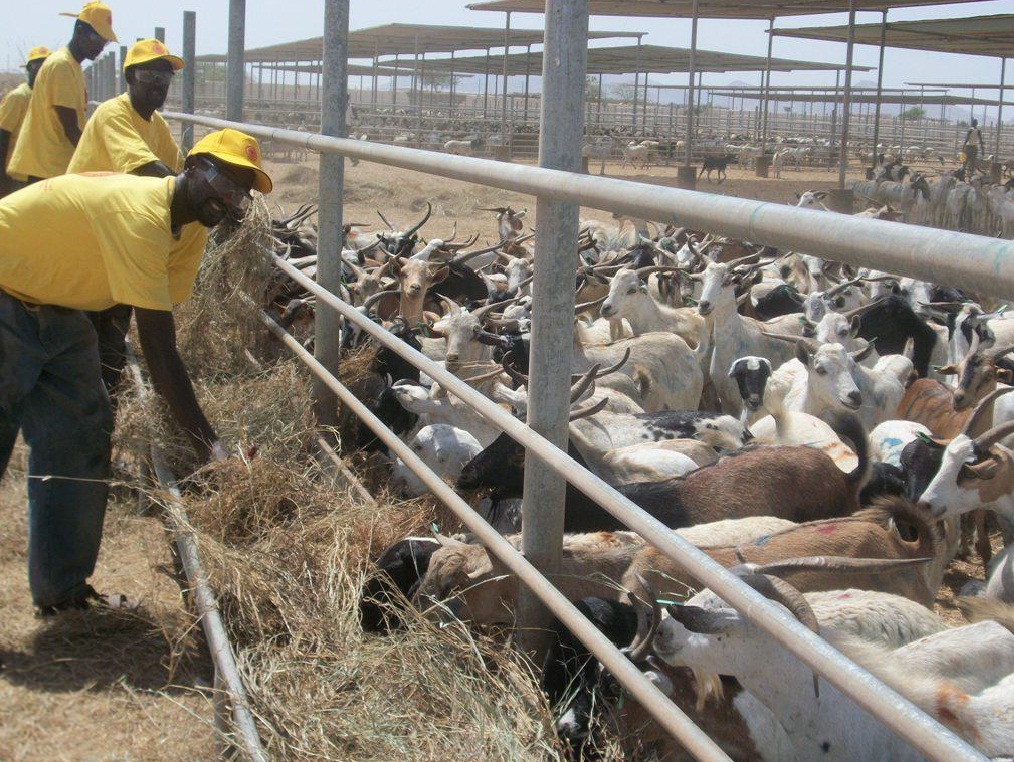
Feeding time for goats in a quarantine station: Regional livestock experts from the Horn of Africa and the Middle East have adopted recommendations towards harmonized, risk-based approaches to control of trade-related transboundary animal diseases (Photo: Saudi-Emirates International Veterinary Quarantine Management Co.)


Following a meeting in Dubai, United Arab Emirates on 13-16 June 2011, some 70 regional and international livestock experts endorsed and adopted a set of recommendations aimed at enhancing safe inter-regional livestock trade between exporting countries in the Horn of Africa and importing countries in the Middle East.

The objectives of the workshop were to:
  • Examine the use of the decision support tool for adoption in prevention and control of Rift Valley fever
  • Assemble an approach to regional harmonization for control of other transboundary animal diseases that impact on livestock trade
  • Delineate animal welfare issues along the marketing chain and propose potential interventions
  • Devise mechanisms for ensuring enhanced communication between the trading partners
  • Define the way forward on risk-based approaches to livestock certification
The workshop participants made recommendations on the following aspects that were discussed during the 4-day meeting:
  • Standard Methods and Procedures
  • Rift Valley fever decision support tool
  • Communication between livestock trading partners
  • Animal health certification
  • Animal welfare
  • Application of the principle of equivalence
The workshop was convened by a consortium of partners comprising the African Union – Interafrican Bureau for Animal Resources (AU-IBAR) as the lead implementing agency, the International Livestock Research Institute (ILRI), the World Organization for Animal Health (OIE), the United States Agency for International Development (USAID) and the United States Department of Agriculture (USDA).


For more information about the workshop activities and to access the presentations, please visit http://rvfworkshop2011.wordpress.com

To view the workshop presentations, please visit http://www.slideshare.net/marketsblog/presentations

Wednesday, June 08, 2011

Regional workshop to discuss risk-based approaches for livestock certification and control of animal diseases


Livestock sector stakeholders from the Horn of Africa and the Middle East will discuss risk-based approaches for control of transboundary animal diseases. (Photo credit: ILRI/Mann. Cattle being watered at the Ghibe River in southwestern Ethiopia.)

Chief veterinary officers and livestock sector stakeholders from several countries in the Horn of Africa and the Middle East meet in Dubai, United Arab Emirates on 13-16 June 2011 for a workshop on enhancing safe inter-regional livestock trade between exporting countries in the Horn of Africa and importing countries in the Middle East. Some 70 participants are expected to attend.

The purpose of the workshop is to:
  • Review the Rift Valley fever situation in the East Africa and Middle East sub-regions;
  • Discuss and test the use of a‘decision support tool’ for prevention and control of Rift Valley fever;
  • Consult on a regional mechanism for coordination for prevention and control of Rift Valley fever using the decision support tool; and
  • Discuss an approach to regional harmonization for control of other transboundary animal diseases that impact livestock trade.

The workshop is convened by the African Union – Interafrican Bureau for Animal Resources (AU-IBAR), the International Livestock Research Institute (ILRI), the United States Agency for International Development (USAID) and the World Organization for Animal Health (OIE).

ILRI’s Market Opportunities theme will be represented by veterinary epidemiologist Dr Bernard Bett, who will facilitate a session on communication among livestock trading partners.

ILRI is also represented by Dr Jeffrey Mariner, a veterinary epidemiologist with the Biotechnology theme who will facilitate several sessions on the Rift Valley fever decision support tool, a risk-based framework that guides responses to outbreaks of the disease.

More information and updates will be posted on the workshop blog, http://rvfworkshop2011.wordpress.com.

The provisional agenda is available here.

Tuesday, May 24, 2011

Study reviews 20 years of global livestock disease dynamics


Livestock-dependent smallholder and pastoralist systems in developing countries have been identified as one of three trajectories of global disease dynamics. (Photo credit: ILRI/Mann)

From a livestock and global change special feature in the Proceedings of the National Academy of Sciences of the United States of America (online 16 May 2011) comes a review paper on global livestock disease dynamics by Brian Perry, Delia Grace and Keith Sones.

Dr Delia Grace, a veterinary epidemiologist and food safety expert, leads the International Livestock Research Institute (ILRI) research team on animal health and food safety for trade.

Lead author, Prof Brian Perry, is an Honorary Research Fellow in the Nuffield Department of Medicine, University of Oxford, UK (based in Kenya), and Extraordinary Professor at the Faculty of Veterinary Science, University of Pretoria, South Africa. A veterinary surgeon by profession, he previously worked at ILRI for 20 years and led the research team on animal health and food safety for trade.

Dr Keith Sones is an animal health specialist with the Nairobi-based Keith Sones Associates.

The paper reviews the changing patterns of livestock disease over the last 20 years, discusses the main drivers of these patterns and plots future trajectories of livestock disease risk and associated control.

While acknowledging the complexity of disease dynamics, the authors point to three main drivers of changing livestock disease dynamics: ecosystem change, ecosystem incursion, and movement of people and animals. Underlying these dynamics are the growing demand for livestock products (the Livestock Revolution) and increasing human population size.

Three trajectories of global disease dynamics are identified as: (1) the intensified and worried well of the Western world, (2) intensifying and market-orientated sectors of the developing world (hot spots) and (3) smallholder systems dependent on traditional livestock-derived livelihoods (cold spots).

Read the abstract

Citation
Perry BD, Grace D and Sones K. 2011. Current drivers and future directions of global livestock disease dynamics. Proceedings of the National Academy of Sciences of the United States of America, 16 May 2011. doi 10.1073/pnas.1012953108

Thursday, May 12, 2011

ILRI film features integrated community-based methods to control trypanosomosis in West Africa


Livestock keepers in West Africa rely largely on treating their cattle with drugs to protect them from trypanosomosis, but resistance to these drugs has emerged in many areas.

This training film (approx. 13 minutes) from the project, Preventing and containing trypanocide resistance in the cotton zone of West Africa, outlines good practices for improving the use of drugs and slowing the emergence of resistance.

These practices, which are based on Rational Drug Use, an approach from human health now adapted for animal care, are clearly explained so that veterinary workers and farmers can treat animals safely.

Rational Drug Use can be combined with other methods that reduce the numbers of tsetse flies to further slow the spread of resistance to trypanocidal medicines.

This is one of three films telling the story of the current state of the war against a disease that is so deadly and widespread that farmers call it 'the malaria of cattle'.

Also see this related post on Livestock Markets DigestStudy calls for participatory approach to prevent trypanocide drug resistance in West Africa

Friday, April 29, 2011

Study calls for participatory approach to prevent trypanocide drug resistance in West Africa


The prevention and management of trypanocide drug resistance in the cotton zone of West Africa are best addressed through a multi-sectoral approach that involves the participation of all actors, including manufacturers, sellers, drug users, regulators and extension providers, a new study recommends.

The study, accepted for publication in Veterinary Parasitology (19 April 2011), assessed the impact of different strategies for preventing and managing resistance to trypanocidal drugs commonly used to control the deadly cattle disease, trypanosomosis, which is transmitted by the tsetse fly and threatens the livelihoods of resource-poor smallholder farmers in sub-Saharan Africa.

Rational drug use, participatory vector control and keeping of trypanotolerant cattle were identified as effective strategies in preventing drug resistance.

Read the abstract.

Citation
Clausen P-H, Mungube E, Bauer B, Zessinn K-H, Diall O, Bocoum Z, Sidibe I, Touratier L, Affognon H, Liebenehm S, Waibel H, Grace D and Randolph TF. 2011. Management of trypanosomosis and trypanocide resistance in smallholder livestock production systems of tsetse-infested sub-Saharan West Africa. Veterinary Parasitology. Article in press.

Related posts on Livestock Markets Digest
Study characterizes West African farmers' knowledge of cattle trypanosomosis

New journal article: Testing of trypanosomosis control strategies in West Africa's cotton zone

Study identifies key elements for successful adoption of rational drug use principles by livestock farmers in West Africa

Tuesday, March 08, 2011

ILRI in the news: Scientist Delia Grace features on BBC Radio 4's Farming Today program

At a global conference on leveraging agriculture for improving nutrition and health held in India early February 2011, veterinary scientists from the International Livestock Research Institute (ILRI), John McDermott, deputy director general in charge of research, and Delia Grace, veterinary epidemiologist and food safety specialist with the Market Opportunities theme, presented a report on agriculture-associated diseases like avian influenza that affect humans, animals and ecosystems.

They called for the use of multi-disciplinary, systems-based approaches, such as One Health and EcoHealth, among other strategies in order to achieve better health outcomes.

Here is the link to the policy brief, Agriculture-associated diseases: Adapting agriculture to improve human health.

The BBC Radio 4 interviewed Delia Grace on the Farming Today program on 7 March 2011 where she talked about the increasing risk of zoonotic diseases as more people keep more livestock, and what can be done to mitigate the impacts of these diseases.

Below is the link to a post on the ILRI Clippings blog written by Susan MacMillan, Head of ILRI's Public Awareness Unit, with the transcript of the interview.

BBC’s ‘Farming Today’ interviews ILRI’s Delia Grace on links between farm animals and human diseases

Monday, February 28, 2011

Study identifies key elements for successful adoption of rational drug use principles by livestock farmers in West Africa

Selling livestock at Niamana Market in Bamako, Mali. Adoption of rational drug use principles is a sustainable strategy in the fight against trypanosomosis in West Africa. (Photo credit: ILRI/Mann)

Creation of ‘knowledge champions’ through training of farmers, working with the mass media to create awareness and using participatory methods are among key factors necessary for successful uptake of rational drug use principles by livestock keepers in West Africa, according to a study  published in the February 2011 issue of the International Journal of Agricultural Sustainability.

African animal trypanosomosis is one of the most severe cattle diseases in sub-Saharan Africa, resulting in losses valued at an estimated USD 4.5 billion annually.

While the disease may be tackled by keeping of trypanotolerant cattle breeds and controlling the tsetse fly vectors by insecticides, control of the disease-causing trypanosomes by treatment with drugs has been identified as the most important strategy. However, widespread use of trypanocide drugs often results in drug resistance and, consequently, treatment failure.

The adoption of the principles of rational drug use developed by the World Health Organization has been identified as one of several strategies that can help to sustainably combat African animal trypanosomosis in the cotton zone of West Africa where the disease is endemic and trypanocide drug resistance is high.

The principles call for the use of preventive mechanisms to decrease the need for drugs; reduce the use of drugs by substitutes; and ensure that drugs are used only if there is a clinical need for them and at a dose that is adequate.

The study evaluated the impact of training of smallholder farmers on rational drug use with respect to increased farmers’ knowledge and farm productivity.

Results of the impact assessment found that trained farmers were better able to identify signs of the disease, bought trypanocides from safe sources, and administered the medicines better than non-trained farmers, leading to a reduction in treatment failures which could be due to resistance.

In addition, using the appropriate amount of the drug enhanced productivity by way of reduced spending on trypanocides as compared to other vital farm inputs such as animal feeds.

In order to enhance the adoption of rational drug use principles by farmers, however, the study calls for the use of participatory methods that involve the existing village network structures in order to create awareness and transmit knowledge.

Dr Hippolyte Affognon, formerly a postdoctoral scientist with ILRI’s Market Opportunities theme, is a co-author.


Citation
Liebenehm S, Affognon H and Waibel H. 2011. Collective livestock research for sustainable disease management in Mali and Burkina Faso. International Journal of Agricultural Sustainability 9(1): 212-221.


Also see these related blog posts:


Monday, February 21, 2011

ILRI in the news: Call for new approaches against livestock diseases that affect human health

Young women herd goats in Rajasthan

Young women herd goats in Rajasthan, India: Multi-sectoral approaches are needed in the fight against animal diseases that affect humans. (Photo credit: ILRI/Mann)

The intimate linkages between agriculture, nutrition and health were the focus of discussion at a recent global conference organized by the International Food Policy Research Institute (IFPRI) in New Delhi, India from 10-12 Februrary 2011.

The theme of the conference was Leveraging agriculture for improving nutrition and health. Some 1000 participants from the agriculture, health and nutrition sectors attended, representing various academic, research, policy, development, governmental and non-governmental organizations.

Among the featured presentations was one by veterinary scientists from the International Livestock Research Institute (ILRI), Dr John McDermott, ILRI's deputy director general in charge of research, and Dr Delia Grace, veterinary epidemiologist and food safety specialist with ILRI's Market Opportunities theme.

In their presentation on agriculture-associated diseases, McDermott and Grace called for the adoption of multi-disciplinary approaches to tackling these emerging infectious diseases that are a threat to humans, animals, agriculture and ecosystems.

A summary may be found in this ILRI policy brief titled Agriculture-associated diseases: Adapting agriculture to improve human health.

Below are links to related media coverage.

The Guardian's Poverty Matters blog
Animal farming and human health are intimately linked

The Economist
Hot spots: How changing farming habits threaten public health

SciDev.Net
Livestock surge may harm human health

Voice of America (VoANews.com)
Growing global appetite for meat, milk presents health risks

In addition, here's a related story from the ILRI News blog
Livestock boom risks aggravating animal ‘plagues,’ poses growing threat to food security and health of world’s poor

Monday, November 08, 2010

Risk maps for bird flu in Africa: French version now available


A couple of months ago, this blog featured an output of the project on Early Detection, Reporting and Surveillance of Avian Influenza in Africa, namely, a report containing risks maps for bird flu in Africa that were developed using multi-criteria decision modelling.

An initial set of risk maps was prepared in 2009; these were refined to produce the final maps contained in the report.

The French version of the report is now available.

Download the French version

Citation
Stevens, K.B., Costard, S., Métras, R., Theuri, W., Hendrickx, S. and Pfeiffer, D.U. 2010. Amélioration de la surveillance de l’influenza aviaire de type H5N1 – Cartographie du risque d’influenza aviaire de type H5N1 en Afrique: Rapport final et cartes de risqué d’influenza aviaire. EDRSAIA (Early Detection, Reporting and Surveillance for Avian Influenza in Africa) project. 

Tuesday, November 02, 2010

New journal article: Field testing of tsetse repellent technology in Kenya

A newly published article in the journal Preventive Veterinary Medicine  (available online 25 October 2010) reports the findings of a 16-month-long field trial of a synthetic tsetse repellent technology among Maasai cattle keepers in Kenya.

Tsetse flies transmit trypanosomes, the protozoan agents that cause animal trypanosomosis, a cattle disease characterized by fever, weakness and anaemia which can, in cases of severe infection, lead to death of the animal.

Various methods used to manage animal trypanosomosis, such as tsetse fly control, trypanocidal drugs and trypanotolerant cattle breeds, have not been widely effective and sustainable, especially where the disease is endemic or where trypanocide resistance is high.

The Kenya study was the first to evaluate a tsetse-repellent device in the field under natural tsetse challenge. The trial pre-established the measure of effectiveness of the technology at a threshold of 50% reduction in trypanosome infection among all treated animals in the herd but the impact of the technology saw only 18% reduction in infection.

Based on this finding, the authors concluded that "the prototype repellent technology package was not sufficiently effective in reducing trypanosome infection incidence under natural tsetse challenge to merit commercial development".

The quest for a sustainable solution to the problem of animal trypanosomosis is not limited to the eastern Africa region. Scientists from ILRI's Market Opportunities Theme and research partners have also undertaken similar studies in West Africa's cotton zone where the disease is endemic and trypanocide resistance is high.

The findings of these studies have been highlighted in previous posts in this blog, namely, characterization of West African farmers' knowledge of cattle trypanosomosis, analysis of appropriate policies for management of trypanocide resistance in Mali and testing of integrated control strategies to reduce the risk of trypanocide resistance.

Read the abstract of the journal article here.

Citation
Bett B, Randolph TF, Irungu P, Nyamwaro SO, Kitala P, Gathuma J, Grace D, Vale G, Hargrove J and McDermott J. 2010. Field trial of a synthetic tsetse-repellent technology developed for the control of bovine trypanosomosis in Kenya. Preventive Veterinary Medicine 97(3-4): 220-227.

Friday, September 24, 2010

New journal article: Economic and poverty impacts of animal diseases in developing countries: New roles, new demands for economics and epidemiology

Value chain analysis and information economics can improve our understanding of the economic and poverty impacts of animal diseases, particularly in developing country contexts.

These new 'bottom-up' approaches are analyzed in a paper published online on 15 September 2010 in the journal Preventive Veterinary Medicine.

The authors, Karl Rich and Brian Perry, highlight the issues affecting different value chain actors and examine how best to align incentives for sustainable control of animal diseases.

"Both value chain analysis and information economics hold particular promise and relevance towards impact assessments that are more robust and thorough than past ones, particularly in the context of the roles of incentives," the authors observe.

Karl Rich is on joint appointment with ILRI and the Norwegian Institute of International Affairs (NUPI). Brian Perry is an honorary professor of veterinary medicine at the Universities of Edinburgh and Pretoria, a visiting professor at the University of Oxford, and formerly leader of ILRI's research team on animal health and food safety for trade.

Read the abstract here

Citation
Rich KM and Perry BD. 2011. The economic and poverty impacts of animal diseases in developing countries: New roles, new demands for economics and epidemiology. Preventive Veterinary Medicine 101(3-4): 133-147.

Wednesday, September 22, 2010

Featured publication: Risk maps for bird flu in Africa

More than 85 percent of households in rural Africa raise poultry for food, income, or both, and many people live in close contact with their birds. The possibility of an epidemic of highly pathogenic avian influenza H5N1 is therefore a major concern. Since 2006 bird flu has been introduced into at least 11 countries in Africa, and over 600 outbreaks reported.

Vigilance is key to limiting the disease but animal health personnel cannot monitor everywhere at once. This risk-mapping project was designed to help prioritize their efforts by showing in which places outbreaks are more likely to occur.

A risk map is a complex, computer-generated image that shows the spatial distribution of the predicted risk of a disease. It is based on the spatial distribution of 'risk factors' associated with an increased risk of disease, and the relative importance of each of these factors. In the case of virulent bird flu, risk factors include major transport routes, markets where poultry may be traded, and wetlands with the possibility of contact between poultry and wild birds.

Researchers in this project, Early Detection, Reporting and Surveillance for Avian Influenza in Africa, have prepared risk maps for bird flu in Africa using multi-criteria decision modelling. In this way they have integrated data and information from such diverse sources as published scientific literature, maps available in the public domain, field surveys and expert consultations. An initial set of risk maps was prepared in 2009. These maps were then refined to produce the final maps contained in the current report.

Project partners include the United States Agency for International Development (USAID), the International Livestock Research Institute (ILRI), the African Union - InterAfrican Bureau for Animal Resources (AU-IBAR), the World Organization for Animal Health (OIE), regional animal health centres, and other national animal health services and veterinary authorities throughout Africa and abroad.

Download the report

Tuesday, September 14, 2010

EcoHealth resource centres planned for Southeast Asia region

The EcoHealth approach to the prevention and control of zoonotic emerging infectious diseases in the Southeast Asia region project is one of the EcoHealth projects on infectious diseases currently supported by the International Development Research Centre (IDRC) in Southeast Asia.

The key objective of the project is capacity building of researchers to apply EcoHealth principles into research through ‘learning-by-doing’.

Six research proposals are being finalized currently, each developed using a transdisciplinary approach.

EcoHealth has been defined as holistic, participatory approaches to understanding and promoting heath and wellbeing in the context of social and ecological interactions. 

EcoHealth approaches see the health of humans as dependent on – and inextricably linked with – the health of animals and the ecosystem.

A new project component has recently been added with the donor’s approval, whereby the project will support the setting up of two EcoHealth Resource Centres within the Southeast Asia region; at Chiang Mai University in Thailand and at the University of Gadjah Mada in Indonesia.

The aim is to promote institutionalization of EcoHealth within these centres that would conduct training and mentoring, assisting the capacity building efforts of the project's researchers, and providing for researchers and key actors involved in other EcoHealth projects.

Currently their focus will be on infectious/zoonotic diseases but ultimately they should become involved in other aspects of EcoHealth, including climate change.

For more information about this project, please contact Dr Jeffrey Gilbert (j.gilbert @ cgiar.org)