News and updates on research on livestock value chains by the International Livestock Research Institute and partners

Showing posts with label projects. Show all posts

Wednesday, October 31, 2012

New research project aims to improve smallholder livestock production and marketing in Botswana

Goats in Botswana
Goats awaiting sale at a market in Botswana. A new collaborative research project aims to improve smallholder livestock production and marketing in Botswana (photo credit: ILRI).

The smallholder sector produces most of Botswana’s meat and over 70% of the country’s agricultural gross domestic product.

Although past policy and research have focused on the beef export sector, rather little information has been generated on the circumstances and potential of the 80,000 smallholders who own most of the country’s cattle, and the 100,000 households that earn livelihoods from sheep and goats.

This leaves strategies and investments for rural development and livelihood generation without a basis in data and analysis.

For both cattle and small ruminants, more competitive smallholder systems can improve livelihoods.

Several factors constrain the production and marketing of surpluses by smallholders: poor animal health is one example, that is often made worse by the complexities of communal grazing, and by limited access to services.

A new 3-year research project, Competitive smallholder livestock in Botswana, asks the following questions, and engages partners in research industry and government to help answer them:
  • What are the characteristics of smallholder livestock producers in Botswana and what factors constrain their livelihoods?
  • How can livestock-related marketing systems in Botswana be improved for the benefit of smallholders and the rural population?

The project has three objectives:
  • To better define smallholder livestock production systems and to identify the factors affecting the productivity of smallholder livestock producers and assess their competitiveness 
  • To understand and improve conditions for market participation and value addition in markets for livestock, livestock products and inputs
  • To strengthen the capacity of agricultural education and extension

The International Livestock Research Institute (ILRI) is collaborating in this project with the Botswana Institute for Development Policy Analysis and the Botswana Ministry of Agriculture.

The outcomes from the study will be improved and more sustainable livelihoods among smallholder livestock keepers, and increased uptake and use of scientific and economic knowledge by those providing services to smallholders.

The project is funded by the Australian Centre for International Agricultural Research (ACIAR) and runs from 1 September 2012 to 31 August 2015.

For more information, please contact Sirak Bahta (s.bahta @ cgiar.org)

Friday, July 13, 2012

The imGoats project reflects on use of Outcome Mapping and innovation platforms to improve goat value chains

Group discussions at the imGoats project learning and reflection workshop
Group discussions at the imGoats project learning and reflection workshop, Udaipur, India, 2-6 July 2012 (photo credit: ILRI/Tezira Lore).

The imGoats project seeks to investigate how best goat value chains can be used to increase food security and reduce poverty among smallholders in semi-arid regions in India and Mozambique.

On 2-6 July 2012, the project teams from both countries met in Udaipur, India to take part in a learning and reflection workshop on the activities achieved so far and the work still remaining.

The five-day, intensive workshop gave the participants ample opportunity to discuss and share progress achieved by the teams in Rajasthan and Jharkhand in India and Vilanculos in Mozambique in order to learn from each other's experiences in using Outcome Mapping and innovation platforms to improve the functioning of goat value chains.

In addition, the teams were able to review their communication plans and refine their strategies towards identifying the communication outputs to be produced and activities to be undertaken in the final six months of the project.

"The agenda of the workshop was very dense but it is heartening to see that all the teams have made good progress. Outcome Mapping has helped us to adapt our planning and improve our work. The session on innovation platforms was useful for sharing experiences and frustrations, too, and how to overcome these," said imGoats project coordinator Saskia Hendrickx of the International Livestock Research Institute (ILRI) at the close of the workshop.

"We have six months left and a lot to do but there is a good team spirit and we can make it," Hendrickx added.

For more information about the workshop, check out the session notes on the imGoats wiki or read some reflections by ILRI postdoctoral scientists Birgit Boogard and Ramkumar Bendapudi on their experiences with the use of Outcome Mapping and innovation platforms in India and Mozambique. Also check out the workshop photos on Flickr.


Funded by the European Commission - International Fund for Agricultural Research (IFAD), the imGoats project is led by researchers from ILRI in collaboration with the BAIF Development Research Foundation in India and CARE International in Mozambique. For more information, visit imgoats.org.

Friday, June 22, 2012

New blog features research on food safety in informal markets in Africa

Testing milk in Kenya's informal market
Testing milk in Kenya's informal market (photo credit: ILRI/Dave Elsworth).

Interested in food safety in informal markets in sub-Saharan Africa? Then check out the new blog of the Safe Food, Fair Food project, a research initiative that is using risk-based approaches to improve food safety and market access in informal markets for animal-source foods in sub-Saharan Africa. 

This BMZ/GIZ-funded project is led by the International Livestock Research Institute (ILRI) and is collaboratively undertaken with several local, regional and international partners

The first phase of the project (2008-11) built core capacity in risk-based methods through training and practical application in 24 proof-of-concept studies in eight countries in sub-Saharan Africa. 

The recently launched second phase of the project (2012-15) will consolidate and expand on the achievements of the first phase by addressing selected high-potential value chains, and targeting regional policy and education.

The three main components of the second phase of the project are:

  • Rapid assessment of food safety risks in four selected value chains using the tools validated in the first phase.
  • Action research on priority food safety issues in these value chains to pilot and test best-bet interventions.
  • Engagement with regional economic communities, the private sector and veterinary universities for a more enabling environment.
For more information, please contact the project coordinator Kristina Roesel (k.roesel @ cgiar.org).

Wednesday, April 25, 2012

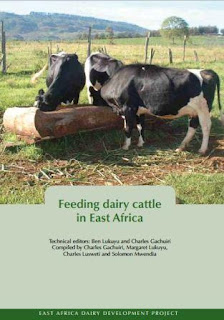
Feeding dairy cattle: Regional experts develop manual for farmers in East Africa


The East Africa Dairy Development project has produced a manual aimed at helping farmers in the region boost the productivity of their dairy cows through adoption of improved animal feeding practices.

The manual was developed by a team of animal science experts from the International Livestock Research Institute (ILRI), the Kenya Agricultural Research Institute (KARI) and the University of Nairobi.

The topics include the basic nutrient requirements of dairy cows; pasture management; production of forage such as hay and silage; feed supplements; practical aspects of feeding calves, heifers and dairy cows; and how to control forage diseases like Napier grass head smut.

Whereas the information has been synthesized in such a way as to be applicable to the East African region, some information may be site specific, and in some instances information that is generalized may need to be customized to suit specific areas.

The manual builds on an earlier version produced by the Smallholder Dairy Project and the Kenya Dairy Development Program that was designed to guide extension workers and smallholder dairy farmers through the basics of feeding dairy animals.

Although dairy farmers are the primary audience of the manual, it may also be a useful information resource for extension workers as well as students of animal production.

For more information, please contact ILRI feed scientist Ben Lukuyu (b.lukuyu @ cgiar.org)
Download the manual

Citation
Lukuyu B, Gachuiri CK, Lukuyu MN, Lusweti C and Mwendia S (eds). 2012. Feeding dairy cattle in East Africa. East Africa Dairy Development Project, Nairobi, Kenya.

You may also be interested in:
Study identifies feed improvement options for dairy farmers in East Africa

Monday, April 16, 2012

Second phase of the ILRI-led Safe Food, Fair Food project gets underway


On 12–13 April 2012, the Nairobi campus of the International Livestock Research Institute (ILRI) hosted an inception meeting for the BMZ/GIZ-funded, ILRI-led Safe Food, Fair Food project to develop action plans for the second 3-year phase of the project to build on previous work from 2008-11.

Present at the inception meeting were project partners from Côte d’Ivoire (Centre Suisse de Recherches Scientifiques), Ethiopia (Addis Ababa University), Germany (Federal Institute for Risk Assessment [BfR] and Freie Universität Berlin), Ghana (University of Ghana), Japan (Rakuno Gakuen University), Kenya (University of Nairobi), Mozambique (Direcção de Ciências Animais), Tanzania (Sokoine University of Agriculture) and Uganda (Makerere University).

During the first phase of the project, a number of studies on participatory risk analysis were carried out in eastern, southern and West Africa. The project also held national workshops to engage policymakers to raise awareness about the potential food safety hazards that exist along the entire value chain.

Findings from the project also featured prominently at the first International Congress on Pathogens at the Human-Animal Interface (ICOPHAI) held in September 2011 in Addis Ababa, Ethiopia where some 25 oral and poster presentations were made by researchers and MSc and PhD students attached to the project.

Also in September 2011, the project held its final synthesis workshop to deliberate on the results of national impact assessment studies and develop a project synthesis book which will facilitate dissemination of the research findings to wider audiences.

The project now moves into its second phase which will adopt an action research approach for stakeholder engagement at the regional level towards uptake of tools and approaches to enhance food safety in informal markets in Africa.

For more information, visit the project web page or view the project publications.

Monday, February 06, 2012

Concerned about the quality of livestock data? The Livestock Data Innovation project seeks your views

Heading home at dusk in Mozambique

The Livestock Data Innovation project is carrying out a short online survey which will help identify priority areas for investments to improve the quantity and quality of livestock-related data available to decision-makers.

The survey is available at: http://www.surveymonkey.com/s/LIVESTOCK_INDICATORS.

There are just eight questions and you should be able to complete the whole survey in 5 to 10 minutes. Responses are all anonymous and you are free to provide or not provide your contact details.

The project is sponsored by the Bill & Melinda Gates Foundation and jointly implemented by the World Bank, the Food and Agriculture Organization of the United Nations (FAO) and the International Livestock Research Institute (ILRI), in collaboration with the African Union Interafrican Bureau for Animal Resources (AU-IBAR).

Wednesday, January 18, 2012

ILRI project offers solutions for improving smallholder pig production in western Kenya

A smallholder pig farmer in western Kenya: Findings from an ILRI-led study  will help to improve feeding practices and  sow productivity on smallholder pig farms in western Kenya (photo credit: ILRI).

Small-scale pig farming in western Kenya is an important source of family income. Pigs kept are of local breeds that are either tethered or left free to scavenge for food. However, one of the main challenges that pig farmers in western Kenya face is inadequate feed supply.

From 2007 to 2009, a collaborative project led by the International Livestock Research Institute (ILRI) carried out research towards improving pig production and health in smallholder farms in western Kenya.

The project has recently published two journal articles, one featuring a descriptive study of smallholder pig feeding practices (Tropical Animal Health and Production, January 2012) and the other highlighting the results of a baseline study on the productivity of local sows (African Journal of Agricultural Research, December 2011).

The findings of the descriptive study of 164 pig farms in Busia District revealed the need for more research on the nutrient composition of the identified local feeds. Additionally, there is need to develop and validate simple combinations of local feeds to formulate balanced feed rations that smallholder farmers can afford.

The baseline study, which was carried out in Busia and Kakamega Districts, assessed the reproductive performance of local sows, investigated the challenges faced by the farmers, and explored opportunities for improving small-scale production of breeding pigs. The baseline data will be useful in identifying key intervention areas and exploring opportunities for improvement in the sector.

The project was undertaken in partnership with the University of Guelph, the University of Nairobi, and the Swiss Tropical and Public Health Institute.

Other outputs from the project have been featured in two earlier posts on this blog:


Citations
Mutua FK, Dewey C, Arimi S, Ogara W, Levy M and Schelling E. 2012. A description of local pig feeding systems in village smallholder farms of Western Kenya. Tropical Animal Health and Production, Online First 5 January 2012, doi 10.1007/s11250-011-0052-6

Mutua FK, Dewey CE, Arimi SM, Schelling E, Ogara WO and Levy M. 2011. Reproductive performance of sows in rural communities of Busia and Kakamega Districts, Western Kenya. African Journal of Agricultural Research 6(31): 6485-6491.

Monday, January 16, 2012

New project adopts innovation and value chain approaches to enhance livestock feeds in India and Tanzania

Fodder market in India
Fodder market in India: Research by ILRI and CIAT aims to enhance  dairy-based livelihoods in India and Tanzania through feed innovations and value chain approaches (photo credit: ILRI/Mann).

Lack of access to adequate high-quality livestock feed is a key constraint towards improved milk yields and hence dairy income for smallholder dairy producers.

As part of efforts towards addressing the problem of feed scarcity, two CGIAR centres, the International Livestock Research Institute (ILRI) and the International Center for Tropical Agriculture (CIAT), have embarked on a research initiative that will use novel systems-based approaches to enhance feeds and feeding in smallholder dairy production systems in India and Tanzania.

By adopting a value chain perspective and using innovation system principles, the project places feed in a broader context and acknowledges that enhancing feed supply involves more than just introducing or promoting feed technologies at farm level but also includes other dimensions such as animal health, livestock breeding and knowledge sharing.

The objectives of the project Enhancing dairy-based livelihoods in India and Tanzania through feed innovation and value chain development approaches (MilkIT) are three-fold:

  • Institutional strengthening: To strengthen use of value chain and innovation approaches among dairy stakeholders to improve feeding strategies for dairy cows
  • Productivity enhancement: To develop options for improved feeding strategies leading to yield enhancement with potential income benefits
  • Knowledge sharing: To strengthen knowledge sharing mechanisms on feed development strategies at local, regional and international levels

The three-year project is embedded in the CGIAR Research Program on Livestock and Fish. It will be coordinated by ILRI with CIAT acting as a major partner. Dr Bernard Lukuyu and Dr Amos Omore from ILRI's Markets, Gender and Livelihoods theme will make key contributions in the areas of livestock feeds and technical/institutional options for improving market access, respectively.

Already, some preliminary activities have taken place. In the latter half of 2011, a number of scoping visits were made to the two study countries to identify project sites and partners. A pre-inception planning meeting is scheduled for 24-25 January 2012 in Nairobi to officially launch the project activities. You can read about the scoping visits in this post on the ILRI Fodder Adoption blog.

For more information about this project, please contact Dr Alan Duncan (a.duncan @ cgiar.org)

Download the project brochure

Tuesday, December 20, 2011

ILRI project uses innovation systems approach to strengthen capacity for community-based animal health systems in Ethiopia

Cattle being watered at the Ghibe River in southwestern Ethiopia
Cattle being watered at the Ghibe River in southwestern Ethiopia. An ILRI-led project has helped strengthen the capacity of local communities to use innovation system approaches towards better access to animal health services (photo credit: ILRI/Mann).


A collaborative project led by scientists from the International Livestock Research Institute (ILRI) has strengthened the capacity of local communities in Ethiopia’s Ghibe Valley to use innovation systems approaches to improve access to animal health systems.

The Ghibe Valley in southwestern Ethiopia is a fertile region whose rich soils and abundant water resources suggest high agricultural production potential.

However, the region is seriously affected by the deadly trypanosomosis (animal sleeping sickness), a wasting cattle disease which affects the livelihoods of smallholder farmers who depend on livestock for milk, meat and draught power.

In order to enhance the community’s access to animal disease control services, the project tested a collaborative trypanosomosis control model in three woredas (administrative units managed by local government).

The project, which was led by ILRI’s Innovation in Livestock Systems research team, used two action research approaches – asset-based community development and innovation systems – to derive lessons on how to sustainably improve livestock health service delivery and how to translate improved livestock health into increased productivity and incomes.

Thirteen trypanosomosis co-operatives were formed to link private veterinary drug suppliers to the remote communities to ensure sustainable supply of trypanocides to farmers and reduce dependence on the central government system.

The rural communities have been communicating their needs directly to the private drug suppliers in the capital city Addis Ababa and supply mechanisms have been established.

The project produced a guideline in the local Amharic language for collaborative trypanosomosis control for use by community animal health workers in various districts and regions affected by the disease.

The project also shared maps based on the tse tse fly habitat and trypanosomosis risk modelling of Ghibe Valley with the district and regional authorities for their use in targeting disease-control investments in high-risk and “hot spot” areas.

Other regions which face trypanosomosis challenge have been informed of the utility of such information and analysis for directing investments for effective trypanosomosis control.

These interventions have resulted in significant changes in land use and land cover, increased cultivation of staple crops and healthier, more productive cattle.

The four-year project, which ended in August 2011, was funded by the Comart Foundation.

For more information, please contact Dr Ranjitha Puskur (r.puskur @ cgiar.org) who leads ILRI's Innovation in Livestock Systems research team.

Wednesday, November 30, 2011

Training program on microbial risk assessment in Vietnam strengthens national food safety policies

Selling pork at a 'wet' market in Vietnam. A new training course on microbial risk assessment is helping to reduce public health risks and improve the management of food and water safety in Vietnam (photo credit: ILRI).

A collaborative training course on microbial risk assessment in Vietnam has provided policymakers with scientific evidence for decision-making towards better management of health risks in food and water.

Environmental health risk assessment in general and microbial risk assessment in particular are still at a very early stage of development in Vietnam.

With its rapid urbanization, industrialization, agricultural development and population growth, Vietnam faces increasing risks from microbial hazards contaminating its water and food supply.

In early 2010, the Swiss-based National Centre of Competence in Research (NCCR) North-South piloted a project that developed a training curriculum in microbial risk assessment as part of national interventions aimed at better managing food- and water-borne health risks in Vietnam.

The project was led by the Hanoi School of Public Health in partnership with the National Institute of Nutrition, the National Institute of Hygiene and Epidemiology, the Preventive Medicine Centre of Ha Nam Province and the Swiss Tropical and Public Health Institute.

Experts from the Market Opportunities theme of the International Livestock Research Institute (ILRI) provided the team with technical support to ensure the quality of the curriculum which covers water, sanitation and food safety.

The collaborative process of developing the training course helped the concerned groups in Vietnam to work together, culminating, in January 2011, with a final training workshop attended by representatives from universities, research institutions and government ministries to discuss areas of future collaboration in research and capacity strengthening in risk assessment.

The course has led to the setting up of a local network on health risk assessment, enhanced the quality of training at the Hanoi School of Public Health, and developed a book-length manual of microbial risk assessment guidelines for food safety.

The development of the training course and its policy impact in tackling issues of water, sanitation, and food safety in Vietnam are described in these NCCR North-South Outcome Highlights, available in English and Vietnamese.

You may also be interested in:
Ecohealth approaches can improve food safety management in Vietnam

Wednesday, November 09, 2011

New Agriculturist magazine features ILRI-led Safe Food, Fair Food project


The November 2011 issue of the bimonthly online magazine, New Agriculturist, features the Safe food, fair food project which aims to improve the safety of livestock products in sub-Saharan Arrica by adapting risk-based approaches, successfully used for food safety in developed countries, to suit domestic informal livestock markets in developing countries in sub-Saharan Africa.

The project is led by scientists from the Market Opportunities research theme of the International Livestock Research Institute (ILRI) and is implemented in eight countries (Cote d'Ivoire, Ethiopia, Ghana, Kenya, Mali, Mozambique, the Republic of South Africa and Tanzania) in collaboration with universities and national research institutes.

In addition to research studies on participatory risk analysis, the project has held national workshops to engage policymakers to raise awareness about the potential food safety hazards that exist along the entire value chain.

In September 2011, the project held its final synthesis workshop to deliberate on the results of national impact assessment studies and develop a project synthesis book which will facilitate dissemination of the research findings to wider audiences.

To find out more, please visit the project web page.

Tuesday, September 13, 2011

ILRI-led food safety project holds forum to synthesize research findings

Pork and beef sellers in Xipamanine Market, Maputo, Mozambique. The ILRI-led Safe Food, Fair Food project is adapting risk-based approaches to improve the safety of informally sold livestock products in sub-Saharan Africa. (Photo: ILRI/Mann).

The Safe Food, Fair Food project begins its final synthesis meeting today 13 September 2011 at the Addis Ababa campus of the International Livestock Research Institute (ILRI), bringing together 25 MSc and PhD students from 11 different countries to present their research findings and draft/completed theses.

The BMZ-funded project is working to improve the management of food safety in general and the safety of livestock products in particular by adapting risk-based approaches to informal markets in sub-Saharan Africa.

The three-year project, which is scheduled to end in December 2011, is being implemented in eight countries (Cote d'Ivoire, Ethiopia, Ghana, Kenya, Mali, Mozambique, the Republic of South Africa and Tanzania) in collaboration with universities and national research institutes.

During the two-day meeting, country coordinators will share information on feedback to communities and synthesize the results of the national impact assessment studies. In addition, a writeshop will be held to collaboratively develop a project synthesis book to facilitate dissemination of the research findings to wider audiences. Plans for individual publications and future research activities will also be discussed.

The meeting’s activities will be facilitated by graduate fellow Kristina Roesel and veterinary epidemiologist Kohei Makita, both of whom are working with ILRI's Market Opportunities theme.

For more information, please visit the project website.

Wednesday, August 31, 2011

Bird flu fear in Asia: IFPRI and ILRI offer research-based disease control options for developing countries

Hen and her chicks
Amid fears of resurgence of avian influenza in parts of Asia, researchers at the International Food Policy Research Institute and the International Livestock Research Institute are helping governments in developing countries to make informed decisions on how to control the spread of the disease and minimize its economic impact on the poor. (Photo: IFPRI)


The H5N1 form of avian influenza that has recently swept through Asia and into parts of Europe and Africa poses an extraordinary challenge for the international community.

And now the United Nations has warned of an imminent resurgence of avian influenza in parts of Asia, following the detection of a mutant strain of avian influenza in China and Vietnam. The UN Food and Agriculture Organization (FAO) has urged "heightened readiness and surveillance against a possible major resurgence of the H5N1 highly pathogenic avian influenza".

While a strong global response is necessary to control the spread of this disease, efforts in developing countries have shown that conventional approaches to disease control and prevention may not always work in the case of avian influenza.

There is considerable uncertainty throughout the developing world about the disease’s spread mechanisms, as well as the timing, extent, and severity of potential outbreaks.

This gap in knowledge, however, does not change the fact that developing countries are faced with critical decisions about how to defend against and recover from a potential outbreak of avian influenza.

Researchers at the International Food Policy Research Institute (IFPRI) and the Market Opportunities theme of the International Livestock Research Institute (ILRI) are spearheading a new research program to study the patterns and determinants of the spread of highly pathogenic avian influenza (HPAI), the economic impacts of an HPAI outbreak on different populations, and cost-effective HPAI control and prevention strategies.

The goal of the project, which is funded by the UK Department for International Development (DFID),  is to help governments in developing countries make more informed decisions about how to control the spread of HPAI and how to minimize the impact on different populations, particularly the poor, of both the disease and the measures taken to control an outbreak so as to ensure optimal compliance.

The project is implemented in Ethiopia,Ghana, Indonesia, Kenya and Nigeria.

For more information and to download the project publications, please visit the project web page.

Tuesday, August 30, 2011

ILRI project offers viable solutions to rising pork prices in Vietnam

Smallholder pig production in northern Viet Nam
Farmer Ma Thi Puong feeds her pigs on her farm near the northern town of Meo Vac, Vietnam: Policies that address supply constraints faced by both small and large pig farmers in Vietnam can help in long-term solutions to the rising prices of pork and live pigs. (Photo credit: ILRI/Mann).

Rising consumer demand for pork, high cost of animal feed and ineffcient value chains have led to skyrocketing prices of pork and live pigs in Vietnam. Within the first half of 2011 alone, the cost of pork and live pigs doubled in the principal urban markets of Hanoi and Ho Chi Minh City.

As policymakers seek long-term solutions towards boosting domestic supply of pork to meet the sustained consumer demand, research findings by scientists from the Market Opportunities theme of the International Livestock Research Institute (ILRI) can help in pointing the way to viable solutions to the current food price crisis.

Findings from a three-year (2007-2010) Australian Centre for International Agricultural Research (ACIAR)-funded ILRI-led collaborative project, Improving competitiveness of smallholder pig producers in an adjusting Vietnam market, suggest that both small-scale and large-scale pig producers should be targeted in a strategy for expanding domestic pork supply in Vietnam, considering that prices are likely to remain high in the long run on account of pork being a key ingredient in the Vietnamese diet.

These and other findings are highlighted in an article by Nguyen Do Anh Tuan of Vietnam's Centre for Agricultural Policy and Lucy Lapar of ILRI published in the 22-28 August 2011 issue of Vietnam Investment Review, Vietnam's leading weekly international business newspaper.

Previous interventions by the Vietnam government have tended to ignore small-scale farmers, focusing instead on developing large-scale farms to address supply constraints such as rising feed prices, losses from diseases and inefficiencies in pork value chain.

However, research findings based on a pig sector model for Vietnam suggest that large-scale pig farms will make a minimal contribution to supply in both the short- and long- term. Indeed, the majority small-scale farms were found to be better able to adapt to volatile prices in feed markets, hence creating efficiencies in these systems.

Therefore, focusing on large-scale farms and ignoring the majority of small-scale farms and their constraints will not result in long-term efficiency gains, the study concluded.

"The focus should be on addressing causes of constraints to productivity growth, such as disease outbreaks, rising feed prices, efficient system for replacement of breeding stocks and improving pork value chain performance," the article's authors suggest.

"Policies that will provide incentives to generate new technological breakthroughs and appropriate institutions to support these would likely to be more effective options," the authors add.

The project collaborators were the Centre for Agricultural Policy - Institute of Policy and Strategy for Agricultural and Rural Development (CAP-IPSARD), the International Food Policy Research Institute (IFPRI), Oxfam Hong Kong and the University of Queensland.

Read the complete article from the Vietnam Investment Review

For more information, please contact Dr Lucy Lapar of ILRI (l.lapar @ cgiar.org), visit the project website or read the project publications.

You may also be interested in these past blog posts on Livestock Markets Digest

Friday, August 12, 2011

Goat value chain actors in India and Mozambique hold innovation platform meetings


Small-scale goat production and marketing are important sources of livelihood for poor livestock keepers in the arid and semi-arid regions of India and Mozambique.

The Market Opportunities theme of the International Livestock Research Institute (ILRI) is leading a project in collaboration with BAIF Development Research Foundation in India and CARE International, Mozambique towards increasing incomes and food security in a sustainable manner by enhancing pro-poor small ruminant value chains in India and Mozambique.

The project Small ruminant value chains as platforms for reducing poverty and increasing food security in India and Mozambique (imGoats in short), which is funded by the International Fund for Agricultural Development (IFAD), got underway in February 2011.

It uses an innovation systems approach aimed at transforming informal subsistence-level goat production to a viable, profitable model while preserving community and national resource systems. In addition to goat keepers, project beneficiaries include small-scale traders and providers of inputs and animal health services.

Project partners in India and Mozambique recently facilitated inaugural innovation platform meetings in Inhassoro, Mozambique (May 2011) and Jhadol, Udaipur, India (July 2011). Innovation platforms offer an opportunity for the different actors in the goat value chain to gather and exchange knowledge and share experiences towards improving goat production and marketing processes for the benefit of all.

During the innovation platform meetings, participants shared the challenges and constraints they face during goat production/marketing and discussed possible solutions and priority areas for action towards addressing the constraints.

For more details about the imGoats project and to read the meeting reports, please visit http://imgoats.org or contact Dr Ranjitha Puskur of ILRI (r.puskur @ cgiar.org).

Wednesday, July 27, 2011

Ecohealth approaches can improve food safety management in Vietnam

Pork seller at a market in Vietnam: One Health and Ecohealth approaches can improve the management of food safety and zoonotic diseases in Vietnam. (Photo credit: ILRI).

Food safety is a major concern for the government of Vietnam. According to the World Health Organization Representative Office in Vietnam, the human costs of food-borne diseases, lost production from diseases and related market losses surpass USD 1 billion per year, an amount equivalent to 2% of Vietnam's Gross Domestic Product.

The topic of food safety management in Vietnam featured at the Second Food Safety and Zoonoses Symposium for Asia Pacific that was held in Chiang Mai, Thailand on 21-22 July 2011.

A presentation by Dr Hung Nguyen-Viet of the Hanoi School of Public Health, Vietnam and researchers from the International Livestock Research Institute (ILRI) considered the challenges, costs and benefits of One Health and Ecohealth approaches to food safety in Vietnam.

Ecohealth and One Health approaches assume that human, livestock, wildlife and environmental health are integrally related.

The presentation also highlighted a number of food safety research projects by ILRI in Vietnam, including the project on ecosystem approaches to the better management of zoonotic emerging infectious diseases in Southeast Asia which is coordinated Dr Jeffrey Gilbert, a veterinary epidemiologist with ILRI’s research team on animal health, food safety and zoonoses.


Citation
Nguyen-Viet H, Grace D, Lapar ML, Unger F, McDermott J and Gilbert J. 2011. Linking research and management of food safety within One Health/Ecohealth context in Vietnam: Concepts and applications. Presentation at the 2nd Food Safety and Zoonoses Symposium for Asia Pacific, Chiang Mai, Thailand, 21-22 July 2011.

Friday, July 15, 2011

Participatory risk analysis: A promising approach to improving food safety in sub-Saharan Africa

Pork and beef sellers in Xipamanine Market, Maputo, Mozambique. Participatory risk analysis offers a new approach to managing the safety of informally produced and marketed food in sub-Saharan Africa. (Photo credit: ILRI/Mann)

Most food in sub-Saharan Africa is produced and sold in the informal sector which is an important source of income, employment and livelihood for millions of poor food producers and sellers.

However, several studies have shown that informally marketed food contains high levels of microbial hazards that pose a threat to public health.

In order to appropriately tackle this problem, approaches are needed that focus on the risk to human health and how best this risk can be assessed and managed rather than focusing solely on the presence of hazards.

For example, the common practice of boiling of milk before drinking it kills disease-causing microorganisms, thereby significantly reducing the public health risks posed by the presence of milk-borne pathogens.

Risk analysis, therefore, presents a new approach to managing food safety and the use of participatory methodologies can improve stakeholder engagement and compliance.

Although risk analysis is now widely applied in much of the developed world and forms the basis of food safety guidelines for domestic and international trade, its use in developing countries has been limited.

This is largely because risk-based approaches to food safety have not been appropriately adapted to suit the prevailing situation in developing countries where informal markets dominate and exist alongside formal markets, and capacity to enforce compliance is low.

The collaborative Safe Food, Fair Food project is currently working to improve the management of the safety of livestock food products by adapting risk-based approaches to suit domestic informal livestock markets in developing countries in sub-Saharan Africa.

The project is led by the Market Opportunities theme of the International Livestock Research Institute (ILRI) and funded by the Federal Ministry for Economic Cooperation and Development (BMZ).

The project involves several partners from eight countries in east, west and south Africa, namely, Côte d’Ivoire, Ethiopia, Ghana, Kenya, Mali, Mozambique, the Republic of South Africa and Tanzania and covers 19 participatory risk analysis topics.

Preliminary results from the proof of concept studies support the hypothesis that risk-based approaches may be useful in improving food safety in informal markets in developing countries.

The application of participatory risk analysis towards improved food safety in sub-Saharan Africa is discussed in a review paper published in the journal, Revue Africaine de Santé et de Productions Animales. The lead author of the paper, Dr Delia Grace, heads ILRI's research team on animal health, food safety and zoonoses.

Click here to read the abstract and access the review paper

For more information, visit the Safe Food, Fair Food project web page


Citation
Grace D, Makita K, Kang'ethe EK and Bonfoh B. 2010. Safe food, fair food: Participatory risk analysis for improving the safety of informally produced and marketed food in sub-Saharan Africa. Revue Africaine de Santé et de Productions Animales 8(S): 3-11.

Friday, May 27, 2011

Collaborative approaches towards better livestock data quality in Africa


Although there are currently several types of livestock data and indicators in Africa, many are difficult to access, such as productivity indicators, livestock inventories and marketing-related data.

On the other hand, some livestock-related data may be readily accessible but with attendant quality issues thereby potentially undermining their reliability and usefulness in policymaking and development planning.

The Livestock Data Innovation project seeks to address these issues through collaborative approaches aimed at improving the quality and accessibility of livestock data and promoting pro-poor investments in the livestock sector in sub-Saharan Africa.

This is a 3-year project sponsored by the Bill and Melinda Gates Foundation and implemented by the World Bank, the International Livestock Research Institute (ILRI) and the Food and Agriculture Organization of the United Nations (FAO) in collaboration with the African Union - Interafrican Bureau for Animal Resources (AU-IBAR).

The presentation below, Livestock data in sub-Saharan Africa: Availability and issues, by Derek Baker of ILRI, Ibrahim Ahmed of AU-IBAR and Ugo Pica-Ciamarra of FAO highlights some of the quality and accessibility issues associated with livestock data in Africa and some proposed approaches of the project and of the AU-IBAR-led Animal Resources Information System 2 (ARIS 2) towards addressing these issues.


For more information, please visit the project web page.

Thursday, May 12, 2011

ILRI film features integrated community-based methods to control trypanosomosis in West Africa


Livestock keepers in West Africa rely largely on treating their cattle with drugs to protect them from trypanosomosis, but resistance to these drugs has emerged in many areas.

This training film (approx. 13 minutes) from the project, Preventing and containing trypanocide resistance in the cotton zone of West Africa, outlines good practices for improving the use of drugs and slowing the emergence of resistance.

These practices, which are based on Rational Drug Use, an approach from human health now adapted for animal care, are clearly explained so that veterinary workers and farmers can treat animals safely.

Rational Drug Use can be combined with other methods that reduce the numbers of tsetse flies to further slow the spread of resistance to trypanocidal medicines.

This is one of three films telling the story of the current state of the war against a disease that is so deadly and widespread that farmers call it 'the malaria of cattle'.

Also see this related post on Livestock Markets DigestStudy calls for participatory approach to prevent trypanocide drug resistance in West Africa

Thursday, April 21, 2011

Livestock data innovation project works to improve quality of livestock data in Africa


The Livestock Data Innovation in Africa project is a three-year (2010–2012) project that works with national governments and institutes to pilot and develop methodologies to identify, collect and analyze livestock data in three pilot countries: Niger, Tanzania and Uganda.

Among other objectives, the project seeks to establish and maintain communication networks between the suppliers and users of livestock data so that a core set of key livestock indicators and their associated data can be identified, regularly collected and shared in order to support targeted pro-poor investment and policy formulation.

The project is sponsored by the Bill & Melinda Gates Foundation and jointly implemented by the World Bank, the International Livestock Research Institute (ILRI) and the United Nations Food and Agriculture Organization (FAO), in collaboration with the African Union - Interafrican Bureau for Animal Resources (AU-IBAR).