News and updates on research on livestock value chains by the International Livestock Research Institute and partners

Showing posts with label value chains. Show all posts

Tuesday, July 01, 2014

Call for contributions: Seminar on African dairy value chains

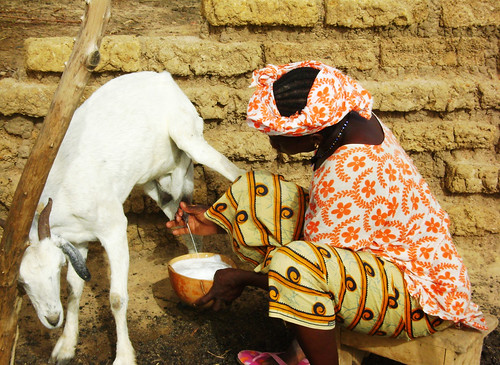
A woman milks one of her goats in Ségou District, Mali
A woman milks one of her goats in Ségou District, Mali (photo credit: ILRI/Valentin Bognan Koné). 

The International Livestock Research Institute (ILRI) and CTA are calling for contributions for a seminar on African dairy value chains to be held in Nairobi, Kenya on 21–24 September 2014.

The objective of the seminar, organized in the context of the AgriFood chain toolkit of the CGIAR Research Program on Policies, Institutions and Markets and the CTA value chain program, is to enable dairy value chain practitioners (farmers’ representatives, private sector firms, non-governmental organizations, development agencies and government officials) and researchers to share lessons on conducive policies and capacity development and analytical tools for the analysis of dairy value chain development.

The organizers are particularly interested in policy-relevant experiences and tools that facilitate a gender-equitable participation of actors in the dairy value chain.

Access more details on the call for contributions

Peer-review and acceptance of relevant contributions will be done on a first-relevant-come, first-served basis. Don't wait until the last minute!

Vous ne comprenez pas bien l’anglais ? Lisez cette note en français ici.

Sunday, March 09, 2014

Parallel insights from the Himalayas and the Tanzanian coast, on agricultural-research-for-development field work

Jo Cadilhon, senior agro-economist with the Policy, Trade and Value Chains program of the International Livestock Research Institute (ILRI), recently travelled to India and Tanzania to visit two ILRI graduate fellows he is supervising. In this blog post, he gives us an insight into their experiences and the different challenges they faced while carrying out their field surveys.

I have travelled recently to visit two new ILRI Graduate fellows I am supervising. They have spent two months in the field with the International Fund for Agricultural Development (IFAD)-funded MilkIT project, which is enhancing dairy-based livelihoods in India and Tanzania through feed innovation and value chain development approaches. This research is linked to the CGIAR Research Programs on Livestock and Fish and Humidtropics. Our aim is to gather data that will help us validate a model useful for the impact assessment of innovation platforms. Despite the two very different field settings they were immersed in, both graduate fellows have been able to share relevant lessons with each other and the project hosting them.

Pham Ngoc Diep is a Vietnamese MSc candidate in Agricultural and Food Economics at the University of Bonn in Germany. Diep is passionate about working for farmers. She already had agricultural development experience in Vietnam and Thailand before joining ILRI but her motivation to take an MSc course and this fellowship was to learn about research methods and tools that she could use in relevant ways for her agricultural development work. She has been diligently going through the traditional steps of a research protocol: two months of literature review and developing questionnaires, two months of field surveys in Tanga Region of Tanzania and she is now inputting her data before analysis and interpretation to write up scientific publications.

Coming from an urban background, Diep liked having had to stay for an extended period with farming communities to collect her data. This experience will help her work better with farmers in future because she has witnessed and appreciated their daily schedule, how they communicated, how they saw, understood and interpreted things. Diep hopes to use this new skill in future when working with farmers in other countries. Diep was particularly challenged by the need to work with interpreters because she could not speak the local language. Having used local extension officers as interpreters, Diep had to think all the time about the possible bias they were introducing into the questions and answers exchanged with the dairy producers with whom they also interacted as part of their regular professional activities. Although the breezy seaside guesthouse she stayed in in the coastal city of Tanga was very pleasant, Diep suffered from the arid heat when working in districts further inland.

The other student working in parallel did not have problems of language or overheating. Shanker Subedi is currently studying agricultural economics at the University of Hohenheim in Germany. He is Nepalese with some previous rural development experience in his country and some knowledge of Hindi. So Shanker felt completely at home during his field work interviewing smallholder dairy producers in Himalayan villages of Uttarakhand State in Northern India. He got along very well with the villagers in whose home he would stay and whose food he would share, for a small fee.

For Shanker, this experience in the field was an opportunity to put agricultural research for development into practice. He felt his social status had been raised while there by the fact that he could share relevant prior agricultural development experience he had from Nepal with the project partners: the viewpoint of an experienced youth was valuable. However, Shanker was more affected by the remote location of his fieldwork setting. The 3G key he had bought – and which was supposed to work where he went, according to the telecoms shop seller – turned out not to pick up any signal so his computer did not have internet access when staying in the villages; he had to rely on his smartphone to stay connected.

Shanker reported suffering from the bitter cold during the Himalayan winter while in the field: he could not work in the evenings because his hands would go numb from typing in the freezing air. The cold nights also made it difficult for him to sleep restfully at night. And then his laptop broke down and he had to travel for two days to the nearest city to get it fixed and lost some of his files in the process.

Both Diep and Shanker are now back in sunny and cool Nairobi. They are now working hard on their data analysis and write-up for their MSc thesis or fellowship report, which are due beginning of April.

Originally posted on Jo Cadilhon's YPARD blog

Thursday, October 17, 2013

Agrifood chain toolkit conference fosters interactions between value chain researchers and practitioners

In this blog post, ILRI agro-economist Jo Cadilhon reflects on a recent conference in Kampala, Uganda that brought together agricultural and livestock value chain researchers and practitioners. The participatory approach of the conference fostered exchange of information and helped the participants learn from each other's experiences. 

Day 1: Plenary storytelling
Plenary storytelling at the agrifood chain toolkit conference on livestock and fish value chains in East Africa held at Kampala, Uganda on 9-11 September 2013 (photo credit: ILRI/Megapix). 

The International Livestock Research Institute (ILRI) organized the first Agrifood Chain Toolkit Conference in Kampala from 9 to 11 September 2013. The objective of the meeting was to gather researchers of value chains and practitioners developing value chains in the field so as to foster feedback from the practitioners on the analysis tools developed by researchers.

The meeting also meant to raise the awareness of practitioners on analytical tools available that could help solve their problems of value chain field development.

This whole initiative was undertaken to contribute to the Value Chain Clearinghouse activity of the CGIAR Research Program on Policies, Institutions and Markets. This first conference was focused on livestock and fish chains so as to tap on ILRI’s expertise and partners within the CGIAR Research Program on Livestock and Fish.

As one of the organizers of the event, I would like to reflect on it with the viewpoint of a value chain researcher. I also reflected on the lessons I learned from the conference with a livestock and fish value chain developer’s viewpoint. Short videos are also available showcasing the reflections of the conference participants and of the organizers.

The concept of an Agrifood Chain Toolkit Conference is built around 'No PowerPoint'. This is meant to foster interaction between participants. This can seem a bit off-putting for researchers who are used to presenting their work under this widespread format.

However, as the editor of the conference coordinating the review of contributions submitted, I was very clear that contributors had to find an alternative way of presenting their work. Many researchers opted for posters instead.

Our ILRI facilitator Ewen Le Borgne made a wonderful job of getting everybody involved into discussions through a series of various activities. After the usual icebreaker to let all 58 participants have an idea of who else was in the room, we heard two stories in plenary.

The first was told by a value chain practitioner on the problems he had faced developing dairy value chains in Zimbabwe. The second was beamed live from Nairobi with my colleague Hikuepi (Epi) Katjiuongua telling us about the development and adaptation of the Livestock and Fish Value Chain Toolkit.

We then gave the opportunity to value chain researchers in the room to present their tools and methods for value chain analysis to the rest of the participants through a mini-sharefair.

All presenters had a corner in the room where they could present and discuss their work with other participants who would roam through the room according to their interest. This part of the meeting did not work quite well.

Perhaps because the main interest of the participants at that time of the day was to enjoy morning tea and snacks. Those were served outside the conference room despite our specification to the venue staff to serve those within the room. Understandably, some of the researchers felt a bit frustrated to see their work was attracting less interest than tea and snacks.

The rest of the first day was used to learn from the experiences of value chain practitioners: their stories allowed the researchers to get a better grasp of the problems they were facing to develop value chains in the field.

On the second day, all participants divided into five small groups to go visit five different value chains: two pig value chains, two dairy value chains and one farmed fish value chain.

This allowed value chain researchers to get an even closer understanding of the problems faced by value chain practitioners. It was also an opportunity to undertake quick-field testing of some of the questionnaire tools ILRI had developed in its Livestock and Fish Value Chain Toolkit.

On the third and final day of the conference, the researchers were now better aware of all the different problems faced by value chain practitioners who were also participating in the conference.

So Ewen and I gave the researchers another chance to market their value chain analysis tools and methods knowing the types of issues that had been discussed on the first day and the real-life problems encountered during the field visits.

A second iteration of the mini-sharefair on value chain tools and methods followed. This one was a greater success because the researchers had been able to customize their marketing pitch to attract visitors to their display using the language and keywords that they had heard being used by the value chain practitioners, and by mentioning that their methods and tools could actually contribute to solving some of the real-life problems they had heard and seen during the past two days.

The interactions between researchers and practitioners were then very lively with several practitioners coming one after the other to see researchers who had tools that could help solve their problems.

There were many expressions of interest to use some of these tools in new contexts through research-for-development projects still to be constructed. Most fulfilling, I heard many value chain practitioners saying they could use some of the tools themselves if those were made available to them and would report back on how they were used and the difficulties faced to adapt them to their own context.

This strong interaction and feedback process between value chain researchers and value chain practitioners was exactly what the Agrifood Chain Toolkit Conference was meant to foster. More such conferences will follow focusing on other commodities in other regions.

To stay informed about future events, register to the Agrifood chain toolkit online discussion group.

Jo Cadilhon, Senior Agro-economist, Policy, Trade and Value Chains Program, ILRI

Friday, October 04, 2013

ILRI to host international conference on mainstreaming livestock value chains

Livestock market in Mali
Animals for sale at Niamana Livestock Market, Bamako, Mali (photo credit: ILRI/Stevie Mann).

An international conference on Mainstreaming Livestock Value Chains: Bridging the Research Gap between Household Analysis and Policy Modelling will take place in Accra, Ghana on 5-6 November 2013.

The conference will directly address existing gaps in the design and application of analytical tools for livestock policy and impact analysis. Participants will include research organizations and development actors with an interest in the empirical specification of agricultural policy, particularly related to livestock.

Presenters will include leading agricultural policy modellers and analysts working on the impact of socio-economic drivers and the impact on improved livestock technologies on people, communities, and the environment.

The goals of the conference are:
  • To establish strong and functional linkages between livestock value chain and impact analysis on the one hand, and sectoral, general equilibrium, and other economic modelling on the other.
  • To identify and advocate pro-poor livestock policy as it emerges from existing analysis.
The finalized papers will be edited and compiled for a special issue of a leading journal.

The conference is organized by scientists from the International Livestock Research Institute (ILRI) under the framework of the CGIAR Research Program on Policies, Institutions and Markets.

For further information, please contact Dolapo Enahoro (d.enahoro @ cgiar.org)

Tuesday, August 27, 2013

Smallholder livestock farmers in Tanzania can benefit from growing consumer demand for beef and poultry products

Major business opportunities exist for smallholder livestock producers in Tanzania, driven by growing demand for high quality beef and poultry products and a large number of rural livestock-keeping households, a recent research study shows.

The research findings were presented at the 19th International Farm Management Congress held in Warsaw, Poland in July 2013. The study assessed urban and rural consumers’ preferred retail outlets and retail forms (different cuts of beef and poultry) as well as their preferences for product quality and safety attributes. Retail outlets and form preferences differed markedly across consumer income classes, but quality and safety attributes were valued by all income classes.

View the presentation below


Citation
Baker D, Pica-Ciamarra U, Longin N and Mtimet N. 2013. The market for animal-sourced foods in Tanzania: Business opportunities for small-scale livestock producers? Presentation at the 19th International Farm Management Congress, Warsaw, Poland, 21-26 July 2013.

Wednesday, July 03, 2013

ILRI publishes report on rapid appraisal of Ethiopia's live cattle and beef value chain

Cattle market in Mi'eso area
Cattle market in Mi'eso, Oromia Region, Ethiopia (photo credit: ILRI/Apollo Habtamu).

Despite the prominence of cattle in Ethiopian society and its economy, relevant qualitative and quantitative information is both scarce and subject to a variety of interpretations.

Mobilizing cattle, and their supporting natural and human resource base, in a sustainable manner for development purposes is therefore a challenge that begins with identification of problems and opportunities about which there is limited agreement.

It is in this context that the Government of Ethiopia requested a diagnostic study, through the Bill & Melinda Gates Foundation, which is supporting the Ethiopian Ministry of Agriculture and Rural Development to undertake a work program requested by the government, to provide strategic input and technical assistance in several key areas of the country’s agricultural sector.

Using an extensive review of secondary materials, learning from a series of stakeholders’ consultations, and participatory rapid assessments of market actors, the study analyzed live cattle and beef marketing.

The key findings have been published by the International Livestock Research Institute (ILRI) in a discussion paper.

The rapid appraisal focused on two of Ethiopia’s major cattle trading routes, representing each of the agropastoral highland production systems and pastoral lowland production, and the respective routes taken by animals to market.

The main objective was to diagnose problems based on quantitative measures, and identify associated policy strategies. The study team included local specialists, international management consultants, as well as researchers from CGIAR.

The team not only interacted with the policymakers on emerging results but also triangulated the results with other experts in the country in the forms of both stakeholders’ consultations and one-to-one interviews.

Download the discussion paper

Citation
GebreMariam S, Amare S, Baker D, Solomon A and Davies R. 2013. Study of the Ethiopian live cattle and beef value chain. ILRI Discussion Paper 23. Nairobi, Kenya: ILRI.

Wednesday, March 20, 2013

Gender strategy of the East Africa Dairy Development project boosts women's participation in dairy organizations

Milk sale in Nairobi's informal market
Milk sale in Nairobi's informal market (photo credit: ILRI/Brad Collis).


The March 2013 issue of the New Agriculturist online newsletter highlights some of the approaches used by the East Africa Dairy Development (EADD) project to transform attitudes to gender so as to achieve increased participation of women in livestock development activities.

The EADD project aims at doubling household income from dairy products among 179,000 livestock-keeping households in Kenya, Uganda and Rwanda.

The project has adopted a dairy hub approach to enable farmers' have easy access to key farm inputs and animal health services as well as bulking and chilling facilities for their milk.

A baseline survey carried out in 2008 found that only 14% of dairy organization members were women. Because gender equity was a key pillar of the project, a pragmatic gender strategy was developed to incorporate gender issues into the project towards increasing women's participation.

Various gender transformative approaches were used. These included training of project staff at country and regional level, incorporation of key gender indicators in project planning and budgets for monitoring and evaluation, and training of farmer groups, particularly women, on the importance of being a member of a dairy organization.

These efforts have borne fruit, with a noted increase in women's membership in dairy organizations from 14% at the start of the project to 29% in June 2012.

The EADD project is now entering its second phase, which will see the project activities expand into Ethiopia and Tanzania.

Read the complete article: Tackling gender blindness in East African dairy development

Thursday, January 24, 2013

New online resource links value chain researchers and practitioners for improved knowledge sharing

Market near Khulungira Village, in central Malawi
Selling agricultural produce at Chimbiya Market, near Dedza in central Malawi. The new AgriFood Chain Toolkit links value chain researchers and practitioners for better sharing of information and knowledge on value chain development (photo credit: ILRI/Mann).

The CGIAR Research Program on Policies, Institutions and Markets has launched a new online resource that links agricultural value chain researchers and field practitioners so that the methods and approaches used for analyzing value chains in developing countries may be better targeted and adapted to suit specific conditions in the field.

The new AgriFood Chain Toolkit is an online resource that brings together the researchers who develop tools and methods for value chain analysis and the people who use the tools in the field.

The toolkit also supports a community of practice, bringing together various stakeholders to review, assess and improve value chain approaches so as to come up with better-suited tools for value chain analysis and development.

“There are too few links existing between value chain researchers and value chain practitioners. The AgriFood chain toolkit is designed to help researchers and practitioners overcome this challenge,” said Jo Cadilhon, an agricultural economist at the International Livestock Research Institute who was involved in developing the toolkit.

The AgriFood Chain Toolkit is based on two main online knowledge-sharing tools:

  • An electronic document repository: This contains links to documents and websites on quantitative methods of value chain analysis, capacity building of value chain stakeholders and several case studies of agricultural supply chains in developing countries. Most of the publications are open access documents.
  • The AgriFood Chain Toolkit Dgroup: This online discussion group is the platform to go to in order to ask for help when looking for a specific value chain tool to suit a specific field context or to provide feedback on the documents and websites found in the document repository.

Find out more by browsing the document repository or sign up to join the AgriFood Chain Toolkit Dgroup.

Thursday, December 20, 2012

Dairy hubs for delivery of technical and advisory services: Lessons from the East Africa Dairy Development project

The vision of the East Africa Dairy Development project is to transform the lives of 179,000 smallholder farming families (approximately 1 million people) by doubling their household dairy income in 10 years.

To achieve this goal, the project seeks to harness information to support decision making and innovation, expand smallholder dairy farmers' access to markets for their milk, and increase farm productivity and economies of scale.

The project uses a hub approach to improve dairy farmers' access to business services, inputs and markets. The dairy hubs facilitate the emergence and strengthening of networks of input and service providers as well as the establishment of mechanisms for farmers to access credit.

On 5-7 December 2012, Jo Cadilhon, agricultural economist with the International Livestock Research Institute (ILRI), attended a stakeholder workshop on the role of the public and private sectors in the delivery of livestock services in Africa. He presented the concept of dairy hubs for delivery of advisory and technical services to smallholder dairy production systems, based on the experiences of the East Africa Dairy Development project.

Below is the presentation:


Wednesday, December 19, 2012

ILRI study calls for a formal grading system for export quality Somali livestock

Batch of Somali goats
Batch of export quality Somali goats (photo credit: Terra Nuova).


Somalia is the largest exporter of live animals from Africa. The country, however, does not have a formal system of grading livestock and livestock products. Such a system is needed to enforce quality control for purposes of stabilizing and expanding international livestock trade. The system would also ensure that the prices of livestock and livestock products are determined on the basis of defined standards.

As a step towards formalizing the existing informal grading system used in Somalia for export quality livestock, researchers from the International Livestock Research Institute (ILRI) and Terra Nuova have identified improved animal nutrition and livestock breeding programs as two possible interventions.

Increasing the quality and availability of animal feed during the long journey from the point of initial purchase to the point of slaughter will lead to enhanced livestock body condition. Body condition was identified as the most important trait used in grading of livestock for export.

Targeted livestock breeding and selection programs will, in the long term, enhance livestock body conformation which was found to be the second most important trait in grading of livestock.

These recommendations are based on a collaborative study by ILRI and Terra Nuova to assess and document information related to the grading of export quality Somali livestock. The specific objectives of the study were to:

  • identify the grading system in use for the four types of export quality Somali livestock (camels, cattle, goats and sheep) in selected markets, based on brokers' and traders' local knowledge;
  • analyze and document the rationale behind the identified grading system;
  • evaluate the relationship between the grading system and price; and
  • ascertain the validity of the grading system in real market environment.

Sex, age, body condition and body conformation were identified as the four main traits used in grading of Somali livestock destined for export. The levels within these traits were: sex (male or female); age (years or categorized as either immature or mature), body condition (excellent, good or fair) and conformation (excellent, good or fair).

The interactions of the alternative levels of these traits gave rise to three commercial grades for export quality livestock, classified in decreasing order of quality as grades I, II, III. However, these grades varied depending on the destination of export and use of the animals.

The findings of the study will be a useful source of reference for regulatory agencies and others involved in formalizing and publicizing of Somalia's grading system for export quality livestock.

Download the discussion paper

Citation
Mugunieri L, Costagli R, Abdulle MH, Osman IO and Omore A. 2012. Improvement and diversification of Somali livestock trade and marketing: Towards a formalized grading system for export quality livestock in Somalia. ILRI Discussion Paper 22. ILRI (International Livestock Research Institute), Nairobi.

Monday, December 10, 2012

ILRI study characterizes Somali chilled export meat value chain

Young goats in Hargeisa Market, Somaliland
Batch of young goats for slaughter and export of chilled meat, Hargeisa Market, Somaliland (photo credit: Terra Nuova).

Export-oriented pastoral livestock production is an important source of livelihood of the people of Somalia. The country is largely food deficient, with imports forming a significant proportion of basic food requirements and which are largely financed through earnings from exports of live animals and meat.

The export of meat products offers more avenues for increased earnings and tax revenue by exploiting the available opportunities for domestic value addition, than does live animal trade.

A collaborative research study by the International Livestock Research Institute (ILRI) and Terra Nuova characterized the Somali chilled export meat value chain in terms of actors, institutions and practices and provided an initial analysis of their profitability in handling four species of livestock.

The main objective of the study was to provide information that would enable development of strategies to improve the efficiency of the Somali chilled meat export value chain as a way of increasing incomes to market actors.

The study presents preliminary recommendations for public and private sectors. These focus on value addition and information sharing on what constitutes value, building of product identity and legally protecting its unique status, and coordination to address costs.

Download the research report

Citation
Negassa A, Baker D, Mugunieri L, Costagli R, Wanyoike F, Abdulle MH and Omore A. 2012. The Somali chilled meat value chain: Structure, operation, profitability and opportunities to improve the competitiveness of Somalia’s chilled meat export trade. ILRI Research Report 32. ILRI (International Livestock Research Institute), Nairobi.

Wednesday, November 14, 2012

Good livestock management by all value chain actors can improve quality in the Ethiopian leather industry


Jean Joseph (Jo) CadilhonJo Cadilhon (left) recently joined the International Livestock Research Institute as an agricultural economist with the Changing Demand and Market Institutions team. From 6-9 November 2012, he was among several scientists and other agricultural stakeholders who took part in an international conference organized by CTA in Addis Ababa, Ethiopia under the theme “Making the connection: Value chains for transforming smallholder agriculture”. He facilitated a session on capacity building in value chains and later during one of the conference field trips learned about an important value chain for livestock by-products: the Ethiopian leather industry. Below is his report.

The International Livestock Research Institute (ILRI) was a partner organizer of the CTA conference on Making the connection: value chains for transforming smallholder agriculture held from 6 to 9 November 2012 in Addis Ababa, Ethiopia.

One of the conference field trips organized by the United Nations Industrial Development Organization (UNIDO) focused on leather products so I joined it to discover this value chain for livestock by-products.

I learned that good management practices by all stakeholders in the chain are just as critical for the quality improvement of livestock by-products as it is for the quality and safety of food products derived from livestock.

Take the example of the leather industry in Ethiopia. Although selling animal hides for leather production is only a by-product for livestock producers, the local tanning industry can process up to 30,000 skins per day, producing leather for shoes and garments and creating significant employment, according to the Leather Industry Development Institute.

Cattle being watered at the Ghibe River in southwestern Ethiopia
Cattle being watered at the Ghibe River in southwestern Ethiopia. Simple improvements in the practices of livestock value chain stakeholders, such as avoiding inflicting wounds on the skin of cattle during herding, could help improve the quality of Ethiopian leather goods. (photo credit: ILRI/Stevie Mann).

Crucially, simple improvements in herding, slaughtering, skinning and marketing practices in livestock value chains could help improve the quality of finished leather goods and thus increase the incomes for all value chain stakeholders.

For example, men’s shoes are cut out of cow skins. The various components of the shoes are cut from different areas of the skin: the shoulder and butt being stronger and of better quality than the skin from the belly and legs.

The job of the leather cutter is to optimize the number of shoe parts that can be cut out of one hide. If there are holes in the hide due to putrefaction of the skin before tanning, this decreases the number of shoe parts that can be cut out of one hide.

These holes are due to infected wounds in the skin. These wounds are usually inflicted on the animal during herding, slaughtering and skinning of the slaughtered animal.

Furthermore, there are usually several days before a hide reaches the tannery from the slaughterhouse through a very long chain of intermediary traders whereas the optimal time to preserve the quality of animal hides before tanning is just 24 hours.

This long time lag increases the likelihood of putrefaction of any wounds on the hides, thus decreasing the quality of the leather.

One indicator of leather quality is the homogeneity of the leather’s surface. When the live animal has been sick or infected by parasites scars and spots can appear on the skin, which then lead to stains and scars on the tanned leather.

The leather cutters and cobblers then have to work around these defects for fear of seeing the price of the final product depreciated.

Quality improvement in the Ethiopian livestock and leather industry is supported by ILRI,  the Italian Development Cooperation, the United Nations Development Program (UNDP), UNIDO and the United States Agency for International Development (USAID) through linkages with the Leather Industry Development Institute.

Monday, January 16, 2012

New project adopts innovation and value chain approaches to enhance livestock feeds in India and Tanzania

Fodder market in India
Fodder market in India: Research by ILRI and CIAT aims to enhance  dairy-based livelihoods in India and Tanzania through feed innovations and value chain approaches (photo credit: ILRI/Mann).

Lack of access to adequate high-quality livestock feed is a key constraint towards improved milk yields and hence dairy income for smallholder dairy producers.

As part of efforts towards addressing the problem of feed scarcity, two CGIAR centres, the International Livestock Research Institute (ILRI) and the International Center for Tropical Agriculture (CIAT), have embarked on a research initiative that will use novel systems-based approaches to enhance feeds and feeding in smallholder dairy production systems in India and Tanzania.

By adopting a value chain perspective and using innovation system principles, the project places feed in a broader context and acknowledges that enhancing feed supply involves more than just introducing or promoting feed technologies at farm level but also includes other dimensions such as animal health, livestock breeding and knowledge sharing.

The objectives of the project Enhancing dairy-based livelihoods in India and Tanzania through feed innovation and value chain development approaches (MilkIT) are three-fold:

  • Institutional strengthening: To strengthen use of value chain and innovation approaches among dairy stakeholders to improve feeding strategies for dairy cows
  • Productivity enhancement: To develop options for improved feeding strategies leading to yield enhancement with potential income benefits
  • Knowledge sharing: To strengthen knowledge sharing mechanisms on feed development strategies at local, regional and international levels

The three-year project is embedded in the CGIAR Research Program on Livestock and Fish. It will be coordinated by ILRI with CIAT acting as a major partner. Dr Bernard Lukuyu and Dr Amos Omore from ILRI's Markets, Gender and Livelihoods theme will make key contributions in the areas of livestock feeds and technical/institutional options for improving market access, respectively.

Already, some preliminary activities have taken place. In the latter half of 2011, a number of scoping visits were made to the two study countries to identify project sites and partners. A pre-inception planning meeting is scheduled for 24-25 January 2012 in Nairobi to officially launch the project activities. You can read about the scoping visits in this post on the ILRI Fodder Adoption blog.

For more information about this project, please contact Dr Alan Duncan (a.duncan @ cgiar.org)

Download the project brochure

Friday, November 11, 2011

Taking stock: ILRI meeting reflects on the past, charts the next steps for livestock research for development

On 9 and 10 November 2011, the Board of Trustees of the International Livestock Research Institute (ILRI) hosted a two-day 'liveSTOCK Exchange’ at ILRI's Addis Ababa campus to discuss and reflect on livestock research for development over the past decade and chart the way forward based on lessons learned.

The event synthesized sector and ILRI learning to help frame future directions for livestock research for development. The liveSTOCK Exchange also marked the leadership and contributions of Dr Carlos Seré who served as the Director General of ILRI from 2002 to 2011.

In October 2011, Dr Seré took up the position of Chief Development Strategist leading the Office of Strategy and Knowledge Management at the International Fund for Agricultural Development (IFAD) headquarters in Rome.

As part of the debate, sharing and reflection, scientists from ILRI's Market Opportunities theme prepared four issue briefs that document the lessons learned from past research projects by the Research Theme as well as the challenges, outcomes, impact evidence, and future prospects for livestock research towards improving market opportunities for smallholder livestock producers. You may access the issue briefs from the links below:


Also check out this presentation: Livestock market opportunities for the poor, that formed the framework for discussion and debate.

To read more about the liveSTOCK Exchange, please visit http://clippings.ilri.org/tag/livestockx/ and the liveSTOCK Exchange wiki.

Wednesday, November 09, 2011

New Agriculturist magazine features ILRI-led Safe Food, Fair Food project


The November 2011 issue of the bimonthly online magazine, New Agriculturist, features the Safe food, fair food project which aims to improve the safety of livestock products in sub-Saharan Arrica by adapting risk-based approaches, successfully used for food safety in developed countries, to suit domestic informal livestock markets in developing countries in sub-Saharan Africa.

The project is led by scientists from the Market Opportunities research theme of the International Livestock Research Institute (ILRI) and is implemented in eight countries (Cote d'Ivoire, Ethiopia, Ghana, Kenya, Mali, Mozambique, the Republic of South Africa and Tanzania) in collaboration with universities and national research institutes.

In addition to research studies on participatory risk analysis, the project has held national workshops to engage policymakers to raise awareness about the potential food safety hazards that exist along the entire value chain.

In September 2011, the project held its final synthesis workshop to deliberate on the results of national impact assessment studies and develop a project synthesis book which will facilitate dissemination of the research findings to wider audiences.

To find out more, please visit the project web page.

Tuesday, August 30, 2011

ILRI project offers viable solutions to rising pork prices in Vietnam

Smallholder pig production in northern Viet Nam
Farmer Ma Thi Puong feeds her pigs on her farm near the northern town of Meo Vac, Vietnam: Policies that address supply constraints faced by both small and large pig farmers in Vietnam can help in long-term solutions to the rising prices of pork and live pigs. (Photo credit: ILRI/Mann).

Rising consumer demand for pork, high cost of animal feed and ineffcient value chains have led to skyrocketing prices of pork and live pigs in Vietnam. Within the first half of 2011 alone, the cost of pork and live pigs doubled in the principal urban markets of Hanoi and Ho Chi Minh City.

As policymakers seek long-term solutions towards boosting domestic supply of pork to meet the sustained consumer demand, research findings by scientists from the Market Opportunities theme of the International Livestock Research Institute (ILRI) can help in pointing the way to viable solutions to the current food price crisis.

Findings from a three-year (2007-2010) Australian Centre for International Agricultural Research (ACIAR)-funded ILRI-led collaborative project, Improving competitiveness of smallholder pig producers in an adjusting Vietnam market, suggest that both small-scale and large-scale pig producers should be targeted in a strategy for expanding domestic pork supply in Vietnam, considering that prices are likely to remain high in the long run on account of pork being a key ingredient in the Vietnamese diet.

These and other findings are highlighted in an article by Nguyen Do Anh Tuan of Vietnam's Centre for Agricultural Policy and Lucy Lapar of ILRI published in the 22-28 August 2011 issue of Vietnam Investment Review, Vietnam's leading weekly international business newspaper.

Previous interventions by the Vietnam government have tended to ignore small-scale farmers, focusing instead on developing large-scale farms to address supply constraints such as rising feed prices, losses from diseases and inefficiencies in pork value chain.

However, research findings based on a pig sector model for Vietnam suggest that large-scale pig farms will make a minimal contribution to supply in both the short- and long- term. Indeed, the majority small-scale farms were found to be better able to adapt to volatile prices in feed markets, hence creating efficiencies in these systems.

Therefore, focusing on large-scale farms and ignoring the majority of small-scale farms and their constraints will not result in long-term efficiency gains, the study concluded.

"The focus should be on addressing causes of constraints to productivity growth, such as disease outbreaks, rising feed prices, efficient system for replacement of breeding stocks and improving pork value chain performance," the article's authors suggest.

"Policies that will provide incentives to generate new technological breakthroughs and appropriate institutions to support these would likely to be more effective options," the authors add.

The project collaborators were the Centre for Agricultural Policy - Institute of Policy and Strategy for Agricultural and Rural Development (CAP-IPSARD), the International Food Policy Research Institute (IFPRI), Oxfam Hong Kong and the University of Queensland.

Read the complete article from the Vietnam Investment Review

For more information, please contact Dr Lucy Lapar of ILRI (l.lapar @ cgiar.org), visit the project website or read the project publications.

You may also be interested in these past blog posts on Livestock Markets Digest

Monday, February 07, 2011

Projects share strategies to increase access of women farmers to agricultural markets and services

Mozambican women selling fruit. Innovative approaches can enhance access of small-scale women farmers to vital markets for their produce. (Photo credit ILRI/Mann)

The recently concluded AgriGender 2011 workshop on gender and market-oriented agriculture which took place at the Addis Ababa campus of the International Livestock Research Institute (ILRI) from 31 January to 2 February 2011 featured discussions on experiences from research on how best to increase the access of small-scale farmers, many of whom are women, to agricultural markets and value chains.

ILRI’s Market Opportunities theme was represented at the workshop by Dr Isabelle Baltenweck, agricultural economist with ILRI’s research team on smallholder competitiveness in changing markets and Dr Ranjitha Puskur, head of ILRI’s research team on innovation in livestock systems.

Below are links to their presentations on lessons learned from two projects, collaboratively undertaken by ILRI and partners, which adopted innovative approaches towards enhancing the access of smallholder farmers to agricultural inputs, services and markets.

Using hubs to increase smallholder farmers’ access to services: Experiences from the East Africa Dairy Development project
By Isabelle Baltenweck and Immaculate Omondi
An overview of how the East Africa Dairy Development project is using an approach involving community-based hubs to bring dairy services closer to small-scale farmers in Kenya, Rwanda and Uganda. This innovative approach has greatly enhanced the access of dairy farmers to agro-veterinary inputs, animal health services and milk markets.

The role of gender in crop value chains in Ethiopia
By Lemlem Aregu, Ranjitha Puskur and Clare Bishop Sambrook
Presentation of results of a gender analysis by the project, Improving Productivity and Market Success of Ethiopian farmers (IPMS) which examined the influence of gender in crop production, marketing, decision-making and access to services and technologies. Potential barriers to women’s and men’s participation in market-led development initiatives are identified and remedial actions to overcome these barriers recommended. The IPMS project was involved in participatory commodity development using a value chain approach.

Strategies for increasing women’s participation in agricultural value chain development: Lessons from IPMS experiences
By Lemlem Aregu and Ranjitha Puskur
An overview of approaches used by the IPMS project to increase women’s participation in agricultural value chains and enhance the access to knowledge and services. Based on the lessons learned from the project, several recommendations are proposed that may assist in planning and management of similar projects.

Outcomes of women’s participation in market-oriented community development: Evidence from IPMS
By Ranjitha Puskur and Lemlem Aregu
An overview of an assessment of the immediate socio-economic outcomes for women farmers who participated in IPMS project interventions in value chains involving poultry, small ruminants, dairy, feed and forage, apiculture, fruits and vegetables.

View more presentations from the AgriGender 2011 workshop on the ILRI Slideshare page at http://www.slideshare.net/tag/agrigender2011.

Find out more about ILRI’s gender-related research on the ILRI Gender and Agriculture blog.

Monday, January 31, 2011

International workshop to discuss strategies for enhancing women's participation in agricultural value chains

Making agricultural markets work for women: A Mozambican woman prepares her agricultural produce for sale. (Photo credit: ILRI/Mann)

Agricultural researchers, development practitioners and policymakers gather at the principal campus of the International Livestock Research Institute (ILRI) in Addis Ababa, Ethiopia for a three-day workshop on gender and market-oriented agriculture beginning today, 31 January 2011.

Participants will discuss the role of gender in enhancing market-oriented smallholder agriculture in developing countries.

The meeting will also present evidence from research on strategies with potential for increasing the access of smallholder women farmers to agricultural commodity value chains.

The workshop is hosted by ILRI on behalf of a project of the Government of Ethiopia implemented by ILRI called Improving Productivity and Market Success of Ethiopian Farmers (IPMS).

ILRI’s Market Opportunities theme is represented by Dr Ranjitha Puskur, head of the research team on innovation in livestock systems, and Dr Isabelle Baltenweck, agricultural economist with the research team on smallholder competitiveness in changing markets.

Dr Puskur is co-author of a number of presentations on women's participation in commodity value chain development and market-oriented smallholder agriculture while Dr Baltenweck will present on experiences from the East Africa Dairy Development Project which is encouraging the use of dairy hubs to enhance access to services by smallholder farmers.

For more information, please visit the ILRI Gender and Agriculture blog or search for #agrigender2011 on Twitter.

Tuesday, January 11, 2011

Quantitative approaches can improve value chain analysis of livestock systems, new study says

Value chain analysis has important applications in development settings but research gaps exist in quantifying the impacts from value chain interventions. Various quantitative methods exist that have the potential to strengthen measurement of value chain impacts.

A new study published online on 18 December 2010 in the journal Food Policy examines the application of two modelling platforms, system dynamics and agent-based modelling, in quantitative value chain analysis of livestock systems within a developing-country context.

The paper, Quantifying value chain analysis in the context of livestock systems in developing countries, is authored by Karl Rich of the Norwegian Institute of International Affairs (NUPI) and on joint appointment at the International Livestock Research Institute (ILRI), R Brent Ross of Michigan State University, Derek Baker of ILRI and Asfaw Negassa of the International Maize and Wheat Improvement Center (CIMMYT).

View the abstract here

Citation
Rich KM, Ross RB, Baker AD and Negassa A. 2011.Quantifying value chain analysis in the context of livestock systems in developing countries. Food Policy 36(2): 214-222.

Friday, December 03, 2010

In the news: Director of ILRI's market opportunities theme interviewed on Vietnam agriculture TV channel

Agricultural economist and director of the Market Opportunities Theme at the International Livestock Research Institute (ILRI), Dr Steve Staal, was interviewed on the Weekend Agro-Products Market programme on VTC-16, Vietnam’s Agriculture and Rural Development television channel.

Dr Staal was speaking during a workshop for an ILRI-led project aimed at improving the competitiveness of pig producers in an adjusting Vietnam market. The workshop was held on 5 October 2010 at the Melia Hotel, Hanoi, Vietnam to mark the end of the project and to present research findings to stakeholders.

He highlighted the key findings of the project, noting that smallholder pig producers in Vietnam are indeed competitive and are likely to remain so, especially in light of projected future increases in consumer demand for fresh pork.

The three-year project (2007-2010) was sponsored by the Australian Centre for International Agricultural Research (ACIAR). The project collaborators were the Centre for Agricultural Policy - Institute of Policy and Strategy for Agricultural and Rural Development (CAP-IPSARD), the International Food Policy Research Institute (IFPRI), Oxfam Hong Kong and the University of Queensland.

More information is available on the project website http://www.vietpigs.com.vn/