News and updates on research on livestock value chains by the International Livestock Research Institute and partners

Showing posts with label animal health. Show all posts

Friday, April 20, 2012

PhD students and interns gain from ILRI training workshop on research methods


Kristina Roesel presents her PhD proposal during a training workshop on research methods
Kristina Roesel presents her PhD proposal during a training workshop on research methods held at ILRI Nairobi (photo credit: ILRI/Tezira Lore).

On 17-18 April 2012, the Nairobi-based International Livestock Research Institute (ILRI) held a training workshop on research methods for eight PhD students and interns attached to ILRI's Animal Health, Food Safety and Zoonoses team which is led by Delia Grace.

The training was facilitated by staff from ILRI's Research Methods Group, InfoCentre, and Markets, Gender and Livelihoods research theme.

The topics included an introduction to R software for data analysis; systematic literature review; using Mendeley to manage and share research papers; presentation skills; integrating gender analysis in research design; animal care and use; research ethics; how to search for journal articles; and use of web 2.0 tools to communicate research.

The session on gender analysis in research design facilitated by Elizabeth Waithanji of ILRI's Poverty, Gender and Impact team was particularly useful in helping the students to define gender-responsive goals and objectives leading to the development of research hypotheses and data collection tools that incorporate gender.

"Disaggregating data collection by gender will enable the generation of research evidence on how men and women are impacted differently by the interventions," Waithanji said.

James Kahunyo presents his PhD proposal during a training workshop on research methods
James Kahunyo presents his PhD proposal during a training workshop on research methods held at ILRI Nairobi. Delia Grace (standing left) facilitates the discussion  (photo credit: ILRI/Tezira Lore). 

The students also presented their PhD proposals to each other and benefited from group discussions on how to fine-tune their project objectives and scope of activities.

Delia Grace, who is also the coordinator of the agriculture-associated diseases component of the CGIAR Research Program on Agriculture for Nutrition and Health, gave the students tips on how to improve their presentation skills to enable them effectively communicate their research not only to their peers but also to international and non-specialist audiences.

"I found the training to be a very useful opportunity for me to practise my presentation skills and I hope to get better with time," said Isaiah Akuku, a research intern attached to ILRI under a capacity strengthening program of the Consortium for National Health Research (CNHR).

"During my internship, I hope to gain knowledge, skills and experience in research for health so that I can contribute to tackling emerging infectious diseases," he added.

The students' research projects fall under the areas of emerging infectious diseases and zoonoses (Rift Valley fever and mapping of zoonoses hotspots) and food safety (mycotoxins, and public health risks associated with dairy and pig value chains).

The students are from Freie Universität Berlin, the University of Nairobi and Wageningen University.

Friday, February 10, 2012

Agriculture-associated diseases featured in new book on agriculture for nutrition and health


On 10-12 February 2011, the International Food Policy Research Institute (IFPRI) organized a conference in New Delhi, India with the theme, Leveraging agriculture for improving nutrition and health.

To commemorate the first anniversary of the conference, IFPRI has published a book which is a compilation of the background papers originally commissioned for the event and subsequently peer-reviewed and revised.

The 23 chapters in Reshaping Agriculture for Nutrition and Health, edited by Shenggen Fan and Rajul Pandya-Lorch, examine how much more agriculture could do to improve human well-being if it included specific policies, actions, and interventions to achieve health and nutrition goals; what kinds of changes would maximize agriculture’s contribution to human health and nutrition; and how human health and nutrition could contribute to a productive and sustainable agricultural system.

One of the chapters, Agriculture-associated diseases: Adapting agriculture to improve human health by John McDermott and Delia Grace, examines the range of agriculture-associated diseases and explores opportunities for shaping agriculture to improve health outcomes, and related policy implications.

McDermott joined IFPRI in October 2011 as the director of the CGIAR Research Program on Agriculture for Nutrition and Health (A4NH). He was previously the deputy director general for research at the International Livestock Research Institute (ILRI).

Grace leads ILRI's research team on animal health, food safety and zoonoses. She is also the program manager for the agriculture-associated diseases component of A4NH.

Below is an excerpt from the chapter:
"Agriculture and health are intimately linked. Many diseases have agricultural roots —food-borne diseases, water-associated diseases, many zoonoses, most emerging infectious diseases, and occupational diseases associated with agrifood chains. These diseases create an especially heavy burden for poor countries, with far-reaching impacts. This chapter views agriculture-associated disease as the dimension of public health shaped by the interaction among humans, animals, and agroecoystems. This conceptual approach presents new opportunities for shaping agriculture to improve health outcomes, in the short and long term. Understanding the multiple burdens of disease is a first step in its rational management. As agriculture-associated diseases occur at the interface of human health, animal health, agriculture, and ecosystems, addressing them often requires systems-based thinking and multidisciplinary approaches. These approaches, in turn, require new ways of working and institutional arrangements. Several promising initiatives demonstrate convincing benefits of new ways of working across disciplines, despite the considerable barriers to cooperation."
Download the book here (in its entirety or by individual chapters)

Friday, December 23, 2011

ILRI develops training manuals towards improving quality of pig production and marketing in Northeast India

Pig production in Nagaland #1
A farmer feeds her pigs in Nagaland, India. ILRI has produced training manuals to help small-scale pig farmers,  veterinary practitioners and pork traders in Northeast India improve farm productivity and product quality (photo credit: ILRI/Mann).

Small-scale pig production and marketing play important roles in contributing to the livelihoods of poor tribal populations that live in Northeast India.

A 2008 study by the International Livestock Research Institute (ILRI) characterized the pig sub-sector in Nagaland, Northeast India and found that the region is home to over a quarter of India's total pig population. Here, 80-90% of tribal communities keep 2-3 pigs, mostly under traditional production systems.

However, the traditional methods of pig production are constrained by lack of management inputs like quality feeds and preventive animal health services. This often leads to low productivity and poor quality of pork products.

Towards improving the quality of pig production and marketing, ILRI's Asia Office and Capacity Strengthening Unit joined hands with national research partners in India to develop three training manuals on smallholders' pig management, veterinary first aid for pigs, and hygienic pork production and marketing.

The manuals are aimed at enhancing the capacity of pig producers, veterinary practitioners and pork traders, respectively, to transform subsistence pig production into small-scale commercial farming that satisfies growing consumer demand for quality and safety.

"It is expected that the implementation of training programs based on these manuals will help to improve productivity and provision of animal health care, and build knowledge and awareness on hygienic pork selling which in turn will improve profitability and livelihoods of smallholder pig producers and pork traders," said Dr Purvi Mehta Bhatt, Head of ILRI's Capacity Strengthening Unit. 

Tuesday, December 20, 2011

ILRI project uses innovation systems approach to strengthen capacity for community-based animal health systems in Ethiopia

Cattle being watered at the Ghibe River in southwestern Ethiopia
Cattle being watered at the Ghibe River in southwestern Ethiopia. An ILRI-led project has helped strengthen the capacity of local communities to use innovation system approaches towards better access to animal health services (photo credit: ILRI/Mann).


A collaborative project led by scientists from the International Livestock Research Institute (ILRI) has strengthened the capacity of local communities in Ethiopia’s Ghibe Valley to use innovation systems approaches to improve access to animal health systems.

The Ghibe Valley in southwestern Ethiopia is a fertile region whose rich soils and abundant water resources suggest high agricultural production potential.

However, the region is seriously affected by the deadly trypanosomosis (animal sleeping sickness), a wasting cattle disease which affects the livelihoods of smallholder farmers who depend on livestock for milk, meat and draught power.

In order to enhance the community’s access to animal disease control services, the project tested a collaborative trypanosomosis control model in three woredas (administrative units managed by local government).

The project, which was led by ILRI’s Innovation in Livestock Systems research team, used two action research approaches – asset-based community development and innovation systems – to derive lessons on how to sustainably improve livestock health service delivery and how to translate improved livestock health into increased productivity and incomes.

Thirteen trypanosomosis co-operatives were formed to link private veterinary drug suppliers to the remote communities to ensure sustainable supply of trypanocides to farmers and reduce dependence on the central government system.

The rural communities have been communicating their needs directly to the private drug suppliers in the capital city Addis Ababa and supply mechanisms have been established.

The project produced a guideline in the local Amharic language for collaborative trypanosomosis control for use by community animal health workers in various districts and regions affected by the disease.

The project also shared maps based on the tse tse fly habitat and trypanosomosis risk modelling of Ghibe Valley with the district and regional authorities for their use in targeting disease-control investments in high-risk and “hot spot” areas.

Other regions which face trypanosomosis challenge have been informed of the utility of such information and analysis for directing investments for effective trypanosomosis control.

These interventions have resulted in significant changes in land use and land cover, increased cultivation of staple crops and healthier, more productive cattle.

The four-year project, which ended in August 2011, was funded by the Comart Foundation.

For more information, please contact Dr Ranjitha Puskur (r.puskur @ cgiar.org) who leads ILRI's Innovation in Livestock Systems research team.

Thursday, June 30, 2011

Regional experts adopt recommendations towards safe livestock trade between the Horn of Africa and the Middle East


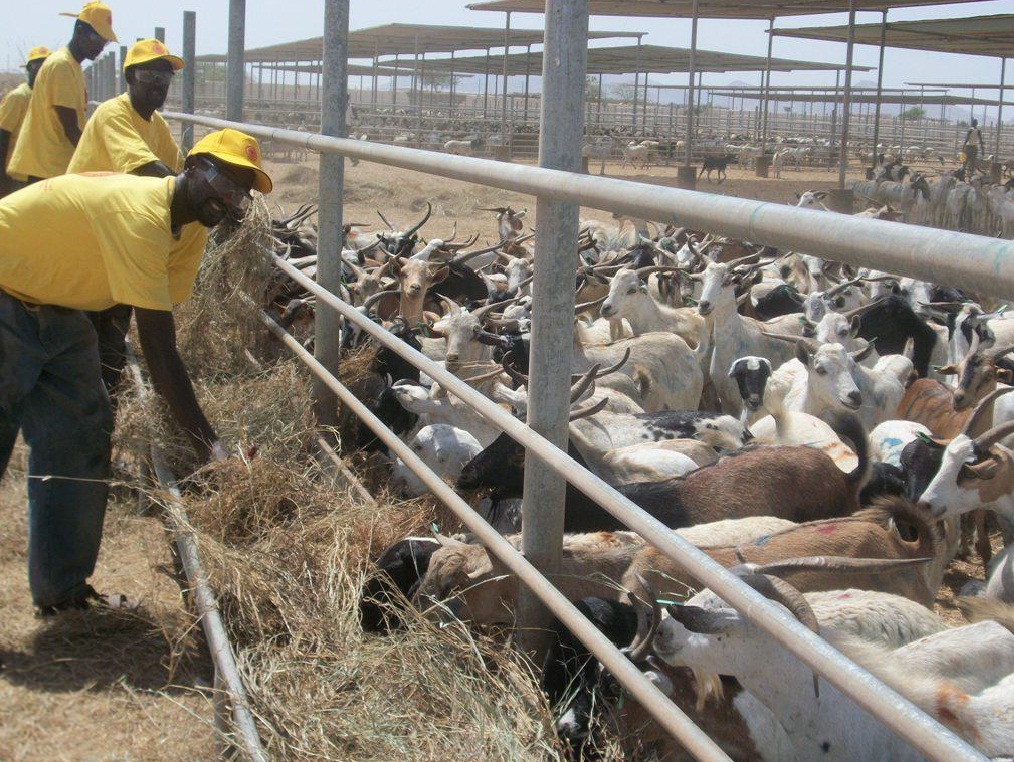
Feeding time for goats in a quarantine station: Regional livestock experts from the Horn of Africa and the Middle East have adopted recommendations towards harmonized, risk-based approaches to control of trade-related transboundary animal diseases (Photo: Saudi-Emirates International Veterinary Quarantine Management Co.)


Following a meeting in Dubai, United Arab Emirates on 13-16 June 2011, some 70 regional and international livestock experts endorsed and adopted a set of recommendations aimed at enhancing safe inter-regional livestock trade between exporting countries in the Horn of Africa and importing countries in the Middle East.

The objectives of the workshop were to:
  • Examine the use of the decision support tool for adoption in prevention and control of Rift Valley fever
  • Assemble an approach to regional harmonization for control of other transboundary animal diseases that impact on livestock trade
  • Delineate animal welfare issues along the marketing chain and propose potential interventions
  • Devise mechanisms for ensuring enhanced communication between the trading partners
  • Define the way forward on risk-based approaches to livestock certification
The workshop participants made recommendations on the following aspects that were discussed during the 4-day meeting:
  • Standard Methods and Procedures
  • Rift Valley fever decision support tool
  • Communication between livestock trading partners
  • Animal health certification
  • Animal welfare
  • Application of the principle of equivalence
The workshop was convened by a consortium of partners comprising the African Union – Interafrican Bureau for Animal Resources (AU-IBAR) as the lead implementing agency, the International Livestock Research Institute (ILRI), the World Organization for Animal Health (OIE), the United States Agency for International Development (USAID) and the United States Department of Agriculture (USDA).


For more information about the workshop activities and to access the presentations, please visit http://rvfworkshop2011.wordpress.com

To view the workshop presentations, please visit http://www.slideshare.net/marketsblog/presentations

Wednesday, June 08, 2011

Regional workshop to discuss risk-based approaches for livestock certification and control of animal diseases


Livestock sector stakeholders from the Horn of Africa and the Middle East will discuss risk-based approaches for control of transboundary animal diseases. (Photo credit: ILRI/Mann. Cattle being watered at the Ghibe River in southwestern Ethiopia.)

Chief veterinary officers and livestock sector stakeholders from several countries in the Horn of Africa and the Middle East meet in Dubai, United Arab Emirates on 13-16 June 2011 for a workshop on enhancing safe inter-regional livestock trade between exporting countries in the Horn of Africa and importing countries in the Middle East. Some 70 participants are expected to attend.

The purpose of the workshop is to:
  • Review the Rift Valley fever situation in the East Africa and Middle East sub-regions;
  • Discuss and test the use of a‘decision support tool’ for prevention and control of Rift Valley fever;
  • Consult on a regional mechanism for coordination for prevention and control of Rift Valley fever using the decision support tool; and
  • Discuss an approach to regional harmonization for control of other transboundary animal diseases that impact livestock trade.

The workshop is convened by the African Union – Interafrican Bureau for Animal Resources (AU-IBAR), the International Livestock Research Institute (ILRI), the United States Agency for International Development (USAID) and the World Organization for Animal Health (OIE).

ILRI’s Market Opportunities theme will be represented by veterinary epidemiologist Dr Bernard Bett, who will facilitate a session on communication among livestock trading partners.

ILRI is also represented by Dr Jeffrey Mariner, a veterinary epidemiologist with the Biotechnology theme who will facilitate several sessions on the Rift Valley fever decision support tool, a risk-based framework that guides responses to outbreaks of the disease.

More information and updates will be posted on the workshop blog, http://rvfworkshop2011.wordpress.com.

The provisional agenda is available here.

Thursday, May 12, 2011

ILRI film features integrated community-based methods to control trypanosomosis in West Africa


Livestock keepers in West Africa rely largely on treating their cattle with drugs to protect them from trypanosomosis, but resistance to these drugs has emerged in many areas.

This training film (approx. 13 minutes) from the project, Preventing and containing trypanocide resistance in the cotton zone of West Africa, outlines good practices for improving the use of drugs and slowing the emergence of resistance.

These practices, which are based on Rational Drug Use, an approach from human health now adapted for animal care, are clearly explained so that veterinary workers and farmers can treat animals safely.

Rational Drug Use can be combined with other methods that reduce the numbers of tsetse flies to further slow the spread of resistance to trypanocidal medicines.

This is one of three films telling the story of the current state of the war against a disease that is so deadly and widespread that farmers call it 'the malaria of cattle'.

Also see this related post on Livestock Markets DigestStudy calls for participatory approach to prevent trypanocide drug resistance in West Africa

Wednesday, May 11, 2011

Study explores economic impacts of livestock commodity-based trade with health & safety focus

Commodity-based trade that focuses on health and safety attributes of the product rather than the status of the country of origin is one option for increasing market access for livestock products from Africa, a new study recommends.

Livestock market opportunities in Africa have traditionally been limited by the presence of certain infectious diseases that pose risks to animal and human health.

The study, published in the April 2011 online edition of Development Policy Review, analyses the technical considerations and likely economic effects of this innovative approach to commodity-based trade.

The paper was written by Dr Karl Rich of the Norwegian Institute of International Affairs (NUPI) and the International Livestock Research Institute (ILRI), and Prof Brian Perry of University of Oxford, University of Edinburgh, and University of Pretoria.

View the abstract here

Citation
Rich KM and Perry BD. 2011. Whither commodity-based trade? Development Policy Review 29(3): 331-357.

Wednesday, February 10, 2010

Blog launched: Participatory Epidemiology Network for Animal and Public Health


The Participatory Epidemiology Network for Animal and Public Health (PENAPH) has launched a blog to share news, training materials and other useful resources related to its work.

Started in 2007, PENAPH connects groups and individuals who apply participatory epidemiology methods in the control of emerging and existing diseases. PENAPH works to improve livelihoods by contributing to solve the world's most pressing health challenges.

PENAPH's partner institutions have a wealth of experience in participatory epidemiology and participatory disease surveillance, as well as interests in promoting One Health approaches. These partners are:
  • African Union-Interafrican Bureau for Animal Resources (AU-IBAR)
  • Food and Agriculture Organization of the United Nations (FAO)
  • International Livestock Research Institute (ILRI)
  • Royal Veterinary College, University of London (RVC)
  • Vétérinaires Sans Frontières - Belgium (VSF-B)
  • Veterinarians Without Borders - Canada (VSF-C)
  • World Organization for Animal Health (OIE)

To find out more about PENAPH, please visit the blog at http://penaph.net.

Friday, May 30, 2008

ILRI presents at OIE 76th Annual General Session


Dr Jeffrey Mariner presenting the ‘Technical Item’ at this year's Annual General Session of the World Organization for Animal Health (OIE) in Paris held on 25-30 May 2008. Dr Mariner leads the team on animal health and food safety for trade, under ILRI's Markets research theme.

The presentation was titled ‘The role of small farmers in animal health’ and authored by Delia Grace, Christine Jost, G. MacGregor Skinner and Jeffrey Mariner. This OIE-commissioned survey of all member country veterinary services led to the drafting of resolution by a working group which was passed by the General Session on 30 May 2008.

The resolution recommends that ‘the OIE review international standards, definitions and guidelines to identify opportunities to encourage small farmer participation, under the supervision of Veterinary Services, and enhance equity and efficiency in animal health and trade’ among other things.

Congratulations on this outcome to Jeff and team!